Short answer
Steam radiators bang because condensed water is trapped where it cannot drain, and the next rush of steam slams it into a fitting. Make sure each one-pipe valve is fully open and the radiator slopes back toward it. When the noise comes from the basement pipes or started with a new boiler, it needs a steam technician.
When steam radiators or pipes bang, the cause is almost always water hammer: steam racing through the pipes runs into a pocket of condensed water, throws it forward and slams it into a fitting. Find where the water collects and the noise stops. In old Pittsburgh steam systems that usually means a radiator tilted the wrong way, a one-pipe valve left half open, a sagging pipe in the basement, pressure set too high, or wet steam from poor piping at the boiler.
A few ticks as pipes warm up are normal. A bang loud enough to rattle the floor is not. Here is how to narrow down where the water is hiding, what you can check yourself, and when the fix belongs to a steam technician.
What Is Happening Inside the Pipe
A steam system boils water in the basement and lets the steam rise through the mains to the radiators. In each radiator the steam gives up its heat and turns back into water, and that condensate is supposed to drain back to the boiler by gravity. Every pipe and radiator has to slope so the water can find its way home.
When water pools where it should not, the next rush of steam picks it up at speed, and the slug hits an elbow or a valve. Steam passing over cold standing water can also condense all at once, collapsing into a vacuum that yanks the water forward with the same result. The bang is the symptom. Standing water is the problem.
Where and When You Hear It
The timing and location of the noise point toward the cause.
| What you notice | Likely cause | First thing to check |
|---|---|---|
| Banging at one radiator as it heats | Radiator pitched away from its valve, or the valve partly closed | Radiator slope and valve position |
| Banging in the basement mains at startup | A sagging main or a pipe pitched the wrong way | Hangers and the slope of the main |
| Banging that began after a new boiler | Near-boiler piping not to spec, or oil in the new boiler's water | Header and equalizer piping, and whether the boiler was skimmed |
| Banging with a jumping sight glass | Dirty or oily water, or pressure set too high | Sight glass and pressuretrol setting |
| Banging inside a wall or under a floor | A sagging runout, often after renovation | Runout pitch where it can be reached |
Radiator Pitch and the One-Pipe Valve
In a one-pipe steam system, steam and condensate share the same pipe. Steam rises into the radiator through the valve, and condensate drains out through that same valve against the incoming steam. For that to work, the radiator has to tilt slightly toward the valve.
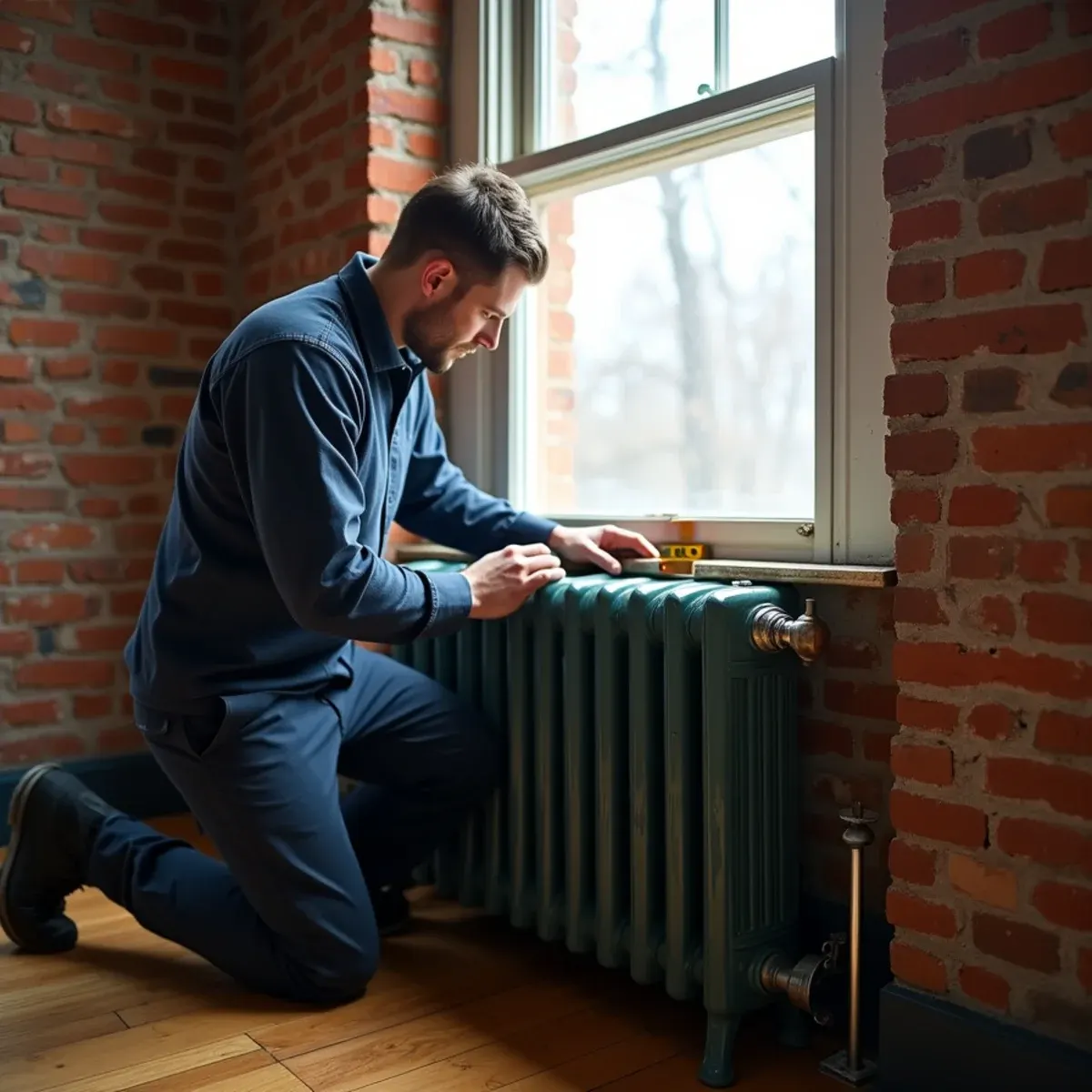
Houses settle. In a hundred-year-old Pittsburgh foursquare or rowhouse, floors sag a little over the decades, and radiators end up level or tipped the wrong way. A level laid along the top of the radiator will tell you. The usual fix is a small shim under the feet at the end opposite the valve, enough to give a gentle slope toward it.
Fully open or fully closed
The supply valve on a one-pipe radiator must be all the way open or all the way closed. A half-open valve chokes the pipe so condensate cannot drain past the incoming steam, and the radiator bangs and spits water from its vent. To make a room cooler, close the valve fully or fit a slower adjustable vent. Never leave it partway.
Two-pipe systems work differently. There the radiator should slope toward the return end, where a steam trap lets condensate out. A failed trap that blows steam into the return can cause banging in the return lines instead.
Sagging Pipes in the Basement
Steam mains are supposed to slope gently away from the boiler toward the far end of the house, where they drop down into the returns. Over the decades, hangers rust, joists sag, and somebody moves a pipe to fit a finished ceiling, a new beam or a plumbing run. A main that dips in the middle collects water at the low spot.
- Look along the basement mains for a visible sag or a hanger that has let go.
- Check any pipe that was disturbed during a basement finish or plumbing work.
- Note the runouts, the short pipes from the main up to the first-floor radiators, which often sag between joists.
Re-hanging and re-pitching steam pipe is work for a steam technician. Done right, it often cures banging for good.
Pressure, Wet Steam and Dirty Water
Residential steam runs at very low pressure, usually well under 2 psi, and many systems run best at a few ounces up to about 1.5 psi. A pressuretrol turned up higher does not heat the house faster. It drives steam harder through the pipes, makes water hammer worse and wastes fuel.
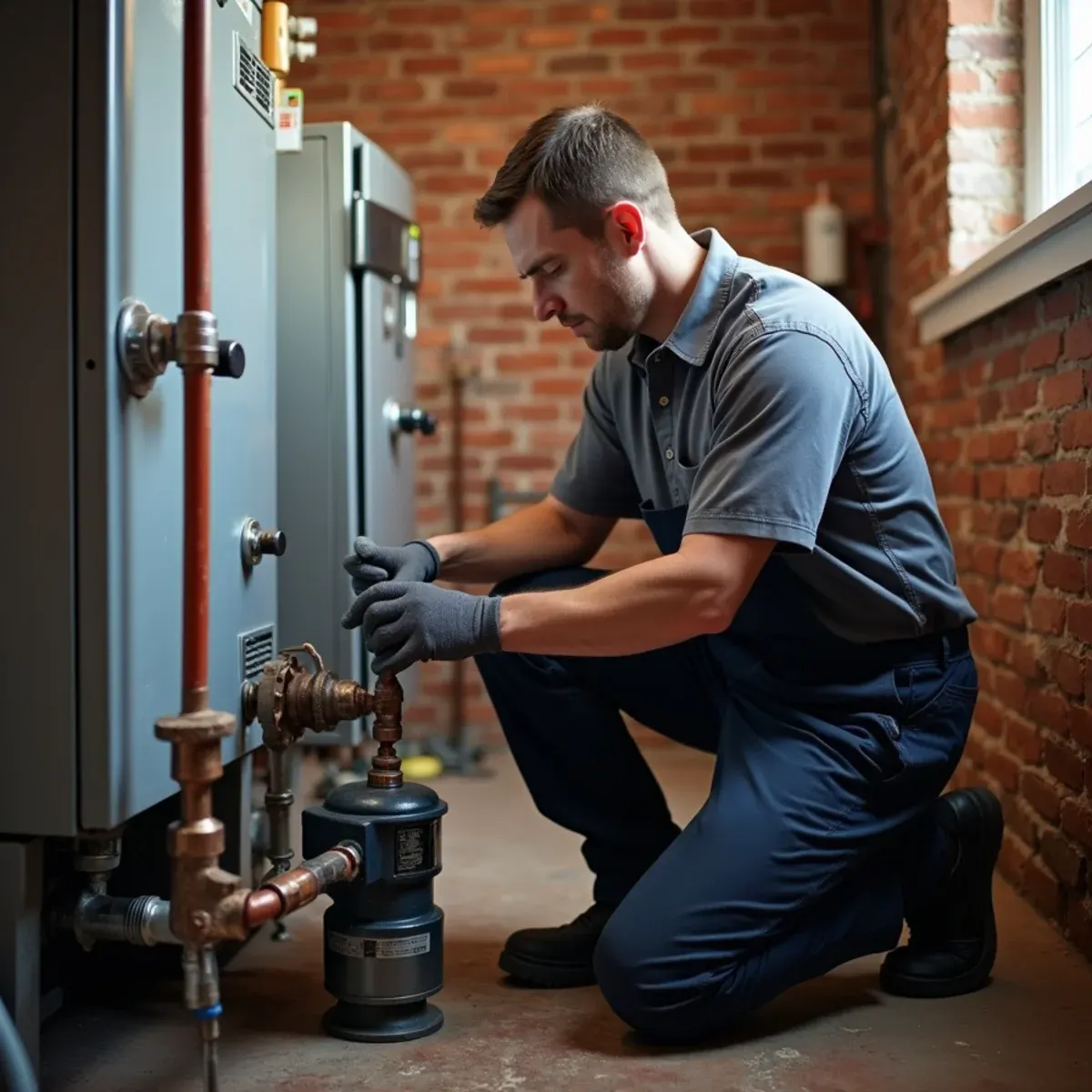
The other big cause sits right above the boiler. If the near-boiler piping is not built to the manufacturer's diagram, with the right header height, pipe sizes and equalizer, the boiler sends wet steam full of water droplets into the mains. A new boiler can also bang for weeks if its water was never skimmed to remove manufacturing oil, which makes the water surge and foam. A sight glass that bounces while the burner runs is the giveaway.
Our steam boiler repair page covers pressuretrols, skimming and near-boiler piping in more detail.
What About Hot-Water Radiators?
Hot-water systems do not get steam-style water hammer. Ticking and creaking as pipes expand through floor joists is common and harmless. Gurgling usually means air in the system, which bleeding the radiators and then checking the boiler pressure takes care of. A sharp bang in a hot-water system more often comes from a quick-closing zone valve, and a boiler that rumbles or kettles may have scale or a flow problem. Those deserve a call too, but they are a different problem from the one in this article.
Banging Radiators in Dormont and Similar Streets
Dormont fits about 8,244 people onto 0.76 square miles, and most of its brick houses and duplexes went up in the radiator era, after the transit tunnel and the Liberty Tunnels made the borough an easy trip from downtown. A century of settling floors, rerouted pipes and replaced boilers makes banging one of the most familiar steam complaints there. Our page on boiler and radiator repair in Dormont covers the area.
If shimming a radiator and opening its valve all the way did not quiet it, the next suspects are pipe pitch, pressure and the piping at the boiler. A technician who handles radiator repair can check slope, valves and vents in the same visit, explain what is causing the noise and give you a price before work begins.
From the technician's side
Why Mornings Are Loudest, and What a Technician Listens For
Water hammer is worst on a cold start, and two habits in older Pittsburgh houses make cold starts colder. The technician we send asks about both before touching a radiator.
- Deep night setbacks. Dropping a steam house ten degrees overnight lets every main and riser cool through. The morning cycle then condenses steam in cold iron before it reaches a radiator, and that water gets thrown. A shallower setback, or none, is often the cheapest fix there is.
- Mains left bare after abatement. Plenty of basements had their old pipe wrap removed and never re-insulated. Bare mains turn far more steam into water on the way out. New fiberglass insulation is a modest job, easiest when boiler replacement or abatement already has the basement opened up.
- Timing is the clue. Note when each bang happens and whether it was the first cycle of the day. A phone recording from the basement helps, because a midday visit rarely reproduces a cold start.
Shimming a radiator a quarter inch on a cool system is a fair homeowner job. Lifting it much further strains the union and the runout below the floor, and if the floor has sagged that far, the runout probably has too. That is work for a steam technician.
The Tudors and colonials on our Mt. Lebanon steam heat page are a good example: a replaced boiler usually still feeds the original mains, so insulation and pitch get checked together before anyone blames the boiler.
Frequently asked questions
Is it dangerous when steam radiators bang?
Usually not right away, but it should not be ignored. Repeated water hammer can loosen fittings, damage radiator vents and valves, and over time crack a fitting or a weak section of pipe. The bigger concern is what the banging says: water is pooling somewhere, which also means uneven heat and wasted fuel. If the noise comes with a leak, a jumping sight glass or a boiler that keeps losing water, call for service rather than waiting.
Why did my pipes start banging after a new boiler was installed?
The two most common reasons are near-boiler piping that does not match the manufacturer's diagram, and oil left in the new boiler's water. Poor piping sends wet steam into the mains. Oil makes the water surge and foam, which the boiler carries up into the system. Skimming usually clears the oil within a few cleanings. Piping problems need the header and equalizer corrected, which is a job for a technician experienced with steam.
Can I turn the pressure down to stop the banging?
Sometimes it helps, if the pressuretrol was set too high. Residential steam usually runs well under 2 psi, and many houses heat evenly at a few ounces to about 1.5 psi, so lowering an over-set control can quiet the pipes and save fuel. It will not fix a radiator pitched the wrong way or a sagging main, and the pigtail under the pressuretrol must be clear for it to read correctly. If you are unsure of the setting, have a technician check it.