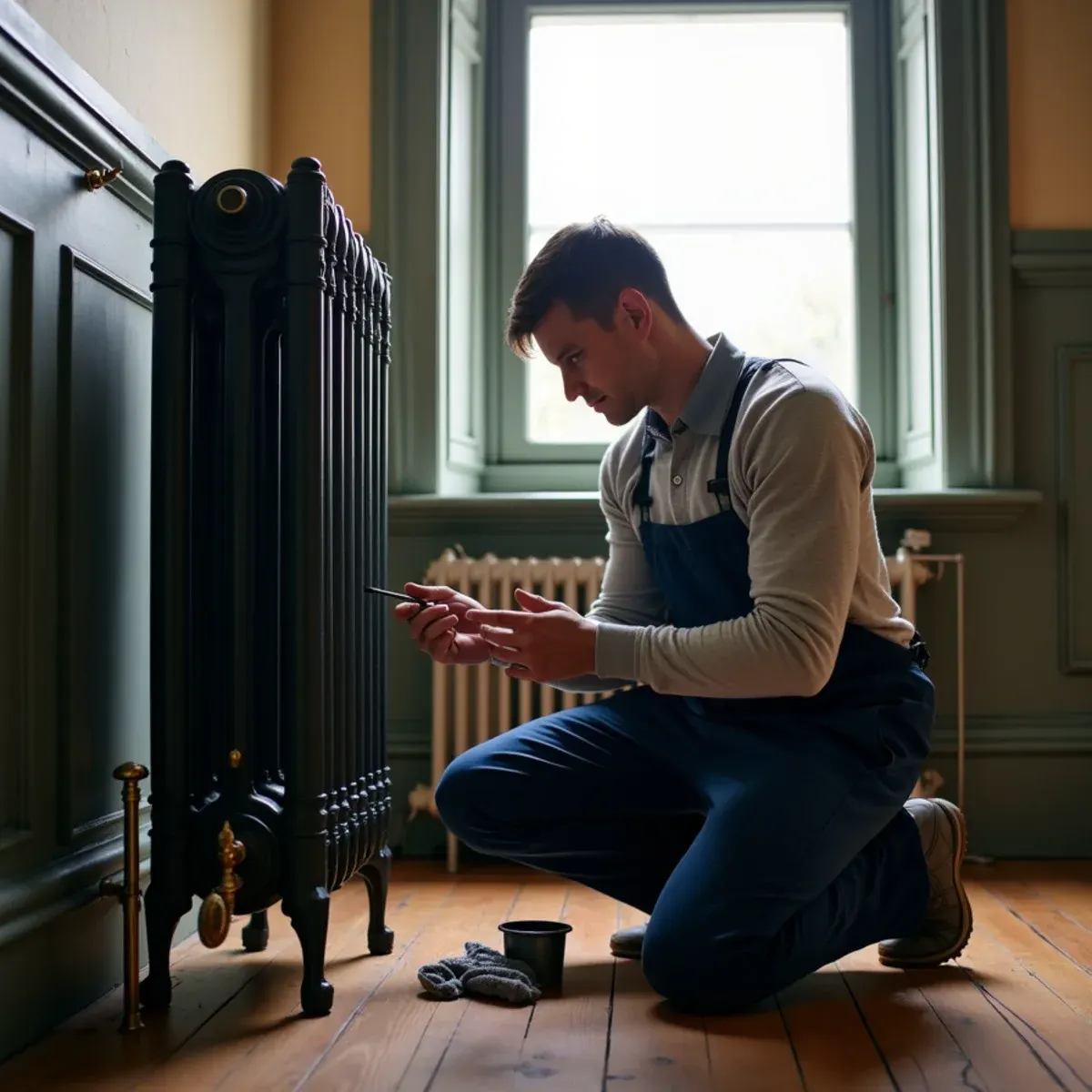
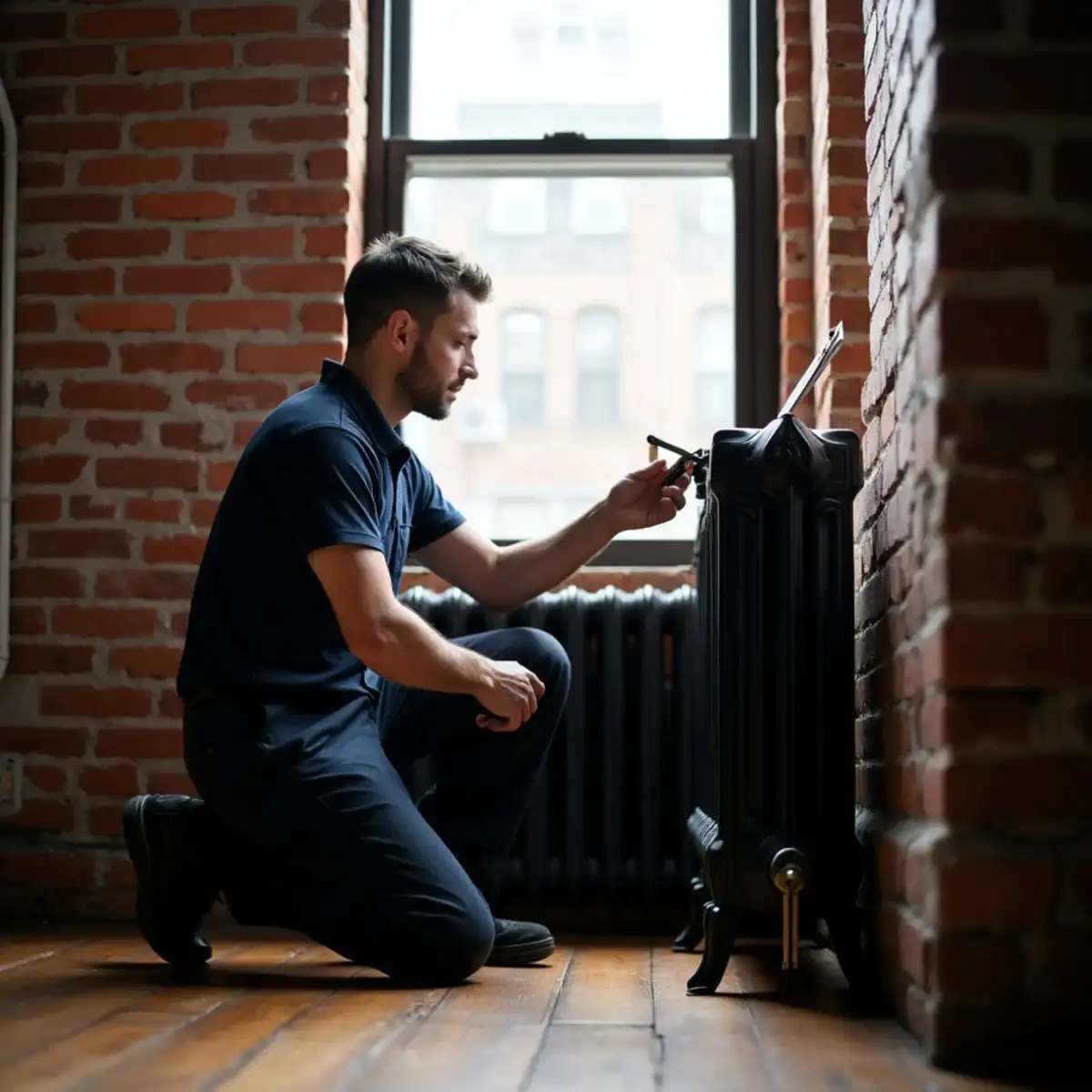
Radiator repair in Pittsburgh starts with a call to (321) 478-0693, any hour: we answer, listen to what the radiator is doing, and send a local technician who works on both steam and hot-water systems. Cold rooms, leaking valves, hissing vents and banging pipes are everyday calls in a city where nearly half the homes went up before 1940.
Most of those radiators are sound cast iron that will outlive the next three boilers. The trouble is in the small parts around them: a vent painted shut, a trap stuck open, dried-out valve packing, a union that no longer seals, or a radiator that has settled until it slopes the wrong way. Those are repairable, usually in one visit.
Radiator problems we fix in Pittsburgh homes
Bloomfield and Polish Hill rowhouses, Highland Park foursquares, Shadyside Victorians split into apartments: most were built with steam or gravity hot water and still run on the original pipes. The boiler has usually been replaced at least once. The radiators upstairs have not. That mix produces a predictable set of calls:
- A cold radiator, or a radiator not heating past the first few sections, in an otherwise warm house.
- A leaking radiator valve, dripping at the stem, the union nut or the pipe thread.
- Air vents that hiss nonstop, spit water, or never let air out at all.
- Banging radiators and knocking pipes on cold mornings.
- Weeping between sections from an old freeze crack or a tired push nipple.
- Hot-water radiators and baseboard that gurgle and stay cool at the top.
- Radiators that must come out for floor refinishing or a remodel and go back in without new problems.
We send technicians across the city and the older boroughs around it, all listed on our boiler and radiator service areas around Pittsburgh page. That includes radiator and boiler repair in Mt. Lebanon, where 1920s and 1930s Tudors and colonials still run on their first radiators. If your home has vents and a furnace rather than radiators, our sister site Pittsburgh Furnace Repair handles those calls.
What a radiator repair visit includes
Radiator repair is detail work on small parts. On a typical visit, the technician we send covers these:
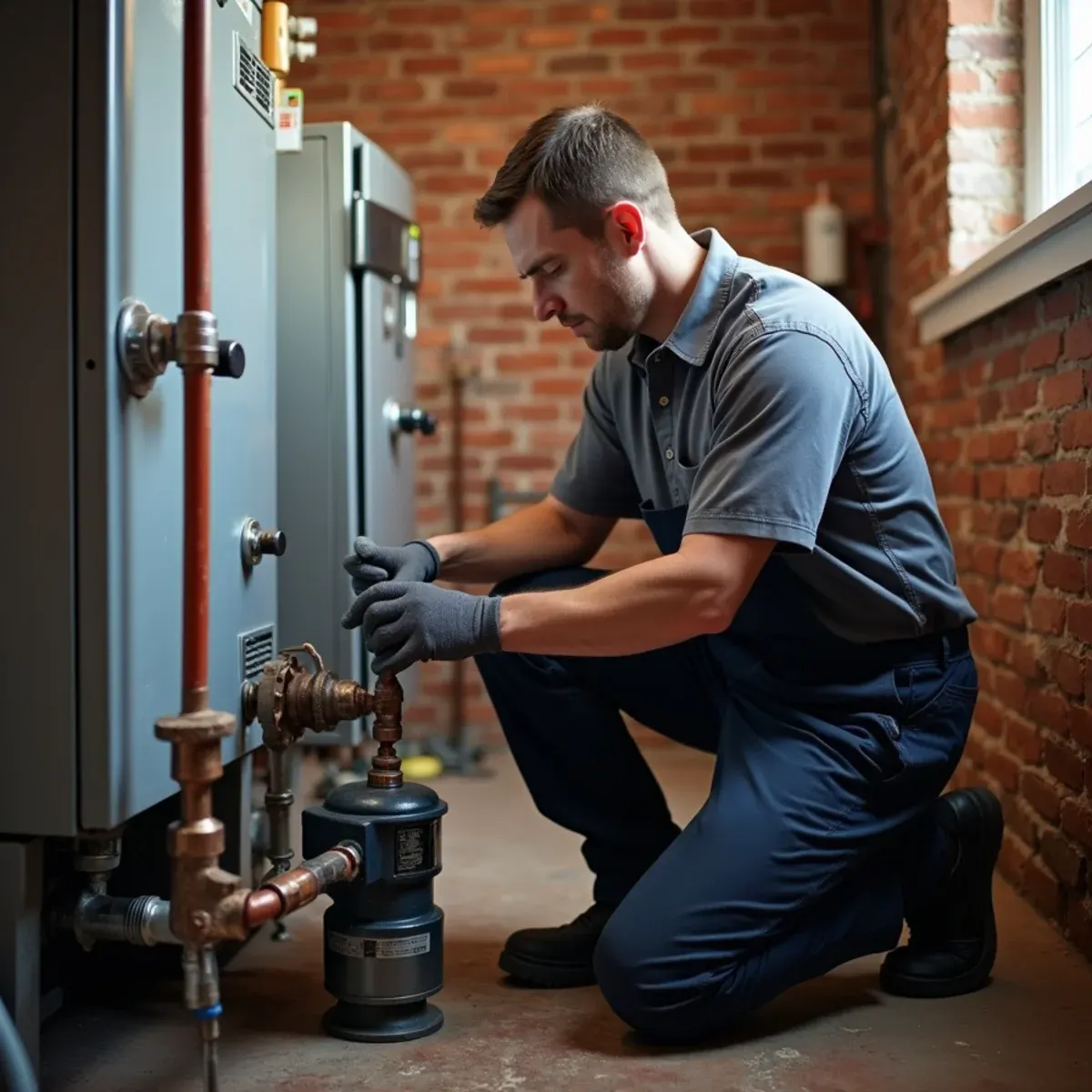
- Identifying the system at the boiler first: one-pipe steam, two-pipe steam, vapor or hot water, because the right vent, trap or valve depends on it.
- A look at the boiler's water line or pressure gauge and the basement main vents, so a fault upstream is not blamed on the radiator.
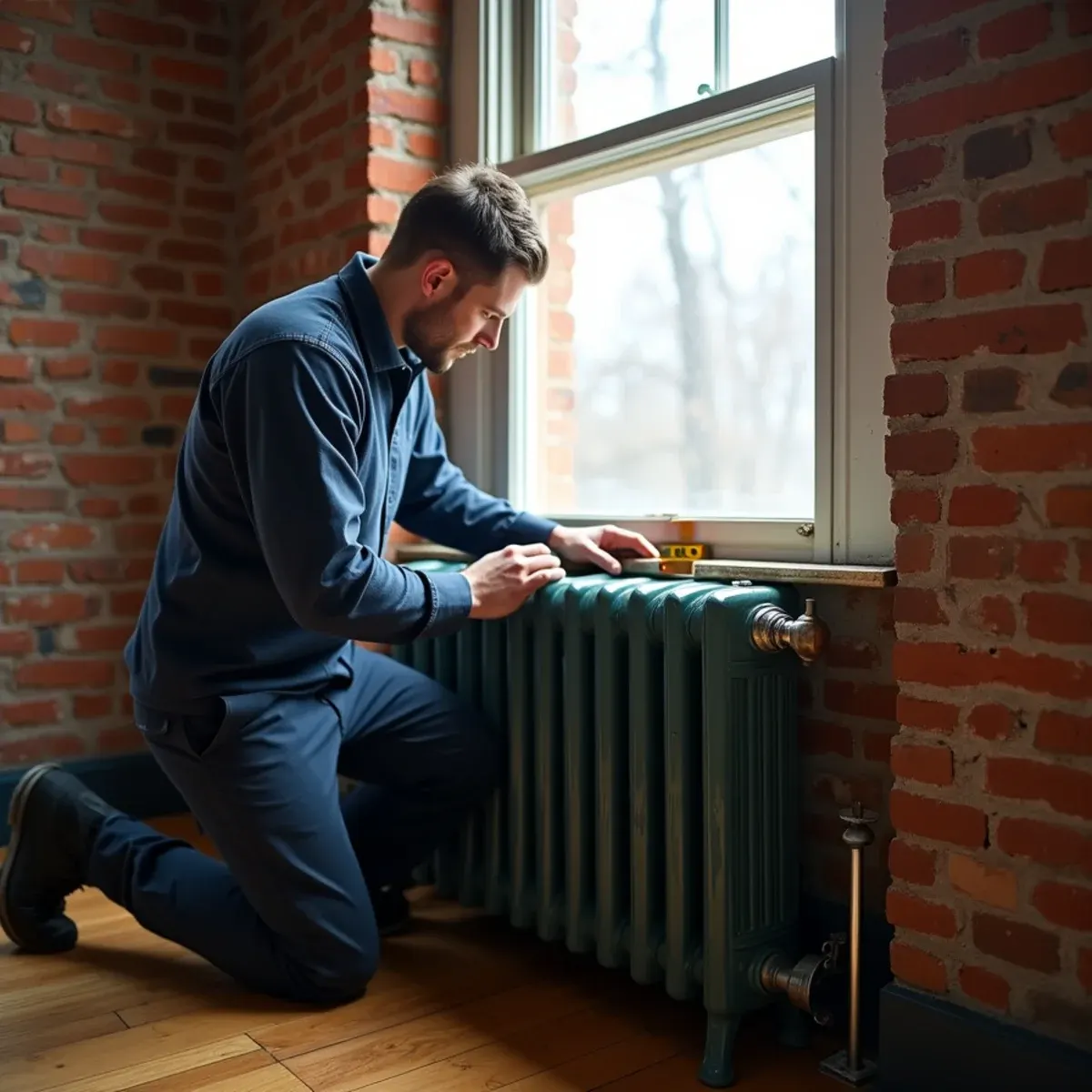
- Checking each problem radiator: valve position, vent or trap, bleeder, and pitch measured with a level on the top.
- Radiator vents replaced and sized to each radiator's place on the main, with an explanation of which radiators got faster or slower vents.
- Valve stems repacked, or seized valves replaced with a full-port valve on one-pipe steam and a throttling valve on hot water or two-pipe.
- New spuds and unions where the ground seat no longer seals, and trap elements or trap bodies renewed on two-pipe steam.
- Hot-water radiators bled from the top floor down, then the boiler pressure rechecked so bleeding has not left it too low.
- Every opened joint watched again once the system is back to temperature, since packing and unions often weep only when hot.
- A plain account of anything found but not fixed, such as a sagging main or a boiler fault, with a price before any further work.
How a radiator call runs, from basement to top floor
- 1
Start at the boiler
The technician confirms the system type, reads the sight glass or pressure gauge and checks that the main vents or air separator are working. A radiator problem that begins in the basement will not be fixed by changing parts upstairs.
- 2
Call for heat and walk the rooms
With the thermostat turned up, the technician notes which radiators heat, in what order and how far across their sections. A radiator hot at the valve end and cold at the far end points straight at air or trapped water.
- 3
Pin down the cause at each radiator
Vents are checked for venting and closing, traps for blowing through, bleeders for trapped air, and valves for whether they are fully open. A level on the radiator top shows whether it slopes the right way for its system.
- 4
Explain the fix and the price
You hear what each radiator needs and what the repair costs, and nothing is opened until you approve it. The system is cooled, or the zone isolated, before any vent, union or valve is loosened.
- 5
Bring it back up and retest
Once the repair is made, the system is brought back to temperature. The technician confirms each repaired radiator heats across, watches the opened joints for drips, and rechecks the boiler water line or pressure after any bleeding or draining.
Cold radiators: stuck air vents, failed steam traps and air-bound hot-water loops
One cold radiator in a warm house is nearly always an air problem. Steam cannot enter a radiator still full of air, and hot water cannot circulate past an air pocket. Which part has failed depends on the system.
One-pipe steam: the radiator air vent
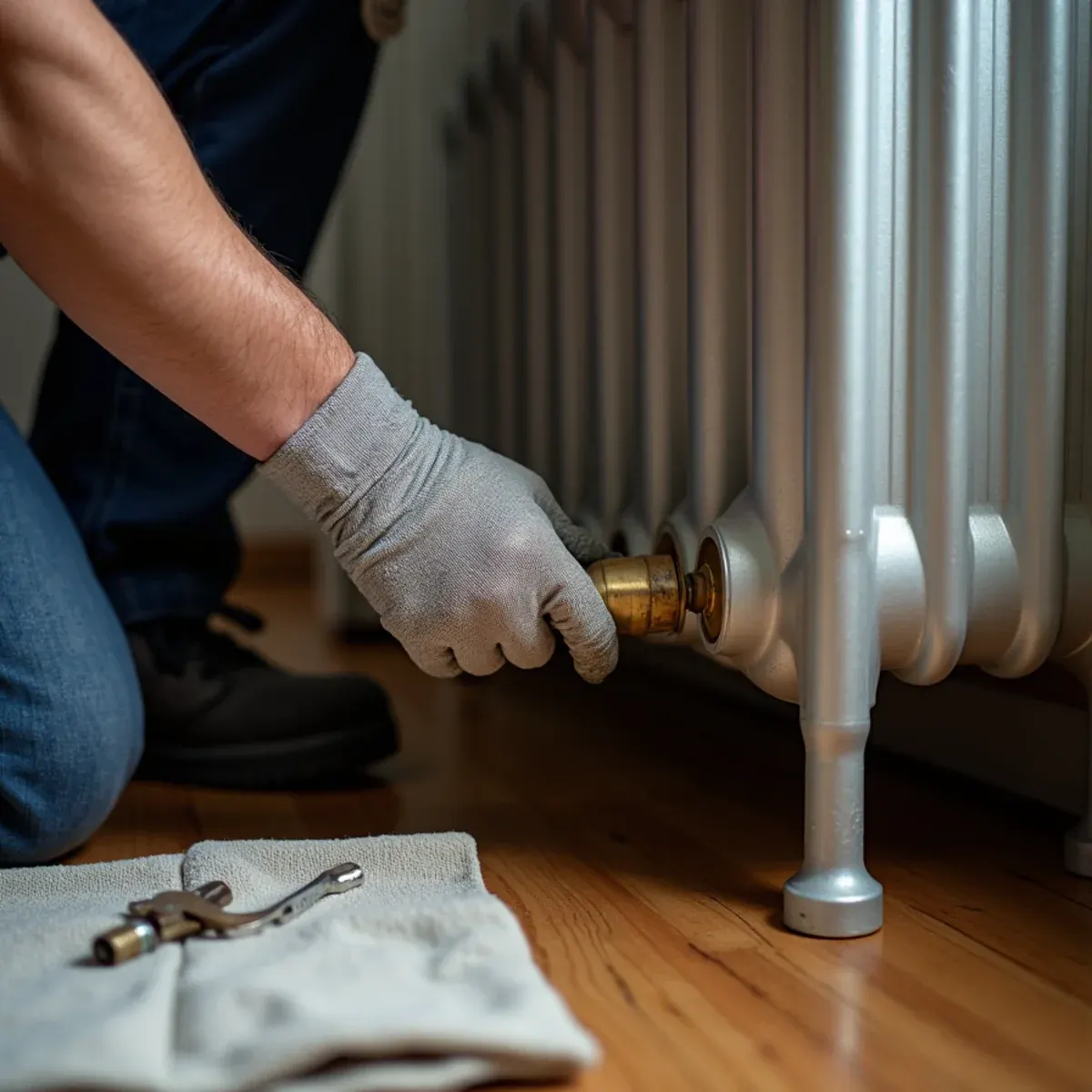
The small vent on the end opposite the valve lets air out as steam pushes in, then closes when steam reaches it. Painted over or clogged with scale, it stays shut and the radiator stays cold. Failed open, it hisses and spits. Radiator air vent replacement is quick, but sizing takes judgment:
- Radiators that heat last, usually farthest along the main from the boiler, get faster vents.
- Radiators that heat first, near the boiler or on short risers, get slower vents so they do not steal the steam.
- Big radiators in big rooms need more venting than a small bathroom radiator on the same main.
- None of it works until the main vents in the basement do their job first.
Two-pipe steam: the trap
A trap at the radiator outlet passes air and condensate but closes against steam. Failed closed, the radiator fills with air and goes cold. Failed open, steam blows into the returns, other radiators slow down and the returns can bang. Steam trap replacement usually means a new element and seat, or a new trap body when the old one is corroded.
Hot water and baseboard: bleeding radiators
On hot water, air rises to the highest radiators, which stay cool at the top. Bleeding radiators with a key at the small valve near the top usually clears it. Needing to bleed every week points to a problem at the boiler's air separator or fill valve. Fin-tube baseboard behaves the same way, and baseboard heat repair often comes down to an air-bound loop, a stuck zone valve or crushed fins. Our guide to why one radiator stays cold while the rest heat covers what a homeowner can safely check first.
Leaking valves, unions and radiator sections
Radiator leaks in older houses come from three places, and most do not mean replacing the radiator.
- Valve stem packing. A leaking radiator valve that drips or wisps steam under the handle usually has dried packing. Snugging the packing nut sometimes stops it; otherwise the technician lets the system cool and repacks the stem. Cracked or seized valves are replaced.
- Unions and spuds. The big nut between valve and radiator joins two halves at a ground seat. After decades of heat cycles, that seat stops sealing. The fix is usually a new spud and valve, since the halves are matched.
- Sections and push nipples. Weeping between sections means a failed push nipple; a hairline crack in the iron is usually old freeze damage. Some radiators can be resealed by a radiator shop; others are better swapped for a matching salvage radiator. Stop-leak is a short-term patch and can foul steam vents and traps.
Hot steam and hot water burn
Do not unscrew a vent, loosen a union or open a valve while the system is running. Escaping steam causes serious burns, and hot-water systems are under pressure. Turn the thermostat down, let the radiator cool, and put a pan under any drip until the technician arrives.
Banging, hissing and gurgling: what each noise means
A soft hiss as a steam radiator heats is normal. A gunshot bang at six in the morning is not. The sound narrows the cause quickly:
| Noise | Likely cause | What the technician checks |
|---|---|---|
| Banging at one steam radiator | Trapped condensate from lost pitch or a half-closed valve | Valve fully open, pitch toward the valve, sagging runout |
| Banging in basement pipes at startup | Water hammer from wet steam or a sagging main | Near-boiler piping, main pitch, boiler water condition |
| Hissing after the radiator is hot | Air vent stuck open | Vent condition and size |
| Water spitting from the vent | Failed vent, poor pitch or wet steam | Vent, pitch and boiler water line |
| Gurgling in hot-water radiators or baseboard | Air in the loop | Bleeders, air separator, boiler pressure |
| Ticking as pipes heat | Pipes expanding against joists | Clearance where pipes pass through floors |
When the banging comes from the basement rather than one radiator, the cause is usually at the boiler, which makes it a steam boiler repair job. Our article on radiators banging from water hammer in old Pittsburgh steam systems explains why the first cold snap is the worst time for it.
Steam or hot water? How we tell in the first five minutes
New owners of older houses in Brookline or Greenfield are often unsure which system they have. It matters, because a fix for one can damage the other. A few questions on the phone usually settle it:
- One pipe and a bullet-shaped vent on the far end: one-pipe steam.
- Two pipes and a fist-sized trap on the outlet side: two-pipe steam.
- Two pipes and a small bleed valve near the top of one end: hot water.
- A glass tube on the boiler with water in it: steam. That sight glass shows the water line.
- A gauge reading pressure and temperature, plus a tank near the boiler: hot water.
On site, the boiler confirms it. Hot-water systems get their own checks at the circulator, expansion tank and fill valve, covered on our hot water boiler repair page.
New valves and thermostatic radiator valves for room-by-room control
Old radiator valves seize, leak or crumble when turned, and the replacement has to suit the system. A one-pipe steam valve needs a full-size port, because steam goes up and condensate comes down through the same opening. A hot-water or two-pipe valve can be smaller and can throttle.
Thermostatic radiator valves, or TRVs, let each room hold its own temperature, taming the sunny bedroom that cooks while the north side stays cool. On hot water and two-pipe steam, the TRV replaces the supply valve. On one-pipe steam, the thermostatic operator mounts on the air vent instead: when the room is warm it closes the vent, air stays in the radiator, and steam stops entering.
One-pipe valves are open or closed
Never turn a one-pipe steam radiator down with its supply valve. Half closed, it traps condensate and causes banging and spitting. Leave it fully open, or fully closed, and use a vent-mounted TRV for control.
Moving, removing or adding a radiator during a renovation
Radiator removal comes up for floor refinishing, plaster work and kitchen or bath remodels. A large cast iron radiator can weigh several hundred pounds, so it takes two people and a dolly. Steam systems are shut down and cooled and the pipe capped. Hot-water radiators are isolated or the zone drained, then refilled and purged afterward.
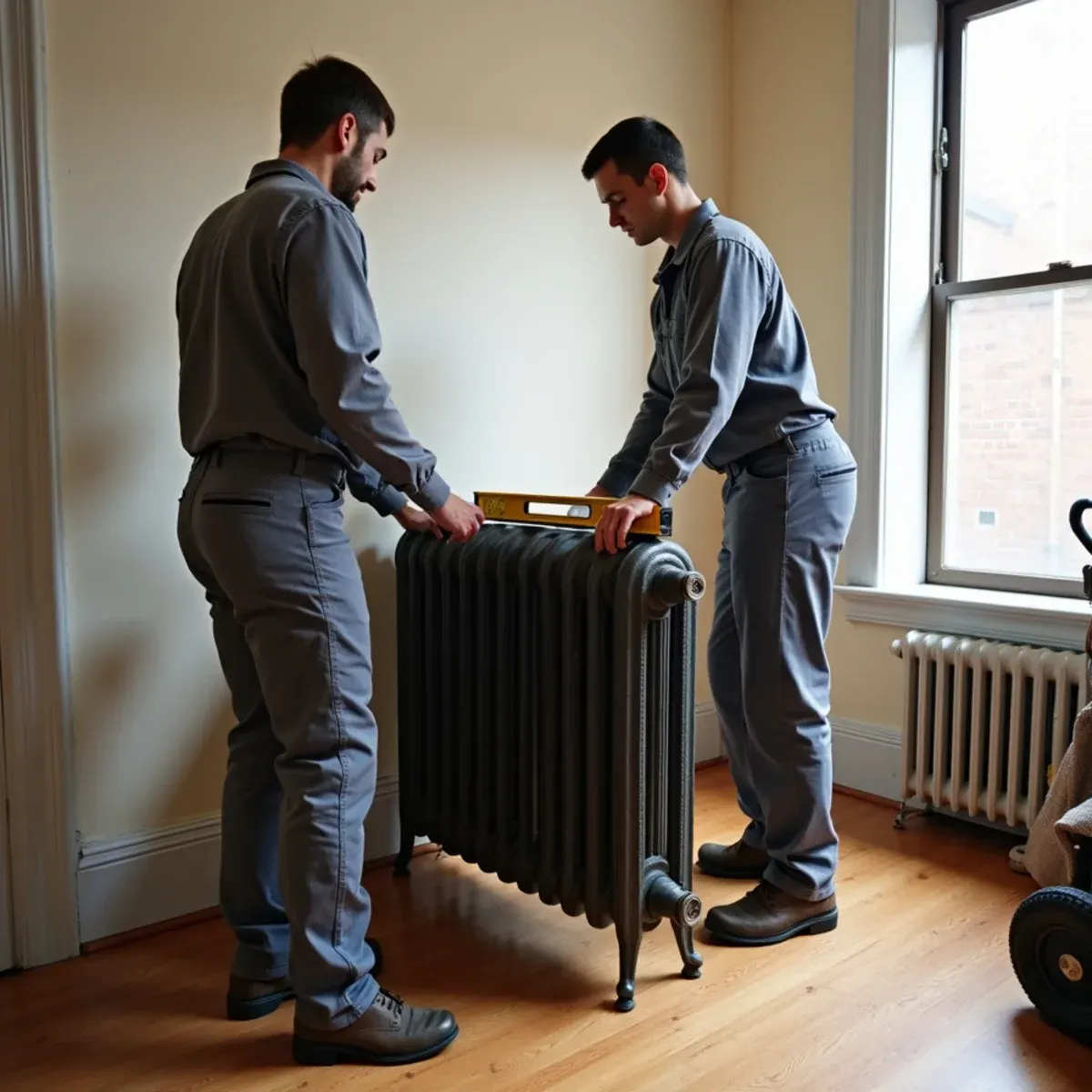
Reinstallation is where rushed jobs go wrong. The technician sets the radiator with the correct pitch, toward the valve on one-pipe steam and toward the return on two-pipe, with a new spud and union where the seat is worn. Many converted apartment houses covered on our Wilkinsburg boiler and radiator service page have radiators that were moved during the conversion and never pitched right.
Adding or permanently removing radiators is a bigger question. A steam boiler is sized to the radiation connected to it, so pulling several radiators can leave it oversized and short cycling, while adding radiators can outrun it. Hot-water zones need rebalancing after any change, as owners of the tight brick duplexes on our Dormont boiler and radiator repair page know. If a renovation lines up with an aging boiler, consider boiler replacement sized to the radiators you keep.
What affects the cost of a radiator repair
- System type: one-pipe steam, two-pipe steam or hot water, each with its own vents, traps and valves.
- The part involved: a vent or trap element is smaller than a new valve, spud and union.
- Access: radiators behind built-in covers or on a third floor take longer.
- Pipe condition: rotted nipples or seized threads add work once a valve comes off.
- Draining and refilling: hot-water repairs that need a zone drained and purged take more time.
- How many radiators: sizing vents across a whole floor costs more overall but less per radiator.
- Timing: nights, weekends and holidays can be priced differently.
You hear the diagnosis and the price before work starts. Every HVAC technician we send is licensed where Pennsylvania requires it, and insured. For published local benchmarks, see our guide to boiler repair cost in Pittsburgh.
Why radiator calls come to this line
Radiators read as part of the whole system
The technician we send judges a cold radiator against the main it sits on and the boiler feeding it, so you are not sold a new vent when the real fault is a clogged main vent in the basement.
Steam and hot water told apart before any part is chosen
A one-pipe vent on a two-pipe radiator, or a bleeder opened on steam, makes the problem worse. Naming the system comes first on every radiator call, before a replacement part is even picked out.
A price for each radiator before any vent comes off
You hear what every problem radiator needs and what it costs before work starts. That lets you fix the bedroom that bangs at dawn now and plan the rest of the house for another visit.
One cold room is still worth a night call
A dead radiator on an outside wall can let a nearby pipe freeze during a January cold snap. The phone is answered around the clock, and the dispatcher asks which room, which floor and which system before sending anyone.
Radiator Repair across Pittsburgh and nearby boroughs
Radiator work follows the original cast iron. In the city that means Bloomfield, Polish Hill and Lawrenceville rowhouses, where one-pipe steam radiators sit under nearly every window. Outside the city line, the 1910s and 1920s brick homes and duplexes we cover for radiator repair in Dormont and the century-old houses above the Ohio that need radiator and valve repair in Bellevue bring the same leaking valves, spitting vents and radiators that lost their pitch.
Radiator Repair: common questions
Why is one radiator cold when the rest of the house is warm?
One cold radiator in a warm house almost always has trapped air. On one-pipe steam, the air vent is clogged, painted over or undersized, so steam cannot push the air out. On two-pipe steam, the trap has usually failed closed. On hot water, air has collected at the top and the radiator needs bleeding. A one-pipe radiator with a half-closed valve or lost pitch can also stay cold. The technician checks those before replacing anything.
Is a hissing steam radiator dangerous?
No, a short hiss while the radiator heats is normal, because air is leaving through the vent. Constant hissing after the radiator is hot, or a vent spitting water, means the vent has failed open. That is not an emergency, but it wastes steam, makes the boiler lose water, and can burn anyone who touches the vent. Keep children away from it and have the vent replaced and sized to its spot on the main.
Can a leaking radiator be repaired, or does it have to be replaced?
Yes, most radiator leaks can be repaired. Valve stem leaks are fixed by repacking or replacing the valve, and union leaks with a new spud and valve. Leaks between sections come from failed push nipples, which a radiator shop can sometimes reseal. A crack in the cast iron itself, usually old freeze damage, is the case where a matching salvage radiator or a new one makes more sense. The technician explains which applies before quoting.
Do radiator covers or paint reduce the heat?
Yes, both can, by very different amounts. A solid enclosed cover, especially a wooden box with a small grille, can cut output noticeably and slow how fast the room warms. Covers with an open top and front and a reflective back lose much less. Ordinary non-metallic paint in any color barely matters, but metallic paints such as aluminum or bronze reduce radiant output slightly. Heavy paint also makes vents and valves harder to service.
Do old cast iron radiators need to be flushed?
No, not as routine maintenance. A closed hot-water system that holds its pressure carries the same water year after year, and flushing it only brings in fresh water with new oxygen and minerals that start corrosion again. Steam radiators collect scale in the bottom of their sections, where it sits harmlessly. Cleaning matters in two cases: a radiator re-pitched so steeply that settled sludge moves toward the valve, and an old system being prepared for a new condensing boiler, which needs clean water.
Is it worth repairing old cast iron radiators?
Yes, in almost every case. Cast iron does not wear out the way a boiler does, and many radiators in Pittsburgh are as old as the houses they heat. What fails are the vents, traps, valves, unions and push nipples around them, and those are replaceable parts. Replacement makes sense only for a radiator with cracked iron from an old freeze, or one that is badly undersized for a room that has changed. A matching salvage radiator, sized to the same output, usually keeps the system balanced.