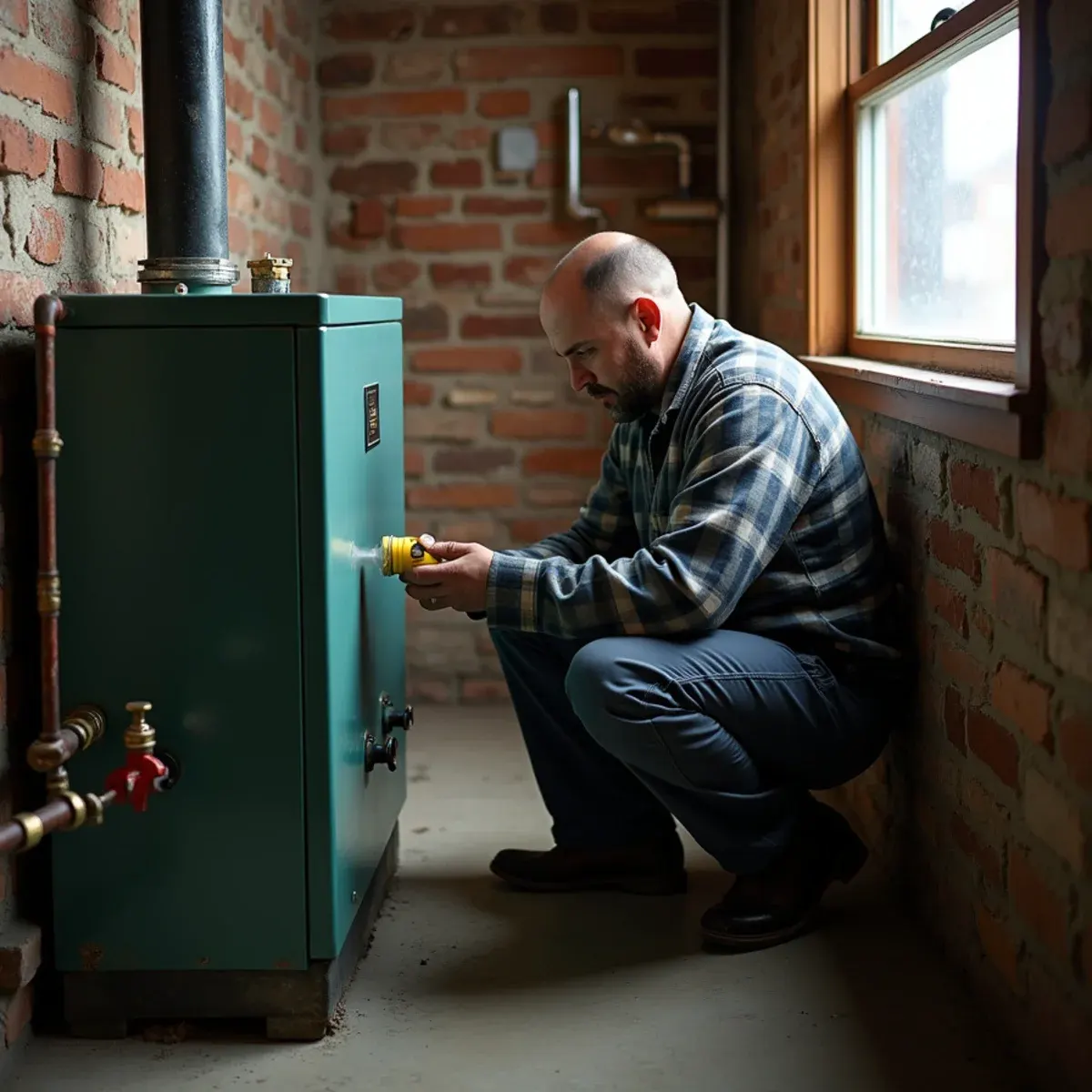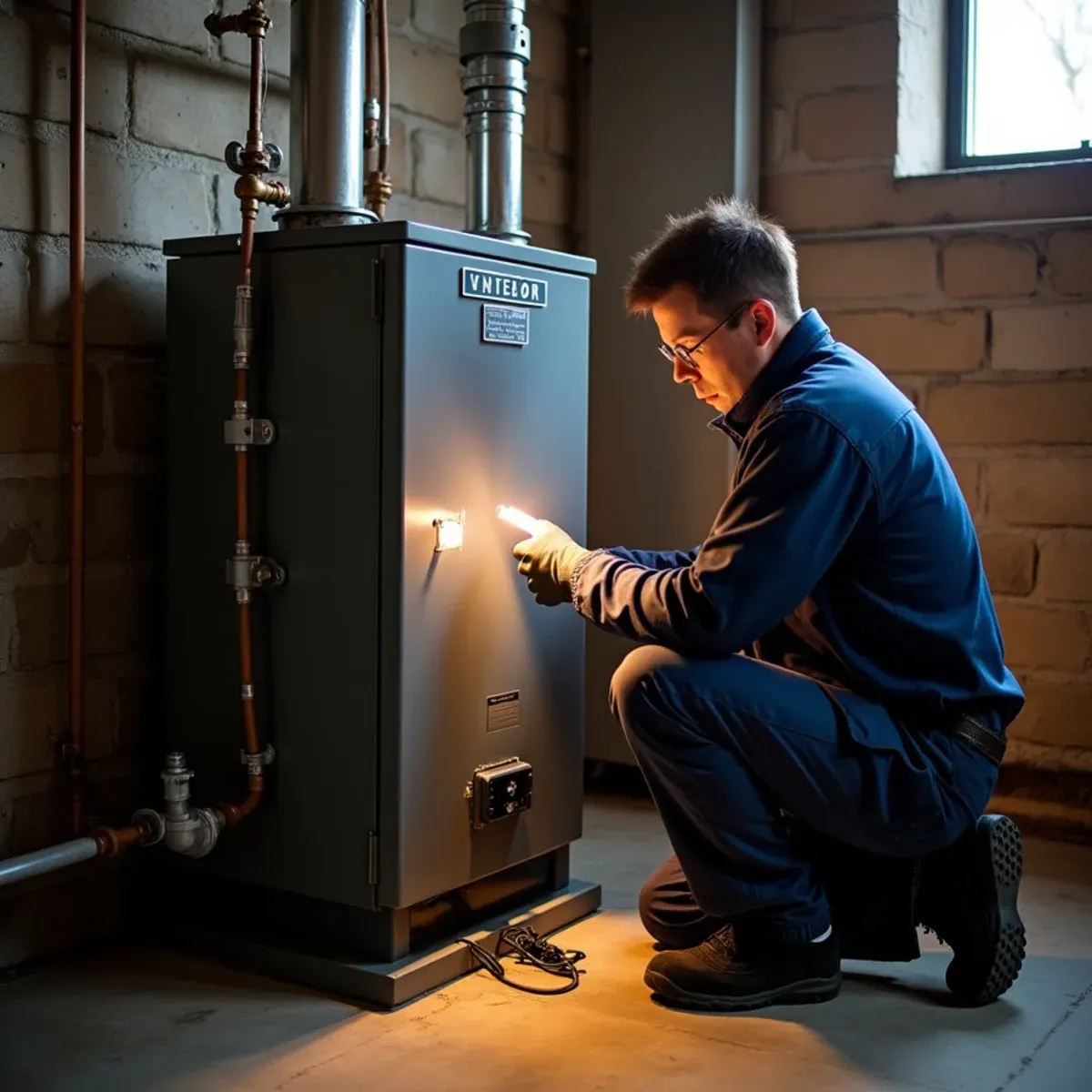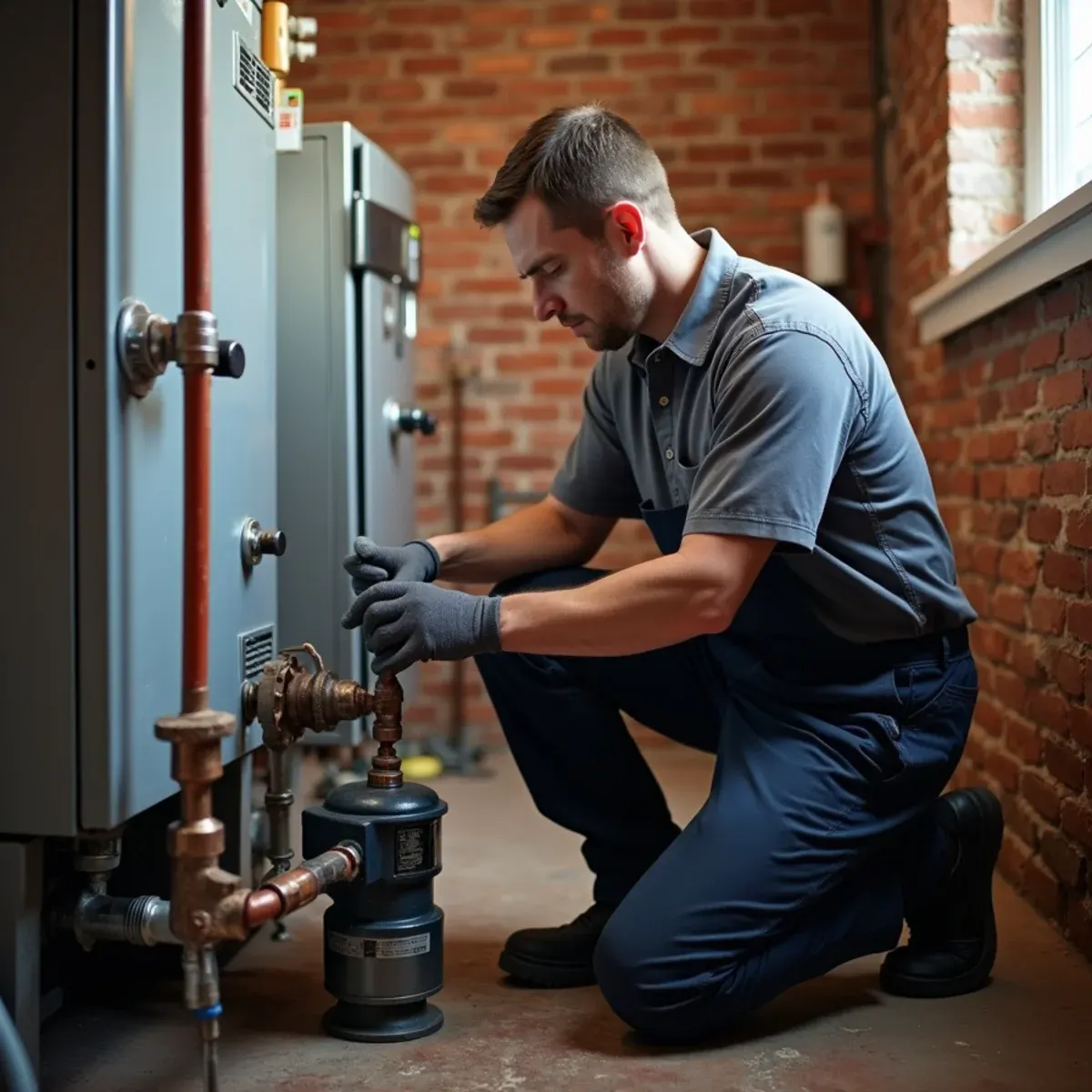
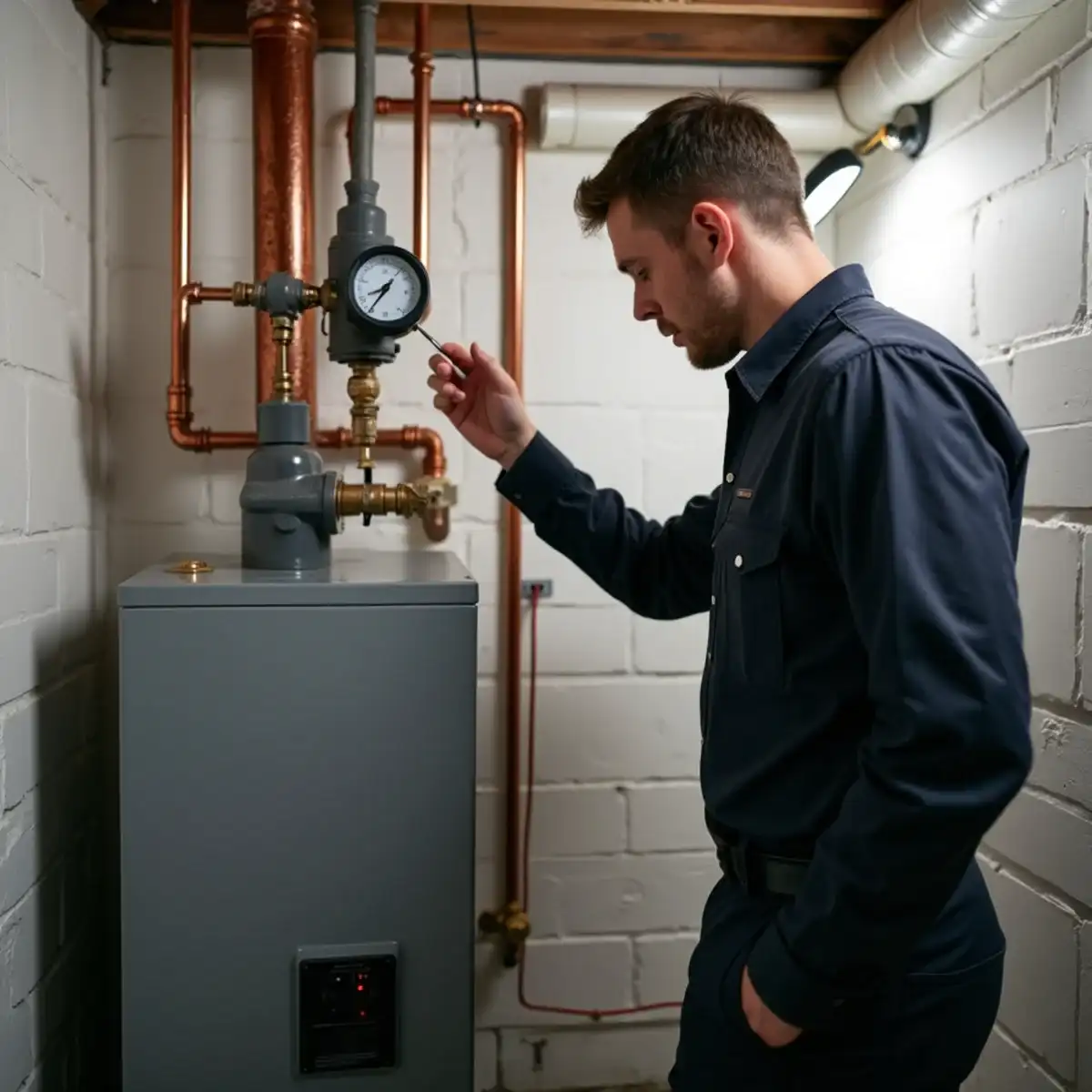
Hot water boiler repair in Pittsburgh covers the pumps, tanks and valves that move heated water to your radiators and baseboard, and a call to (321) 478-0693 reaches us at any hour. We send a local technician who works on hydronic systems, from a seized circulator to a relief valve dripping on the basement floor.
Hot-water heat is the other half of the city's boiler stock. Many systems began as gravity hot water with huge pipes and an open tank in the attic, and were later converted to a pump and a closed tank. Others are newer boilers feeding fin-tube baseboard. Each has its own weak points, and most failures show up as one of three things: no heat moving, pressure that will not hold, or a burner that will not stay lit.
Signs a hot water boiler needs repair
- The boiler is hot but the radiators or baseboard stay cold.
- Baseboard heat not working in one zone while the others heat normally.
- The gauge climbs toward 30 psi when the boiler runs, or you find the relief valve leaking onto the floor.
- The pressure keeps dropping and the boiler needs water, a sign of a boiler losing pressure through a leak.
- Rumbling, popping or a teakettle sound from the boiler, known as boiler kettling.
- Gurgling in pipes and radiators that need bleeding again and again.
- The burner will not light, lights and drops out, or the boiler locks out.
What the technician checks and fixes on a hot-water call
Most hydronic faults show up on the gauge or in the pipes around the boiler. A repair visit covers:
- Pressure noted with the system cool and again at operating temperature, since the gap between the two points to the tank or the fill valve.
- The expansion tank tested properly: a diaphragm tank isolated and its air charge read with the water side drained, or a steel compression tank checked for its water level.
- The fill valve's set pressure and strainer, and whether it lets city pressure creep in while the boiler is cold.
- Power at the circulator relay, then the temperature difference between supply and return pipes to confirm water is really moving.
- Each zone run on its own, with zone valve heads, end switches and valve bodies checked one at a time.
- Air purged zone by zone, and the air separator and its vent checked so the air does not come straight back.
- The burner sequence watched from the call for heat to a steady flame, with any error code read and the aquastat limits confirmed.
- A combustion reading after any burner, ignition or gas valve repair.
- The relief valve and its discharge pipe checked, and the valve replaced only once the cause of any discharge is fixed.
How a hot water boiler repair is worked through
- 1
Read the gauge before touching anything
The technician notes the pressure and temperature, asks whether the relief valve has discharged and checks whether the thermostat is calling. Those three facts usually say whether the problem is pressure, flow or the burner.
- 2
Find out whether water is moving
With the boiler firing, the supply and return pipes are compared by touch or thermometer. A hot supply and a cold return means no flow, so the circulator, its relay, the zone valves and any closed isolation valve are checked next.
- 3
Test the tank and the fill valve
If pressure is the complaint, the expansion tank's air charge is checked against the fill pressure, and the fill valve is watched with the boiler cold to see whether it is leaking city pressure through.
- 4
Watch the burner light
For a boiler that will not fire or stay lit, the technician follows the ignition sequence step by step: thermostat call, draft proving, ignitor or pilot, gas valve and flame signal, until the step that fails shows itself.
- 5
Price, repair, purge and retest
You approve the price before work begins. After the repair, the loop is refilled and purged zone by zone, each zone is run, and the pressure is checked hot and cold again so you know what normal looks like on your gauge.
No circulation: circulator pumps, zone valves and air-bound loops
A hot-water system needs a pump to push water through the loop. Modern circulators are sealed wet-rotor units, and the common failure is a seized impeller after a summer idle, a burnt winding or a bad capacitor. Older systems may have a three-piece pump with a separate motor, coupler and bearing assembly, where a broken coupler spring or dry bearing stops the flow while the motor still hums. Circulator pump replacement is a common repair, but the technician confirms the pump is actually getting power from the relay or control before condemning it.
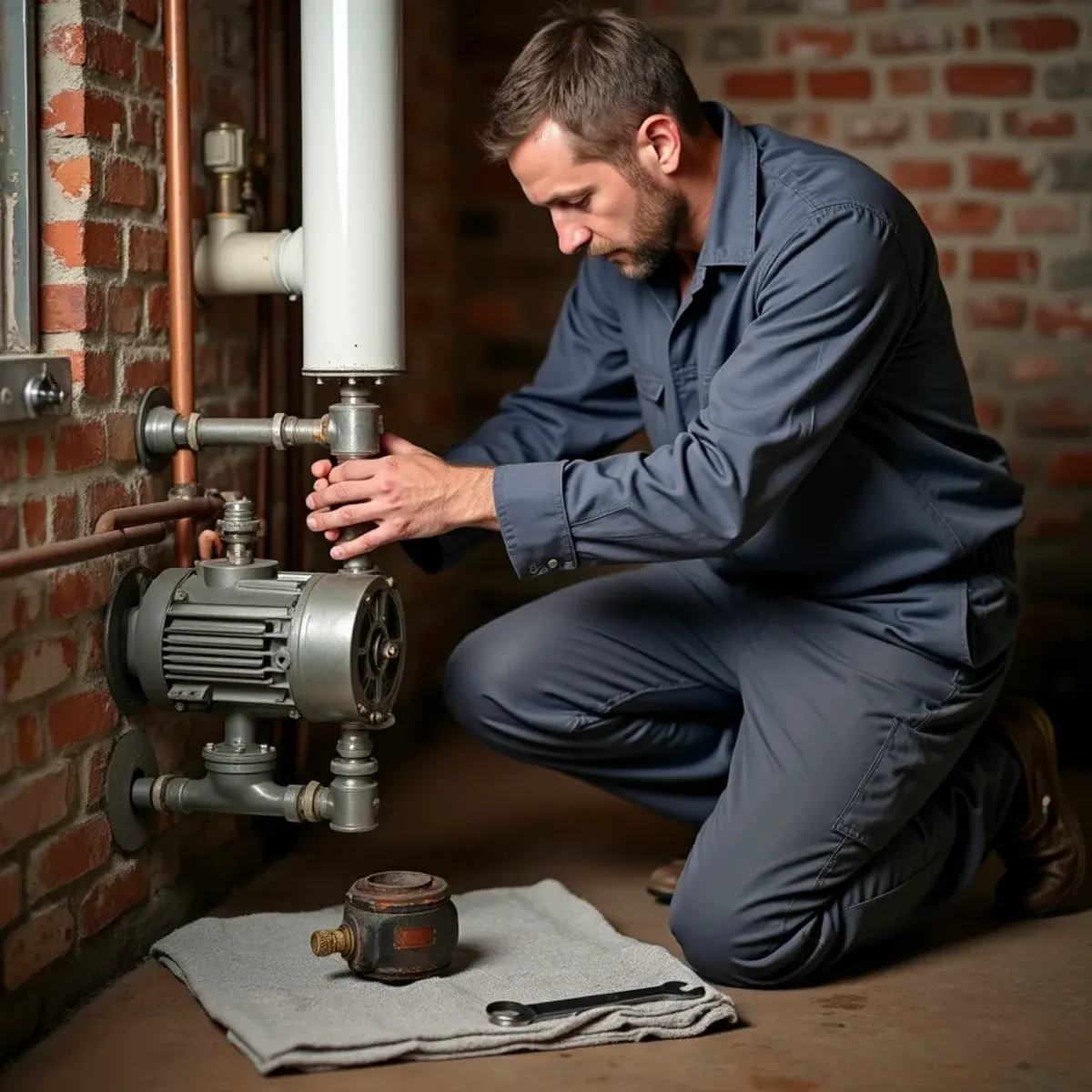
Zoned systems use motorized zone valves or separate pumps. A zone valve head can burn out, or the valve can stick shut while the head runs. Many heads have an end switch that tells the boiler to fire, so a failed switch can leave the whole house cold. Zone valve repair often means a new head; a seized valve body needs the zone drained.
Air is the third cause. An air-bound loop stops flow as surely as a dead pump, usually after a drain-down or when the air separator stops working. The fix is purging zone by zone through the purge valves, then checking that the separator and its vent work.
Pressure too high or too low: expansion tanks, fill valves and relief valves
A residential hot-water boiler typically reads about 12 to 15 psi cold and roughly 15 to 25 psi hot, and its relief valve is usually rated at 30 psi. Three parts keep it in that range.
The expansion tank
Water expands as it heats, and the tank gives it room. A diaphragm tank holds an air charge behind a rubber membrane, set to match the fill pressure. When the membrane fails, the tank waterlogs and pressure spikes every time the boiler fires. Many older houses instead have a steel compression tank hung between the joists in the basement ceiling, or occasionally in the attic, that relies on a pocket of air above the water. These lose their cushion slowly and need to be drained to restore it. An automatic air vent piped near a compression tank bleeds that cushion away, which is a common mistake. Expansion tank replacement or recharging follows from what the technician finds.
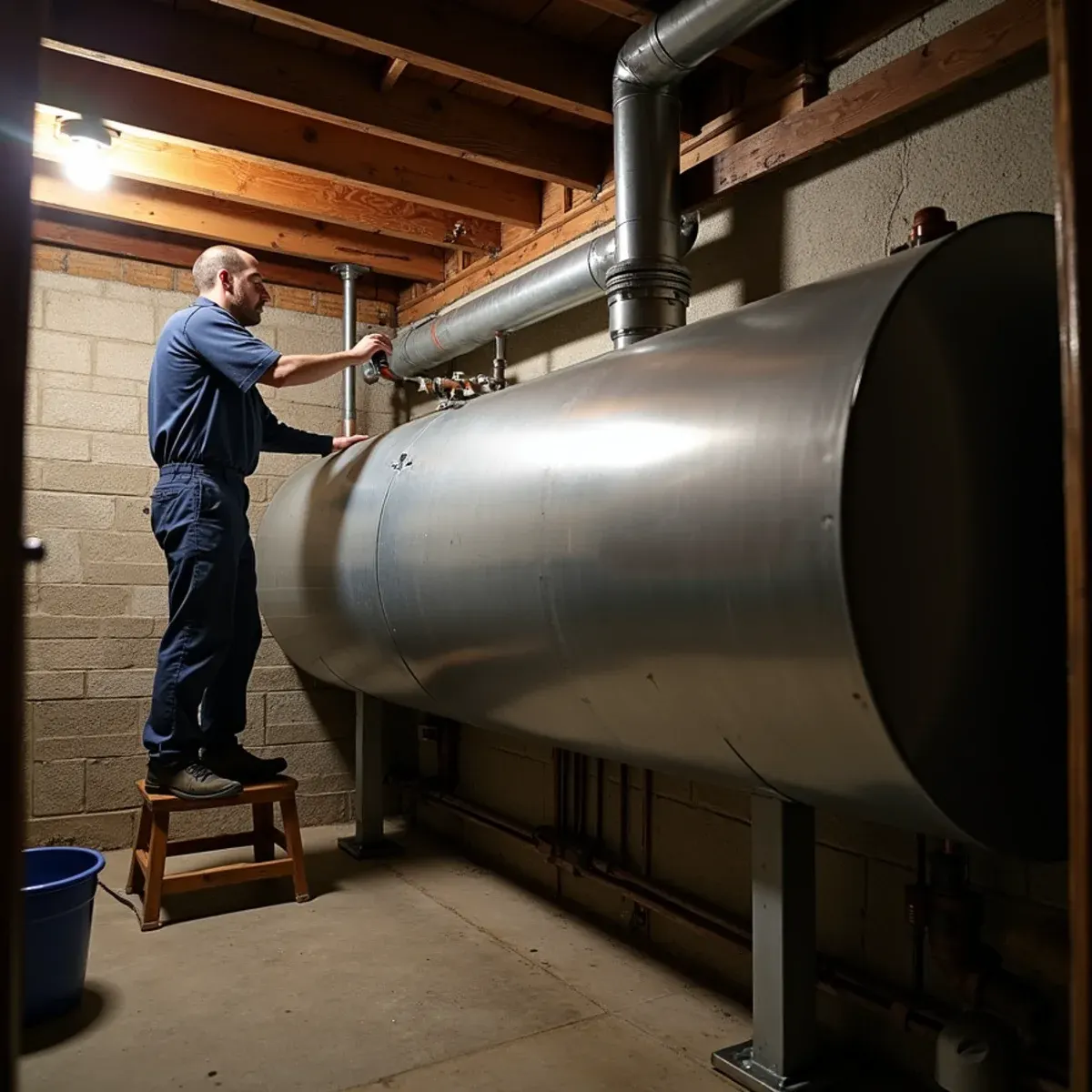
The fill valve and the relief valve
The fill valve, a pressure-reducing valve on the city water line, keeps the system topped up at its set pressure. If it leaks through, pressure creeps up even when the boiler is cold. If its strainer clogs, a system with a small leak loses pressure. The 30 psi relief valve opens when pressure goes too high and should never be capped or plugged. Once a relief valve has discharged a few times, its seat often stays weepy and the valve is replaced, but only after the cause is fixed.
| What the gauge does | Usual cause | What the technician checks |
|---|---|---|
| Rises sharply when hot, drops when cold | Waterlogged expansion tank | Tank air charge or compression tank water level |
| Creeps up even when cold | Fill valve leaking through | Fill valve and backflow preventer |
| Drops steadily, needs refilling | Leak in boiler or piping | Visible leaks, relief valve, buried or hidden pipe |
| Relief valve drips at normal pressure | Worn or dirty valve seat | Valve age and discharge history |
Burner and ignition faults: pilots, ignitors, flame sensors and gas valves
Older boilers use a standing pilot and thermocouple; newer ones use an intermittent pilot or a hot-surface ignitor with a flame sensor. Typical faults are a weak thermocouple, a cracked ignitor, a dirty flame sensor that drops the flame after a few seconds, a failed gas valve or a draft switch that trips on a blocked flue. The aquastat is part of this picture too: it sets the high limit for water temperature, and on boilers with a tankless coil for domestic hot water it holds a low limit as well. A failed aquastat can stop the burner or the circulator, or let the boiler run too hot.
Our checklist for a boiler not firing lists what a homeowner can safely look at first, such as the thermostat, the emergency switch and the breaker.
Gas smell or CO alarm
If you smell gas or a carbon monoxide alarm sounds, leave the house and call 911 or your gas utility from outside first. Do not try to relight the boiler. If the boiler simply locks out, reset it once at most; repeated resets can hide a dangerous fault.
Leaks at the boiler, the relief valve and old piping
Water on the basement floor usually has a simple source: the relief valve discharge pipe, a circulator flange gasket, a weeping drain valve or a leaking fill valve. Harder cases are pinholes in old steel pipe, fittings buried in plaster walls, or a cracked boiler section, which often shows as rust streaks under the jacket. Small hidden leaks matter because every gallon of fresh water brings oxygen and minerals that corrode the system and coat the heat exchanger with scale, and that scale is a common cause of kettling.
Converted gravity systems and big cast iron radiators in older Pittsburgh homes
Gravity hot water moved by convection alone, through large mains and tall cast iron radiators, with an open expansion tank in the attic. Most were converted to a circulator and a closed tank decades ago, but they still hold a large volume of water, and the old open tank or its piping is sometimes still up there. Conversions bring their own faults: a pump sized wrong for the big pipes, old sludge settling in the boiler, and air trapped in mains that were designed to vent through the attic tank.
These systems are common in the 1920s and 1930s houses covered on our Mt. Lebanon boiler and radiator service page, and in Squirrel Hill, Greenfield and Beechview. Large radiators are good news for a condensing boiler, which needs return water below roughly 130 degrees to condense and run at full efficiency. Big cast iron heats a room on cooler water, especially with outdoor reset. The catch is dirty water: condensing heat exchangers need a dirt separator and usually separate boiler and system piping. If the boiler itself is near its end, see our page on boiler replacement.
Baseboard and radiant zones: uneven heat and balancing
Fin-tube baseboard heats fast and cools fast. When one room lags, the cause is often air at a high point, a series loop that is simply too long, fins crushed by furniture, or dampers closed on the covers. Radiant floor zones run at lower temperatures through a mixing valve, and a stuck mixing valve shows up as a cool floor while the rest of the house is fine. Hydronic heating repair on mixed systems means balancing radiators, baseboard and radiant so each zone gets the water and temperature it needs. Individual radiator problems, such as bleeders and valves, are covered on our radiator repair page.
What affects the price of a hot water boiler repair
The same symptom can hide very different jobs: a dripping relief valve might need only a tank recharge, or a fill valve, tank and relief valve together. What moves the price:
- The part that failed. Purging air or recharging a tank is lighter work than a circulator, a zone valve body, a gas valve or a control board.
- Draining and refilling. A repair that opens the loop means draining, refilling and purging. Converted gravity systems hold far more water than modern baseboard, so that step takes longer.
- Valves that no longer close. Missing or leaking isolation valves around the pump may need adding or replacing so the whole house is not drained.
- Tank type. Swapping a diaphragm tank is simpler than draining and resetting an old steel compression tank, or converting it.
- Finding the leak. A circulator flange is easy to see. A pinhole inside a plaster wall or under a floor takes time to locate.
- Condensing boilers. Ignitors, sensors and boards are often specific to the brand and model.
- When you call: nights, weekends and holidays can be priced differently.
You hear the diagnosis and the price before work starts, and nothing is done until you approve it. Our guide to hot water and steam boiler repair costs in Pittsburgh lists published local ranges for the common parts.
Annual hot water boiler service: what is tested
- Cold and hot pressure readings, and the expansion tank charge or compression tank level.
- The fill valve and backflow preventer.
- The relief valve and its discharge pipe.
- Circulators, zone valves, end switches and relays.
- Burner, ignition, flame signal, draft and flue connection, plus a combustion check.
- Aquastat limits, and condensate trap and neutralizer on condensing boilers.
- Air separator and vents, with purging where needed.
The boiler maintenance checklist for Pittsburgh homes goes through each item. Hydronic calls come in from across the city and the Pittsburgh-area boroughs we cover, including the converted apartment houses served by our Wilkinsburg hot water and steam boiler repair page and the brick duplexes on our Dormont boiler repair page. Every HVAC technician we send is licensed where Pennsylvania requires it, and insured, and you approve the price before work begins.
Why hot-water heat owners call this number
The tank and fill valve are tested before the relief valve is blamed
A dripping relief valve is usually reporting a pressure fault, not causing one. The technician we send tests the tank charge and the fill valve first, so a new relief valve does not go on over an unsolved problem.
Gravity conversions are familiar ground
Pumped systems that began as gravity hot water hide trapped air in big mains, pumps sized wrong and old attic tanks still piped in. The technician looks for those leftovers before deciding what has failed.
Flow is measured, not guessed
The temperature difference across the boiler shows whether water is circulating. That keeps a working circulator from being replaced when the real fault is an air-bound zone or a valve someone left closed.
A person answers when the gauge climbs at night
Pressure creeping toward 30 psi after dark gets a live answer. The dispatcher asks for the hot and cold readings and whether the relief valve is discharging, then sends the nearest available technician.
Hot Water Boiler Repair across Pittsburgh and nearby boroughs
Hot-water heat is common in Highland Park and the rest of the East End, where many houses started on gravity systems. South of the city, hot water boiler repair in Brentwood starts by sorting systems: the borough's 1920s brick houses carry hot-water and steam radiators, while later streets toward Baldwin and Whitehall are mostly forced air. Toward Regent Square and Edgewood, Swissvale hot water boiler service calls bring the same circulators, tanks and dripping relief valves.
Hot Water Boiler Repair: common questions
Why is my boiler relief valve dripping?
A dripping relief valve usually means system pressure is reaching about 30 psi, its rated limit. The two common causes are a waterlogged expansion tank, which lets pressure spike when the boiler heats, and a fill valve leaking city pressure into the system. Less often, the valve seat is worn or dirty and drips at normal pressure. Never cap or plug a relief valve. Put a bucket under the discharge pipe and have the pressure checked hot and cold.
The boiler is hot but the radiators are cold. What is wrong?
Hot water is not moving. The usual causes are a seized or failed circulator, a zone valve stuck closed, an air-bound loop after draining or a failed air separator, or a pump relay that is not powering the circulator. A closed isolation valve left from earlier work can do it too. The technician checks whether the circulator runs and whether water is flowing past it before replacing anything.
What pressure should a hot water boiler show?
Typically about 12 to 15 psi when the system is cold and roughly 15 to 25 psi when it is hot, with the relief valve rated at 30 psi. A taller house may be set slightly higher so water reaches the top radiators. If the gauge climbs close to 30 when hot, the expansion tank is the first suspect. If it slowly falls and needs refilling, look for a leak.
How long does a circulator pump last?
Many circulator pumps last around ten to fifteen years, and some run much longer. Dirty water, air in the system, and long idle summers shorten that, because the impeller can seize after months without moving. Older three-piece pumps with a separate motor and coupler can run for decades with occasional coupler and bearing replacement. A pump that is noisy, hot to the touch or slow to start in fall is worth having checked.
How do I know if my boiler expansion tank is bad?
The gauge usually tells you first. If pressure climbs sharply as the boiler heats, from a normal cold reading toward 30 psi, and drops back as it cools, the tank has probably lost its air cushion. On a diaphragm tank, with the boiler cool, a quick press on the air valve at the end is a rough check: water there means the diaphragm has failed. A proper test isolates the tank and drains its water side so the air charge can be read and matched to the fill pressure.
Is boiler kettling dangerous?
No, not right away, but it is a warning to act on. Kettling is water flashing to steam on hot spots inside the heat exchanger, usually because scale has built up or water is moving too slowly through the boiler. It stresses the metal, wastes fuel and can trip the high limit, and left alone it shortens the boiler's life. The technician checks flow through the boiler first, since a weak circulator or a closed valve is a simpler fix than descaling, then looks at water quality.