For heat pump repair in Pittsburgh, call (321) 478-0693 and we will send a local technician to diagnose a ductless mini-split or central heat pump that has stopped heating, iced over, started leaking water or is flashing an error code.
Most heat pumps in this city are ductless. Rowhouses, foursquares and big pre-war houses were built around radiators with no ductwork, so wall-mounted mini-split heads became the usual way to add cooling, and many owners now use them for heat in spring and fall too. The same equipment works hard in July and again in a January cold snap.
Heat pump problems we repair
- Heat pump not heating, or running nonstop without keeping up.
- Heat pump blowing cold air for longer than a short defrost pause.
- Heat pump frozen solid, with ice that does not clear between defrosts.
- Mini-split leaking water from the indoor head down the wall.
- Error codes and blinking lights on a head or the outdoor board.
- Auxiliary heat running constantly on a central system, usually with a jump in the electric bill.
When you call, tell us whether the system is ductless or central, the brand and model from the outdoor unit, and any code on the display. Travel depends on the tunnels and bridges between the technician and your street, so we do not promise an arrival time.
What a heat pump repair visit covers
Whether it is one wall head in a bedroom or a central system with an air handler, the technician we send works through the same core checks before naming a part.
- Error codes read and recorded from the indoor head and the outdoor board, and matched to the manufacturer's code list before anything is reset.
- Airflow at every head: filters, the indoor coil and the blower wheel inspected for dust, mold and debris that choke output.
- The outdoor unit itself: coil, fan blade, base pan and drain path, plus clearance from snow, gutters and dryer vents.
- Electrical tests: voltage at the disconnect, capacitors and contactors, fan motors and the signal wire between the indoor and outdoor units.
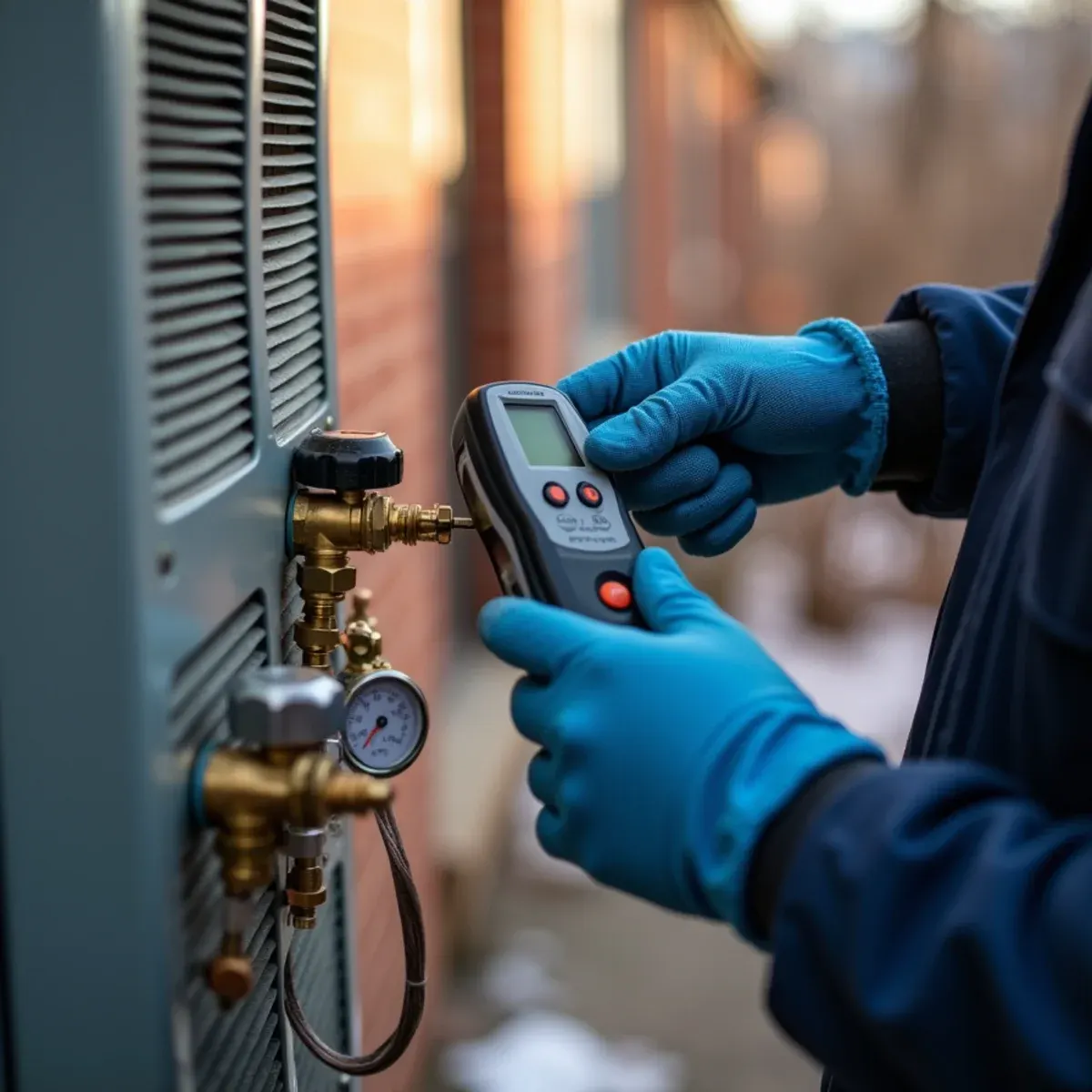
- Refrigerant readings of pressure, superheat and subcooling compared against the manufacturer's data, with a leak search whenever the charge reads low.
- Defrost and reversing checks: coil and outdoor temperature sensors, the defrost control and the reversing valve coil, confirmed by watching the unit switch over.
- Condensate drain and pump flushed and tested with water poured into the drain pan, so a ceiling stain does not reappear next July.
- On central systems, the auxiliary heat strips and the thermostat's staging, so backup heat runs only when it should.
- The refrigerant type and the unit's age noted for you, with a straight word on whether repair still makes sense.
How a heat pump service call unfolds
- 1
Settings and symptoms before tools
The technician confirms the mode on the remote or thermostat, the setpoint and any schedule, then records the error code and asks when the trouble started: after a storm, a cold snap, a power outage or a long idle summer.
- 2
Outside, at the condenser
Ice, snow, a dripping gutter or a blocked base pan are ruled in or out first. Then the fan, coil and electrical parts are checked, and the unit is watched through start-up to see whether the compressor and fan actually come on.
- 3
Gauges and temperature readings
With the system running in heat, pressures and line temperatures show whether the refrigerant charge, metering and compressor are behaving. If the numbers point to a leak, the technician searches the flare fittings, service valves and coil before refrigerant is discussed.
- 4
Indoor heads and controls
Each head is checked for airflow, sensor readings and the drain. On a multi-zone system, the technician confirms each head communicates with the outdoor unit, since one bad board or wire can make several rooms misbehave.
- 5
A diagnosis and a price to approve
You hear which part failed, what the repair involves and its price, before any work starts. If the unit is an R-22 system or the compressor is failing, the repair-or-replace choice is explained plainly rather than buried in the quote.
- 6
Repair, then a defrost and output check
After the repair, the technician measures the warm air leaving each head and, in cold weather, watches the unit through or into a defrost cycle where conditions allow. A leak repair is pressure tested and evacuated before the charge goes back.
Not heating in cold weather: defrost faults, low refrigerant and failed reversing valves
A heat pump collects heat from outdoor air, and even at 20°F there is heat to collect. The outdoor coil runs colder than the air around it, though, so frost forms on it. How the system clears that frost, and whether it has the refrigerant to work, decides whether the rooms stay warm.
Defrost problems
The unit periodically reverses for a few minutes to melt frost off the outdoor coil. When a defrost sensor, the defrost control or the outdoor temperature sensor fails, it either never defrosts and ices over, or defrosts over and over and delivers little heat in between.
Low refrigerant means a leak
Refrigerant is not used up like fuel. A system that is low has a refrigerant leak, and topping it off without finding it only buys time. The technician reads pressures and temperatures, then finds the leak with an electronic detector, bubble solution or a nitrogen pressure test. On mini-splits, flare fittings and outdoor service valves are the usual suspects. The fix is repair, vacuum, and a charge to the manufacturer's specification.
Reversing valve failures
The reversing valve switches between heating and cooling. If its solenoid coil burns out or the valve sticks partway, the system may blow cold air in heat mode. A coil is a simple electrical repair. A failed valve body has to be brazed out after the refrigerant is recovered.
Auxiliary heat on central heat pumps
Central systems carry electric heat strips in the air handler. They should run during defrost and on the coldest nights, and the thermostat shows AUX when they do. If auxiliary heat runs all day in mild weather, the heat pump itself has probably stopped doing its share, and the electric bill will show it. Emergency heat mode forces the strips alone and is meant for a breakdown, not everyday use.
Ductless mini-split repair: leaks, drain clogs, communication errors and dirty coils
Water dripping from the indoor head
A mini-split leaking water almost always has a drainage problem, and it happens in cooling season, when the indoor coil pulls moisture from the air. The drain line clogs with algae, kinks inside the wall or loses its slope. Heads on interior walls often depend on a small condensate pump, and when it fails the water spills out of the head. In heat mode the indoor head stays dry and the outdoor unit sheds the water.
Communication error codes
Indoor and outdoor units talk over a signal wire in the line set. A loose terminal, a damaged cable, a voltage problem after a storm or a failing board breaks that link, and the head blinks or shows a code. Write the code down before you cut power, since some systems clear it on restart.
Dirty filters, coils and blower wheels
Mini-split filters clog quickly in daily use, cutting airflow and output, so rinse them every few weeks. Dust and mold on the coil and blower wheel behind them need a proper cleaning, and leaves or cottonwood can choke the outdoor coil.
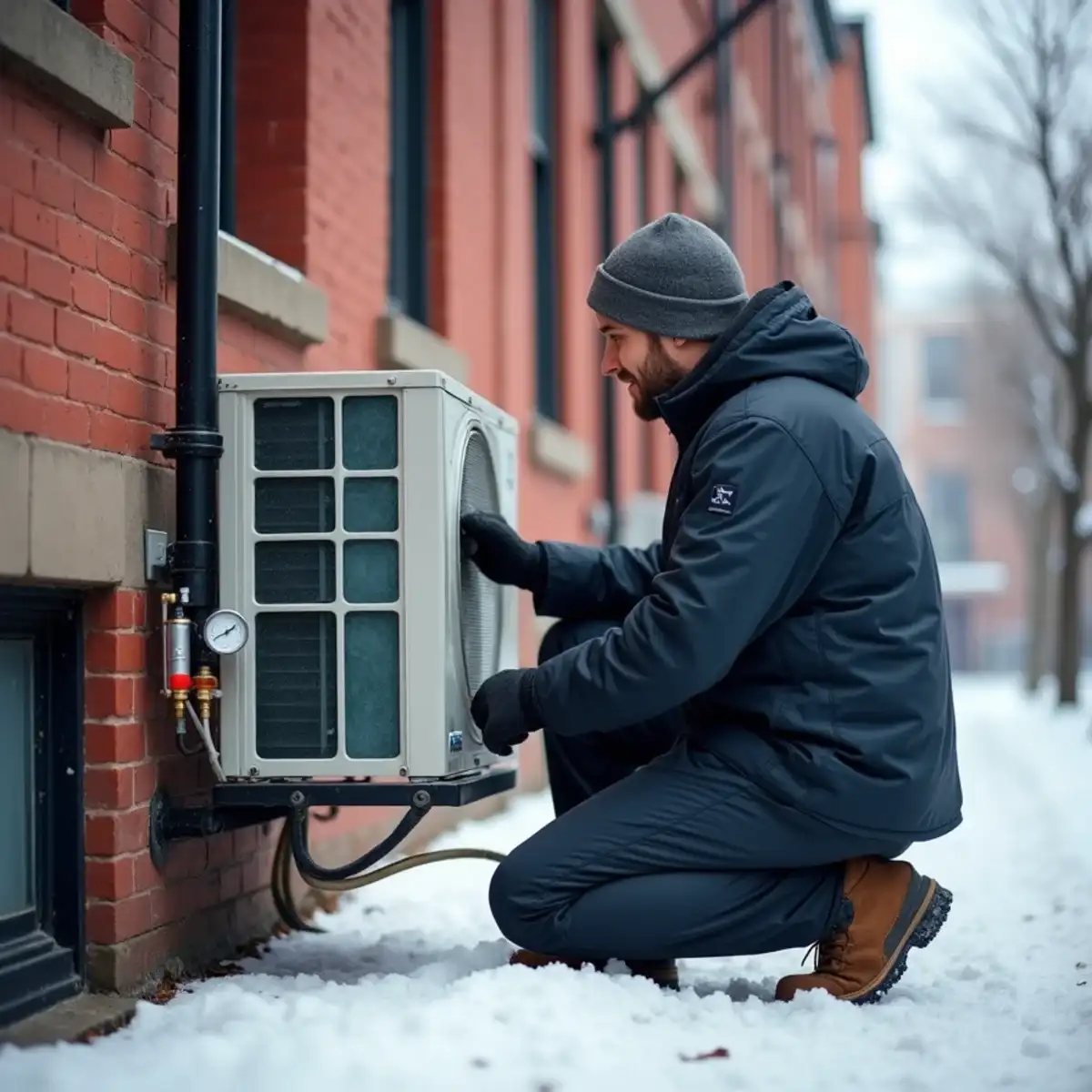
Iced-over outdoor units: what is normal and what is not
| Normal | Not normal |
|---|---|
| Thin, even frost on the coil in damp weather from the teens into the low 40s | Thick ice encasing the coil that is still there after a defrost cycle |
| A steam cloud off the unit during defrost, outdoor fan stopped, a whoosh as the valve switches | Ice building on top of the unit or the fan grille, often from a dripping gutter |
| Indoor heat pausing, or a brief puff of cool air from a central system, for a few minutes | A fan blade striking ice, or a unit buried in snow or frozen into meltwater |
| Water and a little ice under the unit afterward | Frost that returns within minutes, or ice on only part of the coil, which can mean low refrigerant |
If the unit is iced solid
Switch the system off and do not chip at the ice. The fins and tubes tear easily, and a punctured coil turns an ice problem into a refrigerant leak. Clear snow from the base, check for a dripping gutter, and call. Units on a stand or wall bracket above the snow line ice up far less often.
Heat pumps in radiator homes: how the boiler and the mini-splits share the work
Most Pittsburgh homes with mini-splits still have a boiler, and the pairing works when each does what it is good at. Mini-splits heat efficiently in mild weather. The boiler and cast iron radiators carry the house through the coldest weeks, when even a cold-climate heat pump loses capacity.
- In spring and fall, set the boiler thermostat a few degrees below the mini-splits so the heat pump runs first.
- In a hard freeze, let the boiler lead. Rooms without a head, bathrooms and pipes in outside walls depend on radiator heat.
- Keep the boiler serviced every fall even if the heat pump does most of the work, using our annual boiler service checklist.
- If some rooms stay cold once the boiler takes over, look at the radiators, not the heat pump. Read why one radiator stays cold or see our radiator repair service.
On a hot-water system, outdoor reset can run the boiler cooler while the heat pump carries part of the load; our hot water boiler repair page covers those controls, and boiler replacement covers pairing a new boiler with existing mini-splits. The setup is common from ductless heat pumps in Dormont duplexes to 1920s homes needing heat pump and boiler service in Mt. Lebanon and converted houses behind boiler and heat pump calls in Wilkinsburg. See all our Pittsburgh service areas.
Repair or replace: compressor age and refrigerant type
Sensors, capacitors, fan motors, condensate pumps, boards and fitting leaks are usually worth repairing. The hard calls involve the compressor and the refrigerant.
- Compressor age. Heat pumps are commonly expected to last around 10 to 15 years, often longer for well-kept ductless systems. A dead compressor near the end of that range usually means replacement.
- R-22. Not produced or imported in the United States since 2020, so only recovered and reclaimed supply remains, at a high price. An R-22 system with a major leak or failed compressor is almost always a replacement candidate.
- R-410A. Still available for servicing existing equipment and used in most systems from roughly the last 15 years. Under the federal HFC phasedown, new equipment has moved on, and R-410A may cost more over time.
- R-454B and R-32. Most new residential systems now use these lower-impact refrigerants, which need different tools and handling. Refrigerants are never mixed or swapped into a system built for another.
- Cold-climate models are built to keep delivering useful heat at 5°F and below, a real upgrade over an older unit that quits below freezing.
What affects the cost of a heat pump repair
The technician diagnoses the system and gives you a price before work starts. What moves it:
- Ductless or central, and how many heads a multi-zone unit feeds.
- The part: a capacitor or sensor is small, a reversing valve or compressor is major.
- Refrigerant work: leak search, repair, evacuation, and the refrigerant type and amount.
- Access: a head high over a stairwell, or an outdoor unit on a roof or rowhouse back porch.
- Parts availability for the brand and model.
- Timing: nights, weekends and the first cold snap are the busiest stretches.
Why radiator-home owners call us about their heat pumps
The boiler and the heads are judged together
In a house heated by both, a cold room can be a mini-split fault or a radiator that never came on. The dispatcher asks which system is meant to heat that room, so the right fix is planned before anyone arrives.
Leaks found, not topped off
Adding refrigerant to a leaking system and leaving is the quickest way to pay for the same call twice. The technicians we send locate the leak, repair it and charge to the manufacturer's specification, with the price agreed first.
Your model number shapes the dispatch
Parts and error codes vary widely between ductless brands. Giving the dispatcher the data-plate details from the outdoor unit lets us send a technician who knows that equipment, and lets you hear early if the part has to be ordered.
Answered in heat waves and cold snaps
A heat pump in a radiator house is pushed hardest in July and again in a January freeze. The line is answered every hour of both seasons, and the person who picks up logs the code you read out for the technician.
Heat Pump and Mini-Split Repair across Pittsburgh and nearby boroughs
Ductless repair calls come from houses that never had ducts: brick rowhouses in Greenfield and Brookline, and Shadyside Victorians split into apartments with a head in each unit. Dormont's tight lots and shared walls push outdoor units onto brackets and back porches. Calls for mini-split repair in Swissvale come from radiator-era houses in a former rail-signal factory town above the Monongahela, where mini-splits were the usual cooling add-on.
Heat Pump and Mini-Split Repair: common questions
Why is my heat pump blowing cool air in winter?
Often the air is not cool, just cooler than a hot radiator. Heat pump supply air commonly runs somewhere around 85 to 100°F, which can feel lukewarm on your hand, and a few minutes of cool air during defrost is normal. If it blows truly cold air for long stretches, check that it is in heat mode and the outdoor unit is running. Beyond that, the usual causes are a refrigerant leak, a stuck reversing valve or a defrost fault.
Is it normal for the outdoor unit to be covered in frost?
Yes, light, even frost is normal in cold, damp weather, and the unit clears it with a defrost cycle every so often. During defrost the fan stops, steam rises off the coil, and heat pauses for a few minutes. Thick ice that stays after defrost, ice on top of the unit, or a fan hitting ice is not normal. Switch the system off, leave the ice alone, and call.
Do you repair every mini-split brand?
No, not every one, and we would rather say so up front. The technicians we send work on most major ductless and central heat pump brands, but parts availability varies, especially for less common imports and discontinued models. When you call, give us the brand and model number from the data plates on the outdoor unit and indoor head, so we can match a technician to that equipment or tell you plainly if we cannot help.
Can a heat pump heat a Pittsburgh home without the boiler as backup?
Yes, in some homes, but most pre-war houses here are better off keeping the boiler. A correctly sized cold-climate heat pump can carry a well-insulated house through most winters, though its output drops as temperatures fall toward zero. Ductless heads heat the rooms they face, so closed bedrooms, bathrooms and pipes in outside walls can run cold. A serviced boiler protects the house during an arctic outbreak or a January breakdown.
Why does my mini-split take a few minutes to blow warm air?
Because it is protecting you from a cold draft. In heat mode most ductless heads hold the indoor fan off, or at a crawl, until the indoor coil has warmed up, which usually takes a few minutes after start-up and again after each defrost. The louvers may open and the light come on while nothing seems to happen. If the head stays silent for much longer than that, or the outdoor unit never starts, check that the remote is set to heat rather than auto or dry, then note any blinking code and call.
Why does my heat pump keep turning on and off?
Short cycling usually comes from the system reaching its setpoint too fast or tripping a protection. An oversized unit, a clogged filter or coil, a thermostat or remote sitting in a draft or in direct sun, and a failing sensor are the common causes. Low refrigerant can trip a pressure safety and make it stop and restart. Inverter mini-splits should slow down rather than cycle hard, so frequent full stops are worth a look. Clean the filters first; if it continues, the technician checks sensors and refrigerant readings.