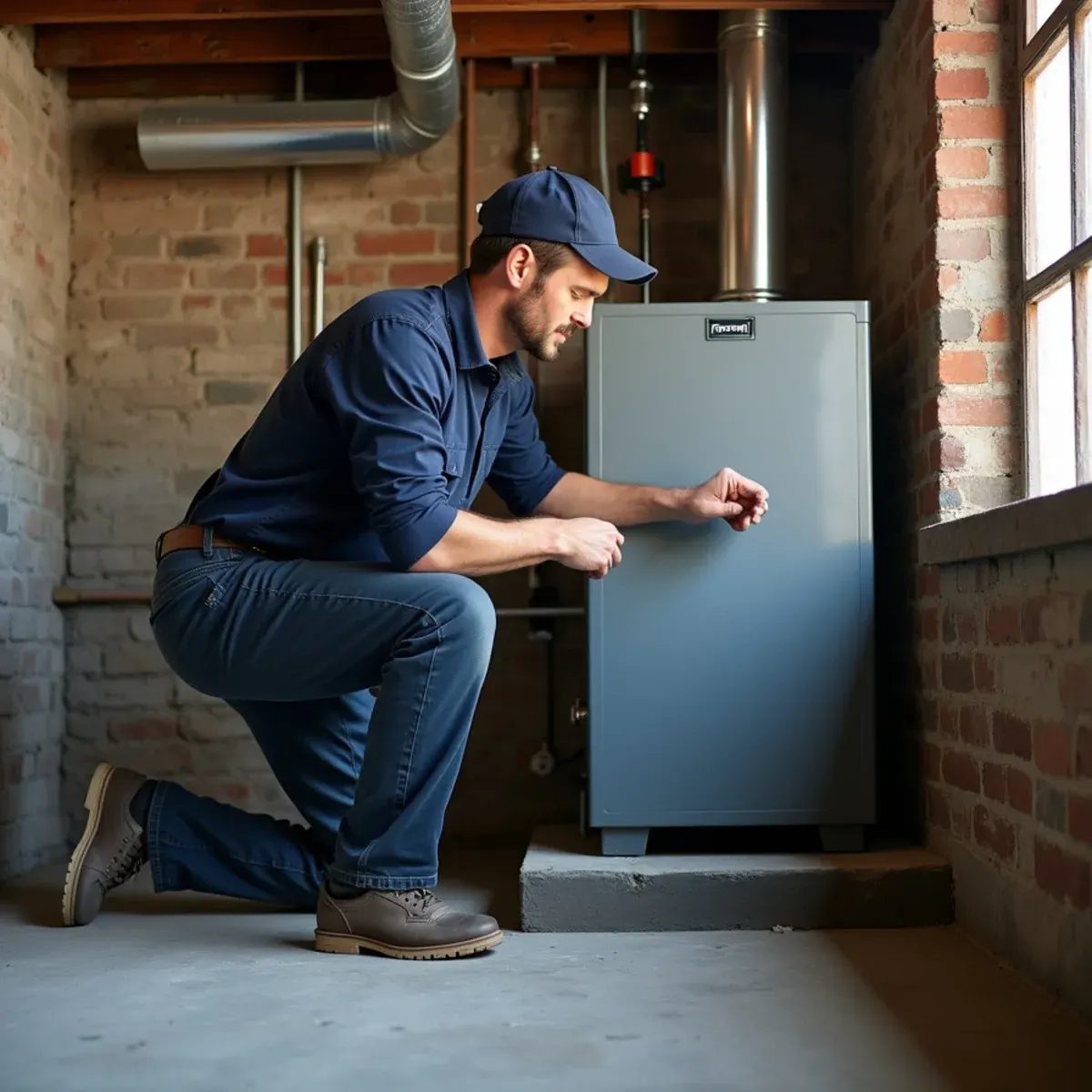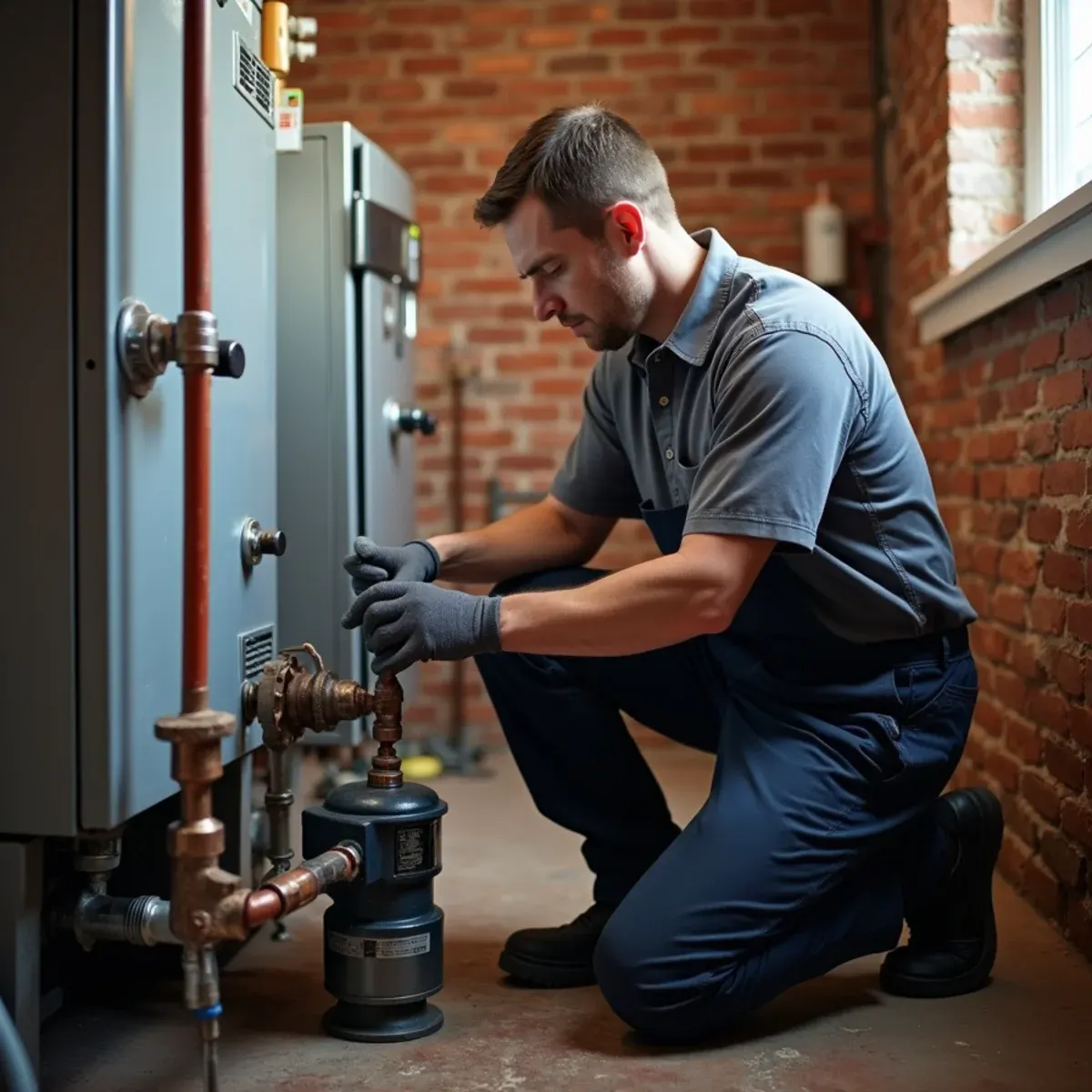
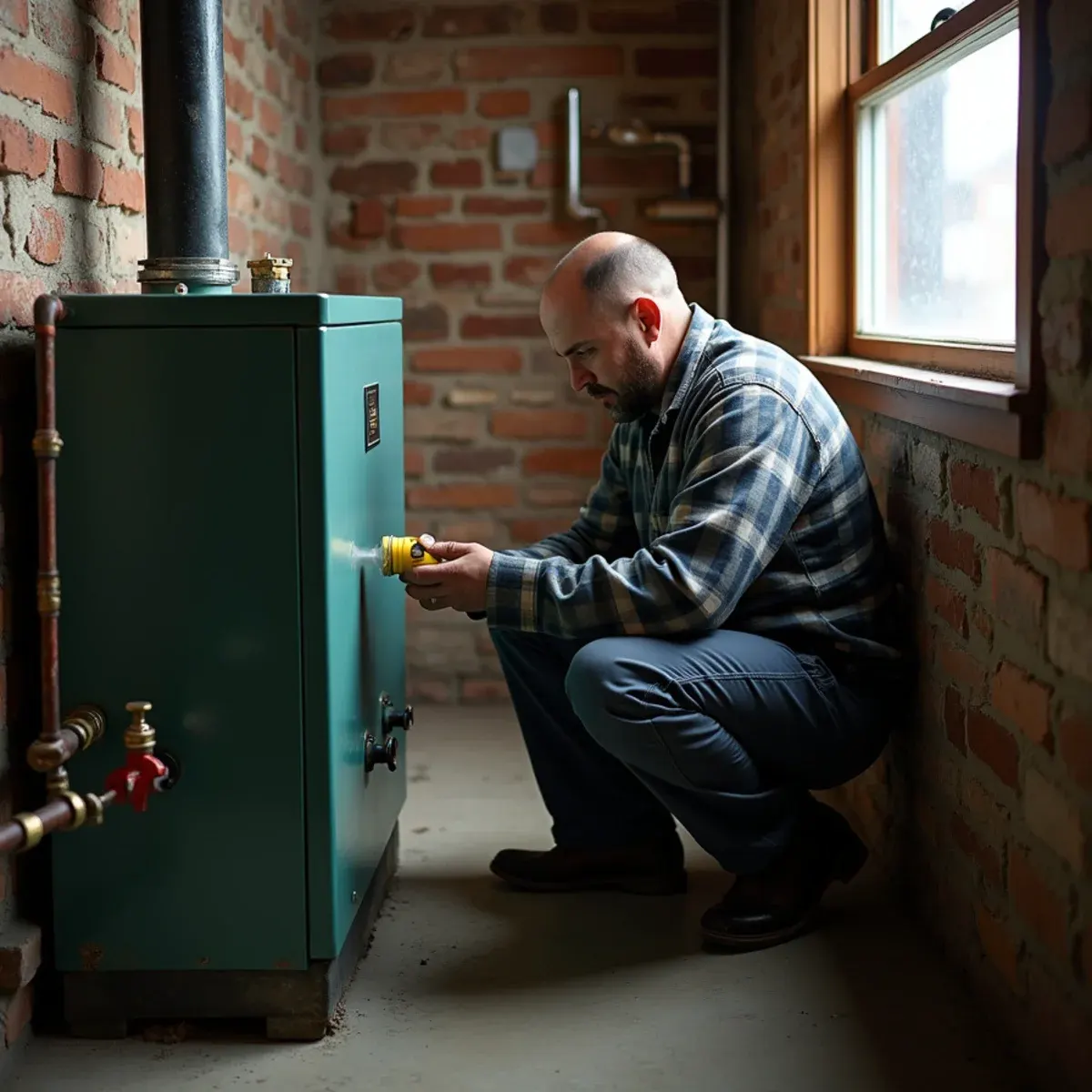
Short answer
A boiler that will not fire is usually missing a call for heat, power, gas or water, or a safety control has shut it down on purpose. Confirm the thermostat, the service switch and breaker, and the gas valve. Read the sight glass or pressure gauge, note any code, press reset once at most, then call.
If your boiler is not firing, check five things before you call: the thermostat is actually calling for heat, the boiler's service switch and breaker are on, the gas valve is open, the water level (steam) or pressure (hot water) is where it belongs, and whether a lockout light or error code is showing. Those checks take about ten minutes and solve a fair share of cold-morning calls. If none of them brings the burner on, stop there and call (321) 478-0693. We answer 24/7 and send a local boiler technician.
This list is written for the gas-fired steam and hot-water boilers that sit in thousands of Pittsburgh basements, from East End rowhouses to the big divided houses in Wilkinsburg. Work through it in order. Each step either finds the problem or rules out something the technician would otherwise check first.
Stop Here If You Smell Gas or a CO Alarm Sounds
Leave first, then call
If you smell gas or a carbon monoxide alarm is sounding, do not touch the boiler, light switches or the thermostat. Get everyone out of the house and call 911 or your gas utility from outside. A boiler service is never the first call for a suspected gas leak.
The same goes for scorch marks around the burner door, fresh soot on the boiler jacket, or water pouring onto the floor. Shut the boiler off at its service switch if you can do it safely, and call for emergency boiler repair.
Check 1: Is Anything Asking the Boiler for Heat?
A boiler that never starts is often a boiler that was never told to. Before you go to the basement, look at the thermostat.
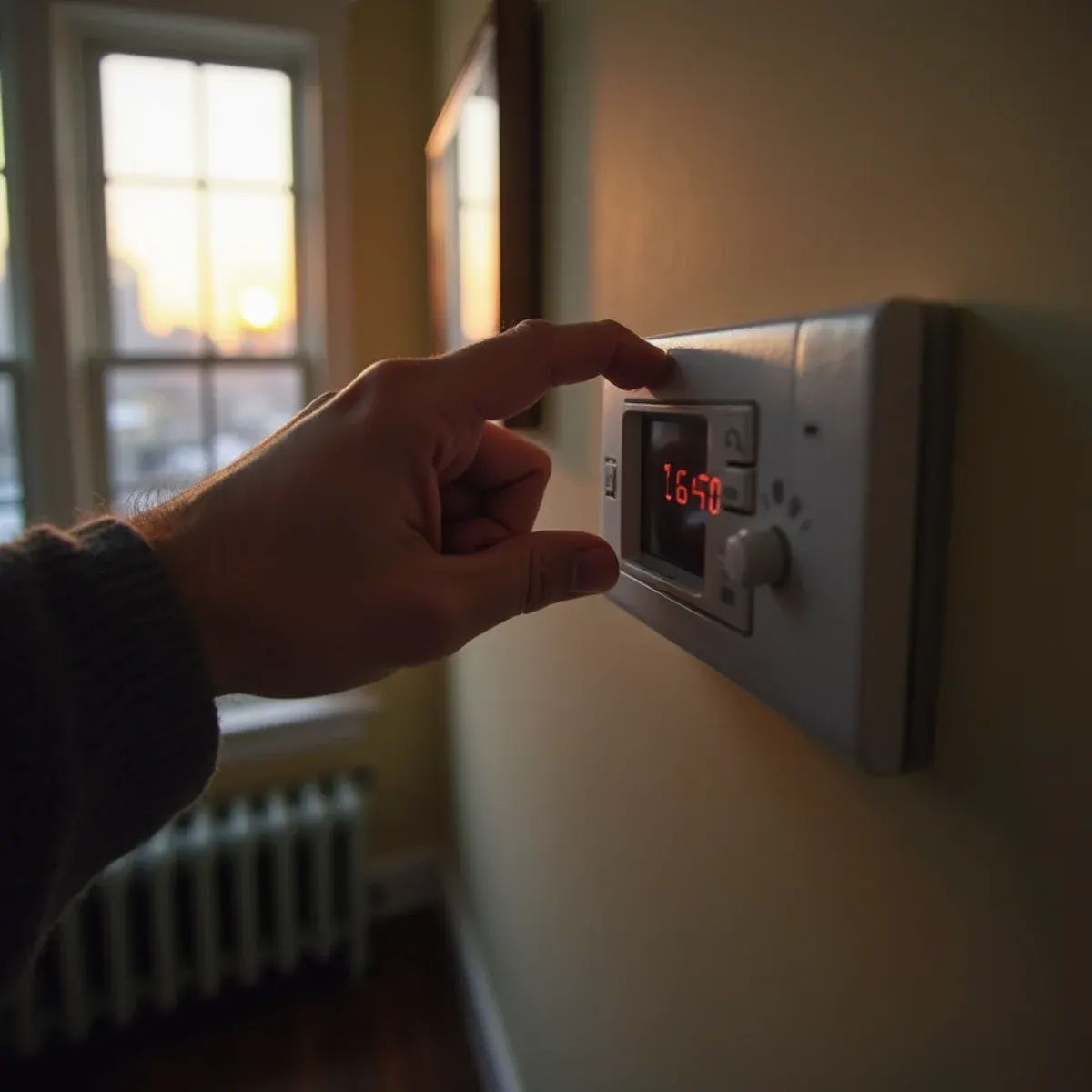
- The mode is set to Heat, not Off or Cool.
- The setpoint is at least three or four degrees above the room temperature.
- The screen is not blank. Many thermostats run on batteries and quit without warning.
- In a zoned hot-water house, check the thermostat for the cold zone, not the one in the hallway.
Turn the setpoint up and listen. Within a minute or two you should hear a click at the boiler, then a circulator hum on a hot-water system or the burner lighting. If you hear nothing at all, move on to power.
Check 2: Power at the Boiler
Every boiler needs electricity for its controls, even an old one with a standing pilot. Most Pittsburgh basements have a service switch near the boiler or at the top of the basement stairs. It looks exactly like a light switch, often with a red cover plate, and it gets flipped off by accident.
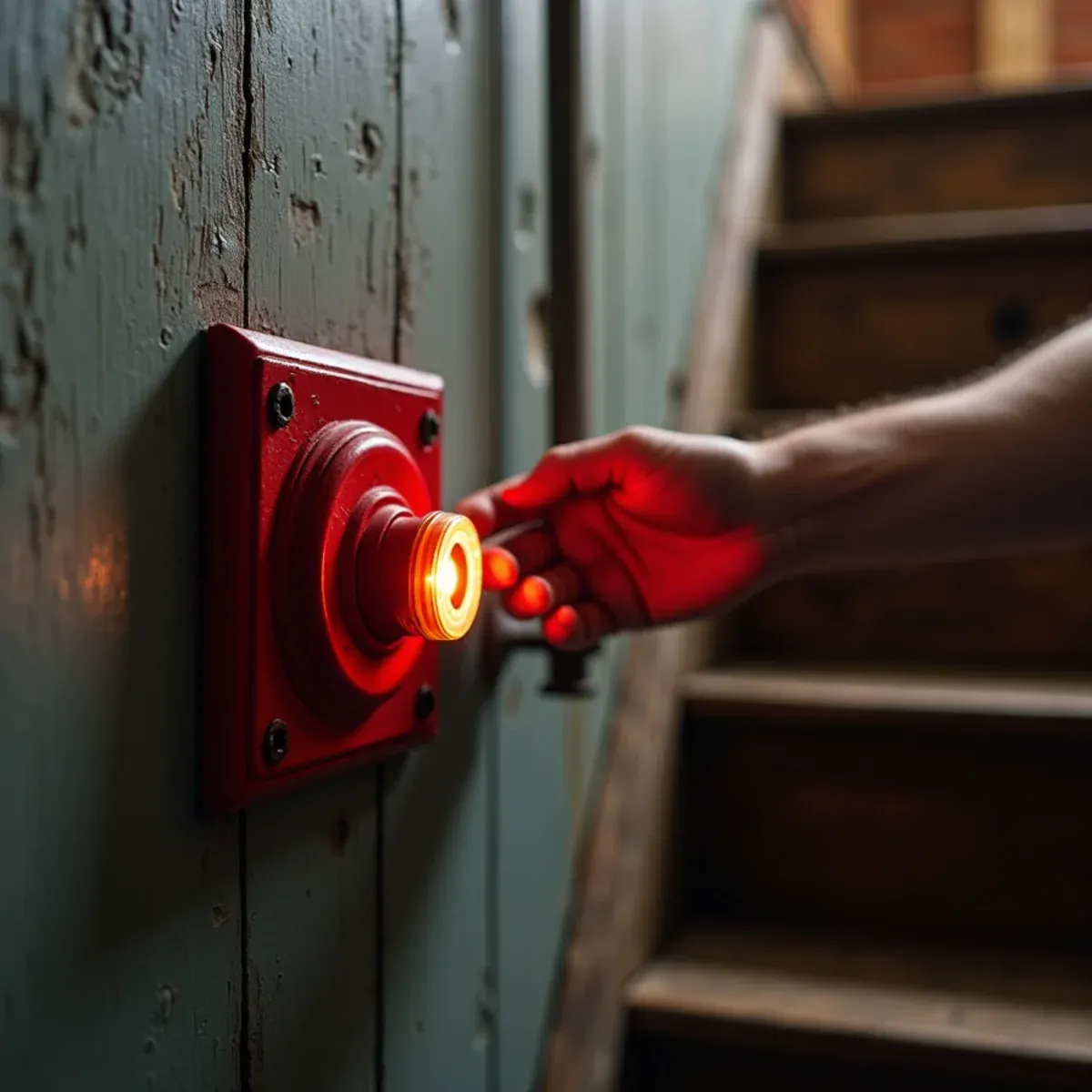
- Find the service switch and make sure it is on.
- Check the breaker or fuse for the boiler circuit. If a breaker has tripped, reset it once. If it trips again, leave it off.
- Look for lights or a display on the boiler. A modern boiler with a dark screen and a live switch points to a blown control fuse or a failed transformer, which is a technician job.
Check 3: Gas Supply and the Lockout Light
Find the gas shutoff on the pipe feeding the boiler. The handle should run in line with the pipe. If the range or water heater also stopped working, the problem is upstream of the boiler, and your gas utility is the right call.
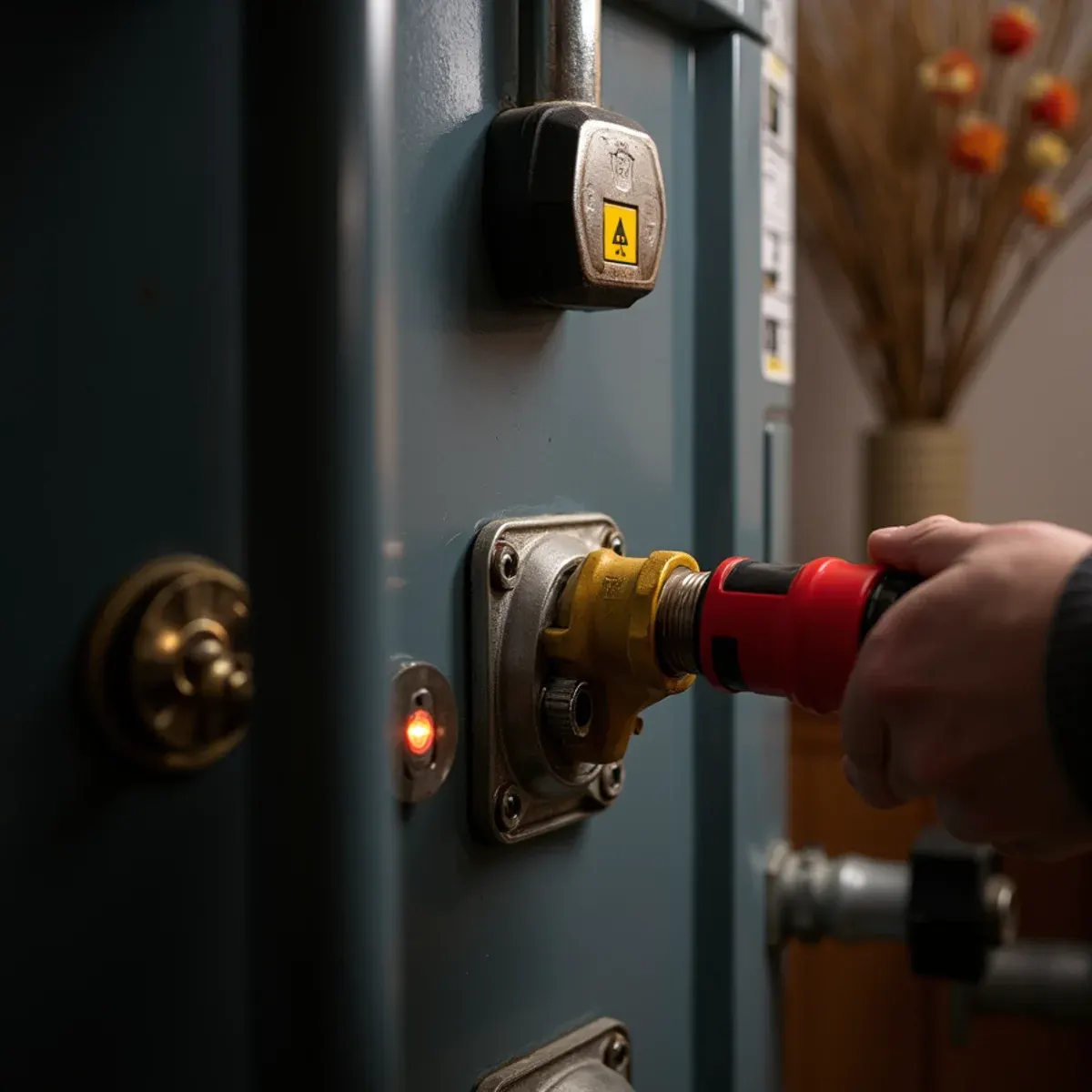
Older boilers with a standing pilot
Look through the sight window for a small blue flame. If the pilot is out, relight it only by following the instructions printed on the boiler's label. If it will not stay lit after one careful attempt, the thermocouple or gas valve may be failing. Do not keep trying.
Newer boilers with electronic ignition
These boilers try to light a few times, then lock out and show a light or a code. Write the code down first. You can press the reset button once. If the boiler lights and runs, keep an eye on it. If it locks out again, leave it locked out. The lockout means the control found a problem with the ignitor, flame sensor, gas valve or venting, and repeated resets can let unburned gas collect in the combustion chamber.
Check 4: Water Level or Pressure
A boiler with too little water will refuse to fire, by design. What you look at depends on the system.
Steam boilers: the sight glass
Find the sight glass, the small glass tube on the side of the boiler. With the boiler idle, water should sit roughly halfway up. If the glass is empty, the low-water cutoff has shut the burner off to protect the boiler. That is the cutoff doing its job.
Never add cold water to a hot, dry steam boiler
If the sight glass is empty and the boiler is hot, shut the boiler off and let it cool down completely before anyone adds water. Cold water on hot, dry cast iron can crack a section. If you keep finding the glass low, the boiler is losing water somewhere and needs steam boiler repair.
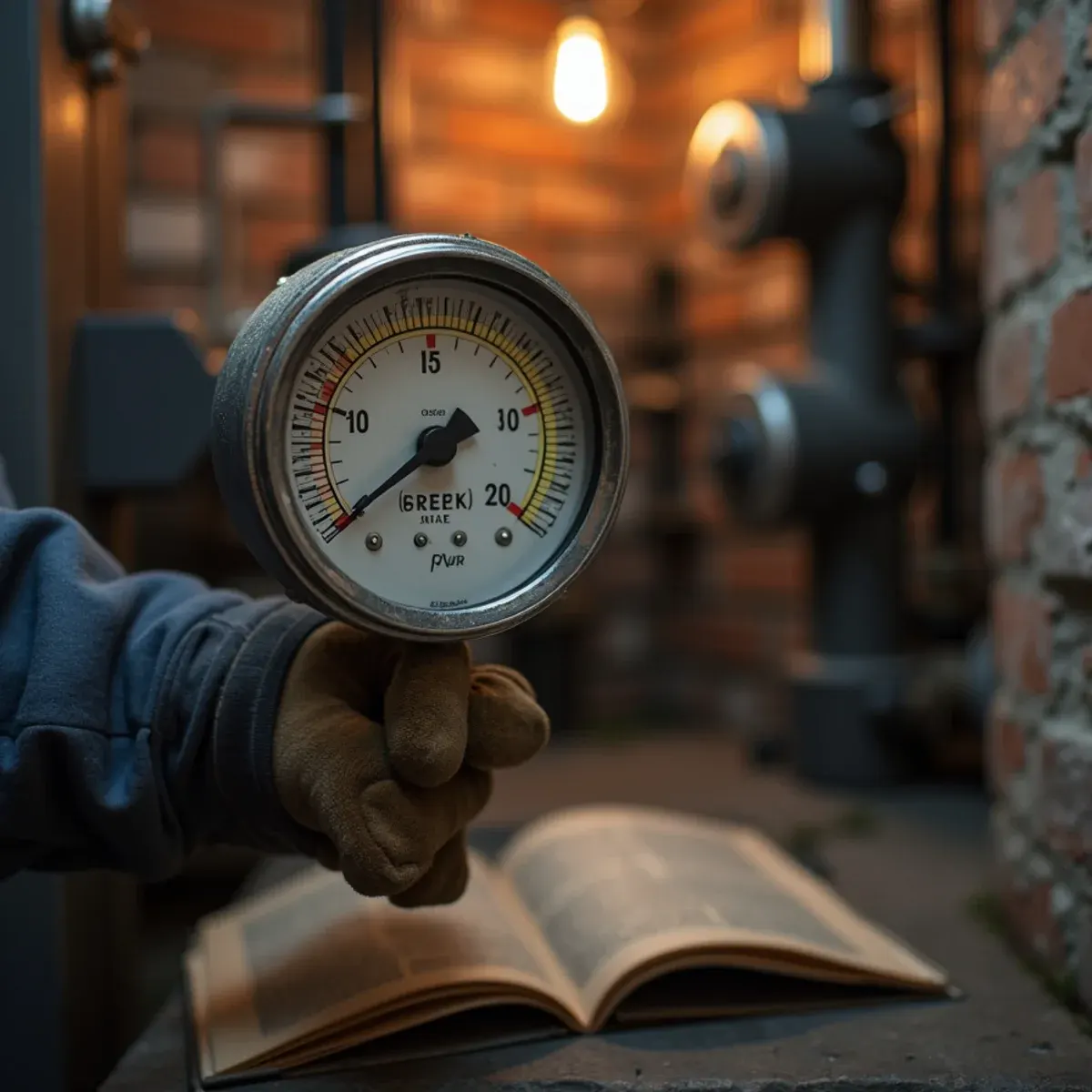
Hot-water boilers: the pressure gauge
Read the pressure gauge. A residential system typically shows about 12 to 15 psi cold and roughly 15 to 25 psi hot. Many newer boilers have a low-pressure switch and will not fire when pressure falls well below normal. Low pressure usually means a leak, a dripping relief valve or a fill valve that stopped feeding. A gauge climbing toward 30 psi is the opposite problem, often a waterlogged expansion tank. Both are routine hot water boiler repair calls.
Check 5: Venting, Condensate and Snow
High-efficiency condensing boilers vent through plastic pipes on an outside wall, not up the chimney. After a heavy snowfall, check that the intake and exhaust terminals are clear. Drifted snow or ice over a vent is one of the most common reasons a condensing boiler locks out during a Pittsburgh cold snap.
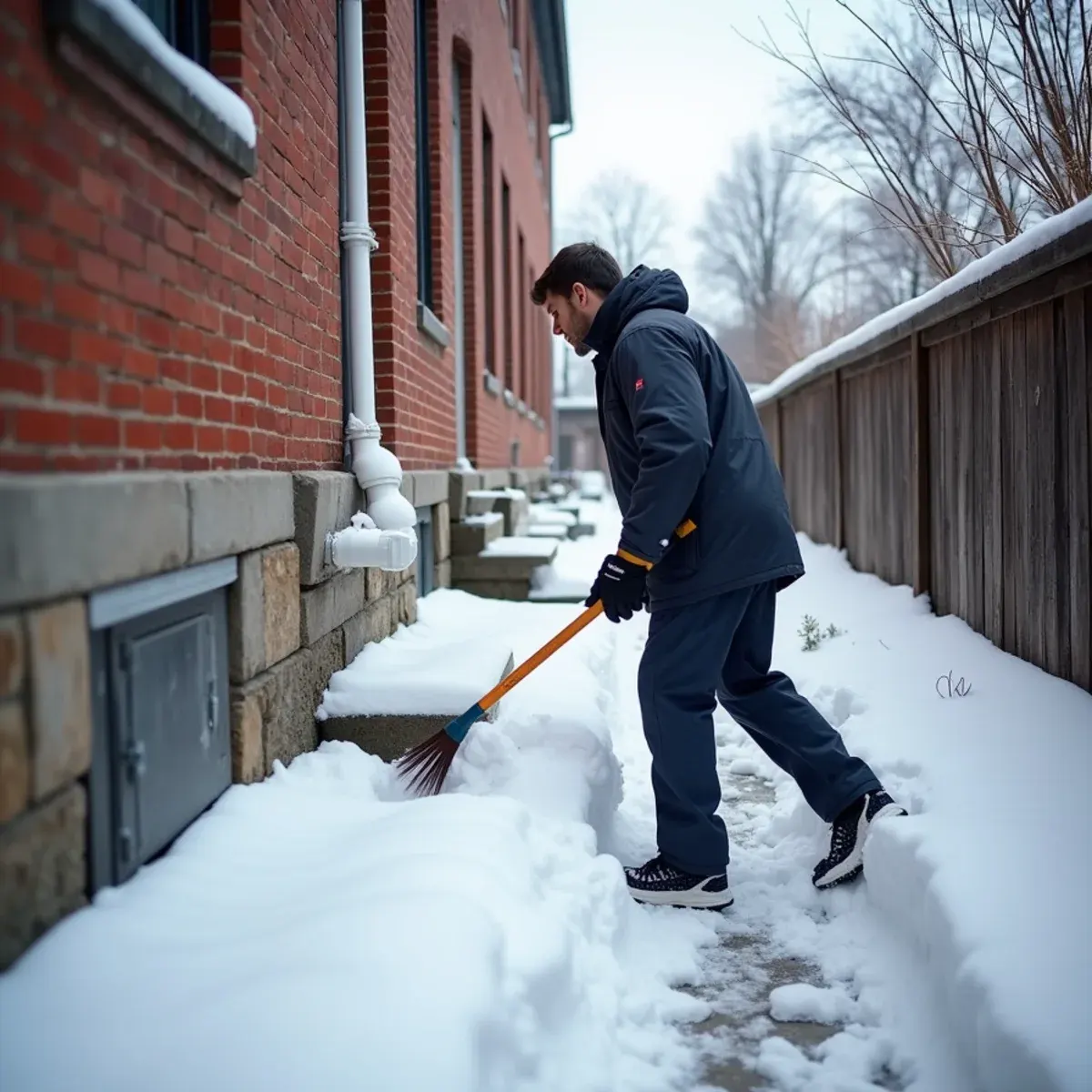
They also drain condensate through a small trap, sometimes to a pump. A clogged trap or a frozen drain line can stop the boiler and set a code. Brushing snow off a vent terminal is fine. Taking apart the trap or the flue is a technician job.
Older boilers vent into the chimney, and many Pittsburgh chimneys are decades past their best. Some boilers have a spill switch near the draft hood that trips when exhaust is not leaving properly. If that switch has tripped, do not reset it and keep running the boiler. Call.
What to Tell Us When You Call
If the boiler is still down, have this ready when you call:
- Steam or hot water, and roughly how old the boiler is.
- What you found: thermostat, switch, breaker, gas, sight glass or pressure reading.
- Any lockout code or blinking-light pattern.
- How cold it is indoors, and whether anyone in the house cannot handle the cold.
In the multi-unit houses along Penn Avenue and around the Hamnett Historic District, those details also help us judge how urgent the call is for tenants on the upper floors. Our page on boiler repair in Wilkinsburg covers the housing there. The technician explains the repair and the price, and you approve it before work begins.
From the technician's side
How a Technician Traces a Boiler That Will Not Light
A gas boiler lights in a fixed order: call for heat, safety switches, draft, ignition, gas valve, then proof of flame within seconds. The technician we send follows it with a meter, not a parts guess, because the fault sits wherever the sequence stops.
- The safety switches are wired in a chain. Low-water cutoff, high-limit aquastat, spill switch and pressure switch share one string. One open switch keeps the burner dark, and voltage readings find it.
- Flame signal is measured in microamps. A weak reading usually means a sooted sensor rod or a poor burner ground, a far smaller repair than the control board that often takes the blame.
- Gas pressure is read at the valve. A manometer on the inlet and outlet taps separates a gas-starved boiler from a failed valve.
- Many boards store lockout history, useful when the boiler behaves perfectly while the technician watches.
Some guides tell homeowners to sand the flame sensor. That means opening a burner compartment that should stay closed, and a sensor that fouls again within a season points to a combustion problem sanding will not fix.
A failed ignition system rarely justifies a new boiler by itself, since universal ignition modules fit most older cast iron boilers. The math changes at the third major repair in a few years; see our boiler replacement page. It comes up often in the steel-era houses on our Munhall boiler repair page, where a tired boiler still feeds sound cast iron radiators.
Frequently asked questions
How many times can I press the reset button on my boiler?
Once. If the boiler lights and keeps running, watch it over the next few cycles. If it locks out a second time, leave it off and call. A lockout means the control had trouble lighting or proving flame, and each reset can let a little unburned gas into the combustion chamber. Write down any code before you press anything.
Why does my boiler light for a few seconds and then shut off?
Most often the flame sensor is dirty or failing, so the control cannot confirm a flame and shuts the gas off for safety. A weak ignitor, low gas pressure, a blocked vent or a condensate problem can cause the same pattern. None of these is a safe homeowner fix. Note any code it showed and call for service rather than resetting it again and again.
Can I leave the boiler off overnight during a cold snap?
For a single night it is usually survivable if the house stays above about 55 degrees. Once overnight lows fall into the single digits, pipes in kitchens over unheated porches, on outside walls and in radiators under drafty windows can start to freeze. Open the cabinet doors under sinks, keep interior doors open and use electric space heaters with safe clearance. If the indoor temperature is dropping fast, call rather than waiting for morning.
Why is the pilot light on but the boiler will not fire?
Usually the call for heat is not reaching the gas valve, or the pilot is too weak to open it. On many older standing-pilot boilers there is no house current at the valve: the pilot flame heats a thermopile that generates a few hundred millivolts, and a lazy pilot, a worn thermopile or a failed valve leaves the pilot burning with no main flame. An open safety switch, such as a low-water cutoff or a tripped spill switch, does the same thing. Check the thermostat and the water level or pressure, then call, because the remaining tests need a meter.