
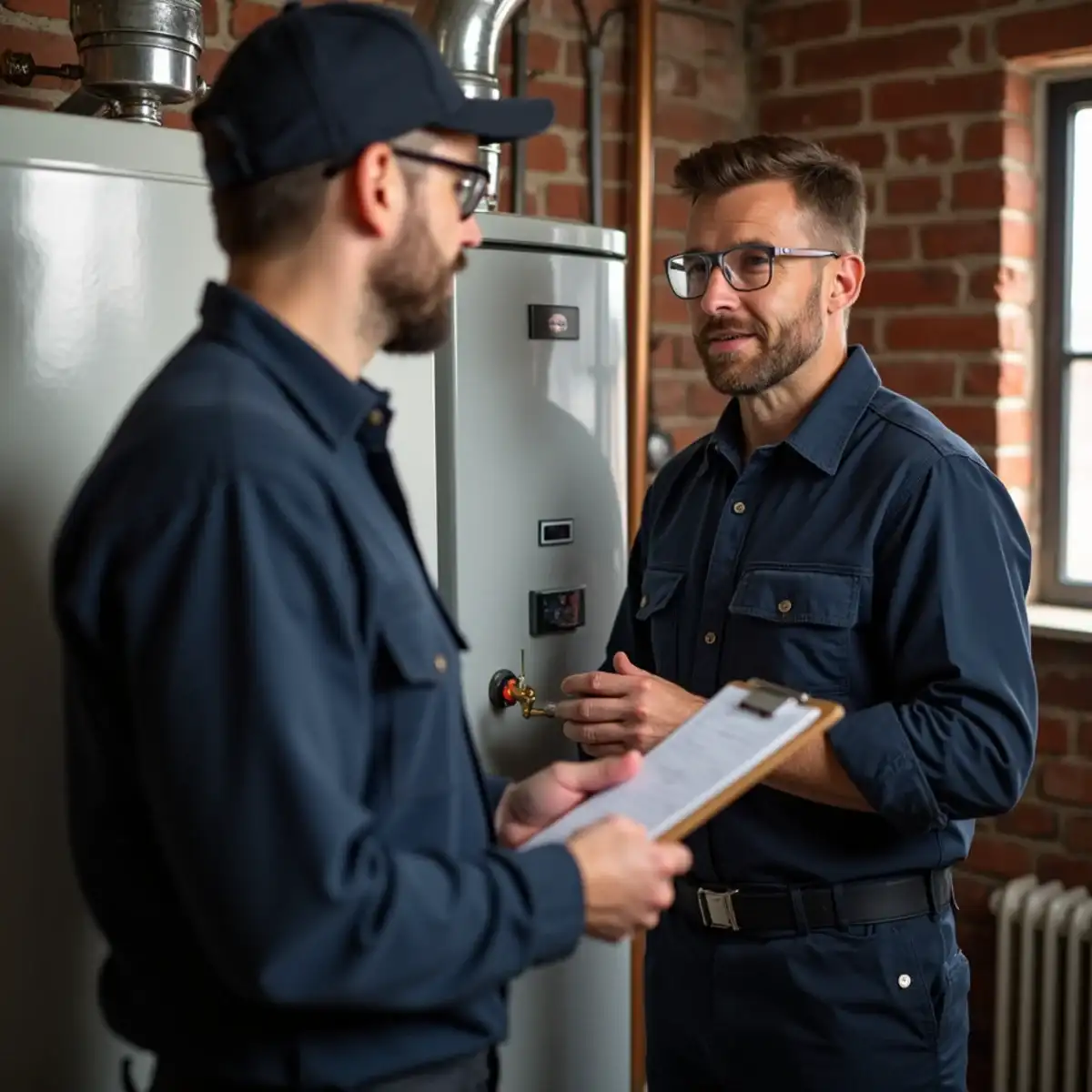
Why a boiler-only line exists
Most heating companies in western Pennsylvania are built around furnaces and air conditioners, and boilers get a paragraph on a page about everything else. That is a poor fit for a city where roughly half the houses were built before 1940 and still heat with steam or hot water through cast iron radiators. A one-pipe steam system in a Bloomfield rowhouse or a converted gravity system in a Squirrel Hill foursquare has its own parts, its own failure patterns and its own mistakes to avoid.
Pittsburgh Boiler & Heating Repair was set up to handle exactly those calls: steam boilers, hot-water boilers, radiators, boiler replacement, and the ductless heat pumps that radiator homes added for cooling. Furnace and ductwork calls are handled by a separate sister site, so this line stays focused.
The 24/7 promise
The phone at (321) 478-0693 is answered 24 hours a day, 7 days a week, including holidays. A person picks up, not a voicemail box. They ask what kind of system you have, what the gauge shows, which rooms are cold and whether anything is leaking, then dispatch a technician while you are still on the call.
What we do not do is print an arrival time on the website. A technician coming from the South Hills through the Liberty Tunnel at 5 p.m. in a snowstorm is not the same trip as midnight on a clear night. The dispatcher tells you a realistic estimate for your call.
How dispatch works
Pittsburgh Boiler & Heating Repair connects you with independent local HVAC technicians who perform the work. When you call, we match the job to an available technician who works on that type of equipment in your part of the city: steam, hot water or a ductless heat pump. The technician arrives with your notes, diagnoses the boiler and the radiators together, explains what failed, and gives you the price before work starts. You decide whether to go ahead. The technician then makes the repair, runs the system through a heating cycle and tells you what was done.
Because the technicians are independent local contractors, the person who does the work is responsible for it, including any permits the job needs. Our part is answering every call, sending the right person, and keeping the process honest: diagnosis first, a clear price, no work you did not approve.
Who does the work
The people who show up are independent local HVAC technicians who work in Pittsburgh-area basements like yours all winter. The calls we route to them are boiler calls: low-water lockouts on steam boilers, circulators that have stopped turning, relief valves dripping into a bucket, radiators that bang or never get warm, and the ductless heat pumps that radiator homes added for cooling.
Matching the call to the right person matters more on a boiler than on most equipment. A technician who services steam knows to check the water line, the pigtail and the main vents before touching the burner. One who works on hot-water systems knows that a dripping relief valve usually points to the expansion tank or the fill valve, not the valve itself. That is the knowledge we dispatch for, and it is why the dispatcher asks what kind of system you have before sending anyone.
What you can ask the technician to show you
- Their license details where the work requires one, and proof of insurance
- What failed, how they tested it, and the part they want to replace
- The price before any work starts, broken out by parts and labor
- Any permit the job needs, and their written parts and labor terms
Licensing and insurance
Every HVAC technician we send is licensed where Pennsylvania requires it, and insured. Pennsylvania does not issue a single statewide HVAC license; requirements depend on the municipality and the work, and the City of Pittsburgh licenses mechanical contractors through its Department of Permits, Licenses and Inspections. Ask the technician for their details on any job.
Safety comes before the service call
If you smell gas or a carbon monoxide alarm is sounding, leave the house and call 911 or your gas utility from outside. We are a repair service, not the first call for a suspected leak. Once responders say the house is safe, call us and we will get the boiler looked at. The emergency boiler repair page explains what to do and what not to touch while you wait.
Where we work
Every neighborhood in the City of Pittsburgh, plus Mt. Lebanon, Wilkinsburg, Dormont, Bellevue, Munhall, Swissvale and Brentwood. The full list, with ZIP codes and drive times, is on the service areas page.
What this line does not handle
Staying narrow is deliberate. Homes heated by a forced-air furnace and ductwork are served by our sister site, Pittsburgh Furnace Repair, so this line stays on boilers, radiators and heat pumps. Large commercial and industrial boiler plants need different crews and are not dispatched from here. And this is not an emergency service for gas leaks or carbon monoxide: those calls go to 911 or the gas utility first, then to us once the house is safe. Everything else that heats a Pittsburgh home through radiators or baseboard, we answer: start with radiator repair, steam boiler repair or hot water boiler repair.
Questions about how we work
Are you a heating contractor or a referral service?
We are the answering and dispatch side. When you call, a person takes the details and sends an independent local HVAC technician who works on boilers, radiators or heat pumps. That technician diagnoses the problem, gives you the price before work starts and performs the repair. Knowing that up front tells you who to ask about permits, parts and any workmanship terms: the technician doing the job.
Who is responsible for the repair once the technician arrives?
The technician who performs the work. They quote it, carry it out, pull any permit it needs and stand behind their own parts and labor terms, which they should give you in writing. If something is unclear, ask before you approve the price. If you cannot reach them afterward, call our line and we will help put you back in touch.
Why does a boiler line need technicians who know older systems?
Because most boilers in Pittsburgh feed radiators that are older than the boiler itself. A one-pipe steam system in a rowhouse or a gravity hot-water conversion in a foursquare fails in ways a forced-air technician rarely sees: bad pitch, stuck vents, waterlogged compression tanks, near-boiler piping done wrong. Diagnosing the boiler and the radiators together is what keeps a simple repair from turning into an unnecessary replacement.