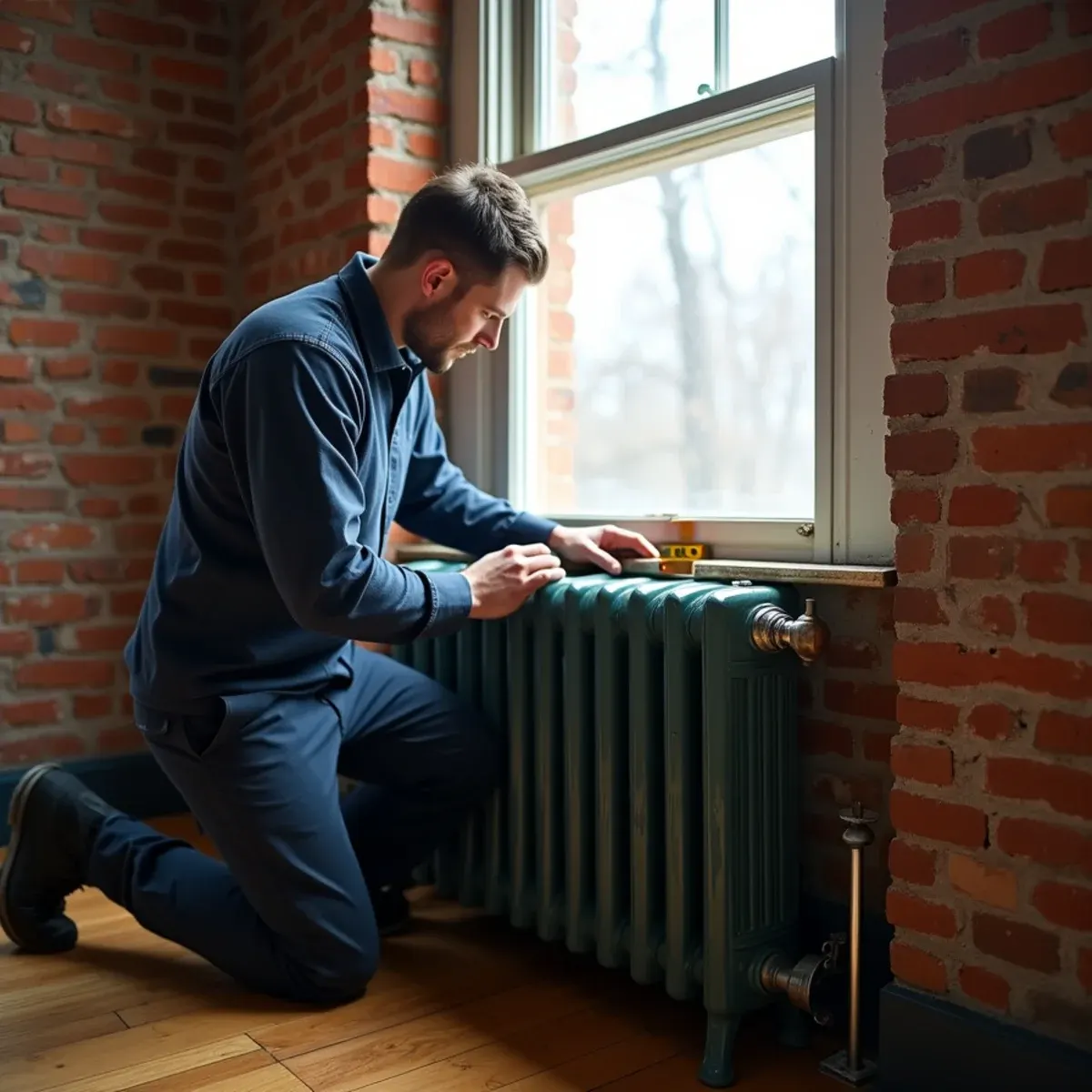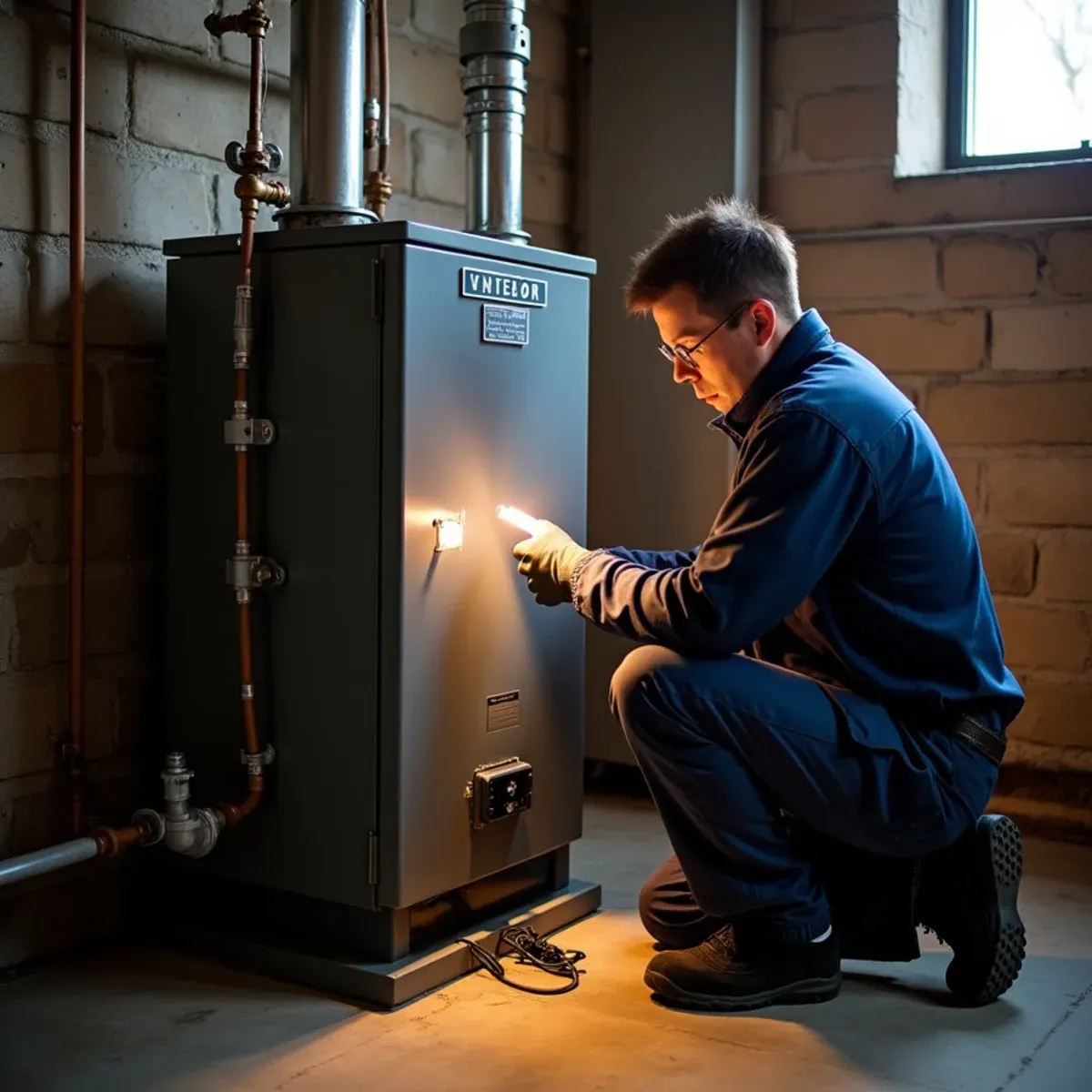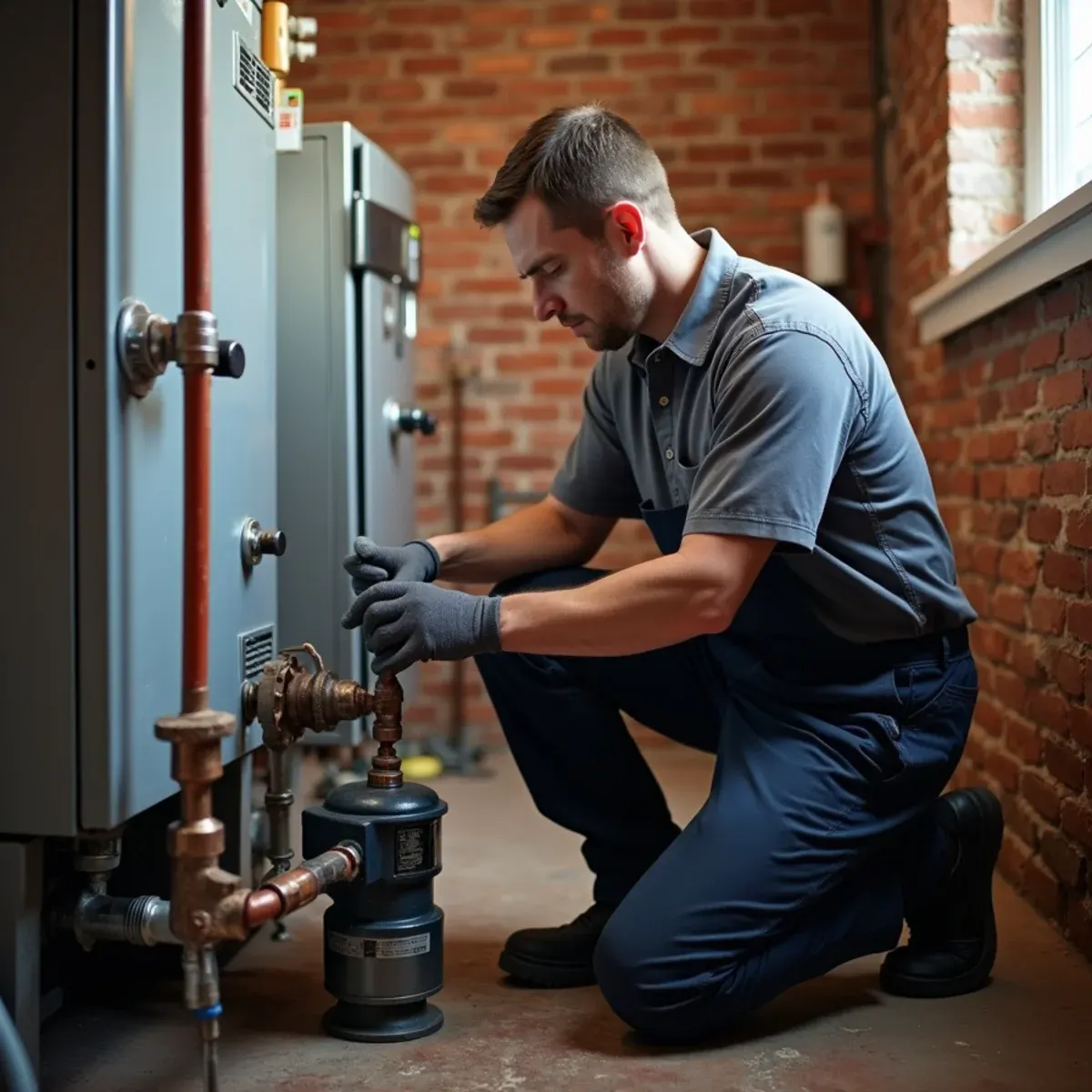
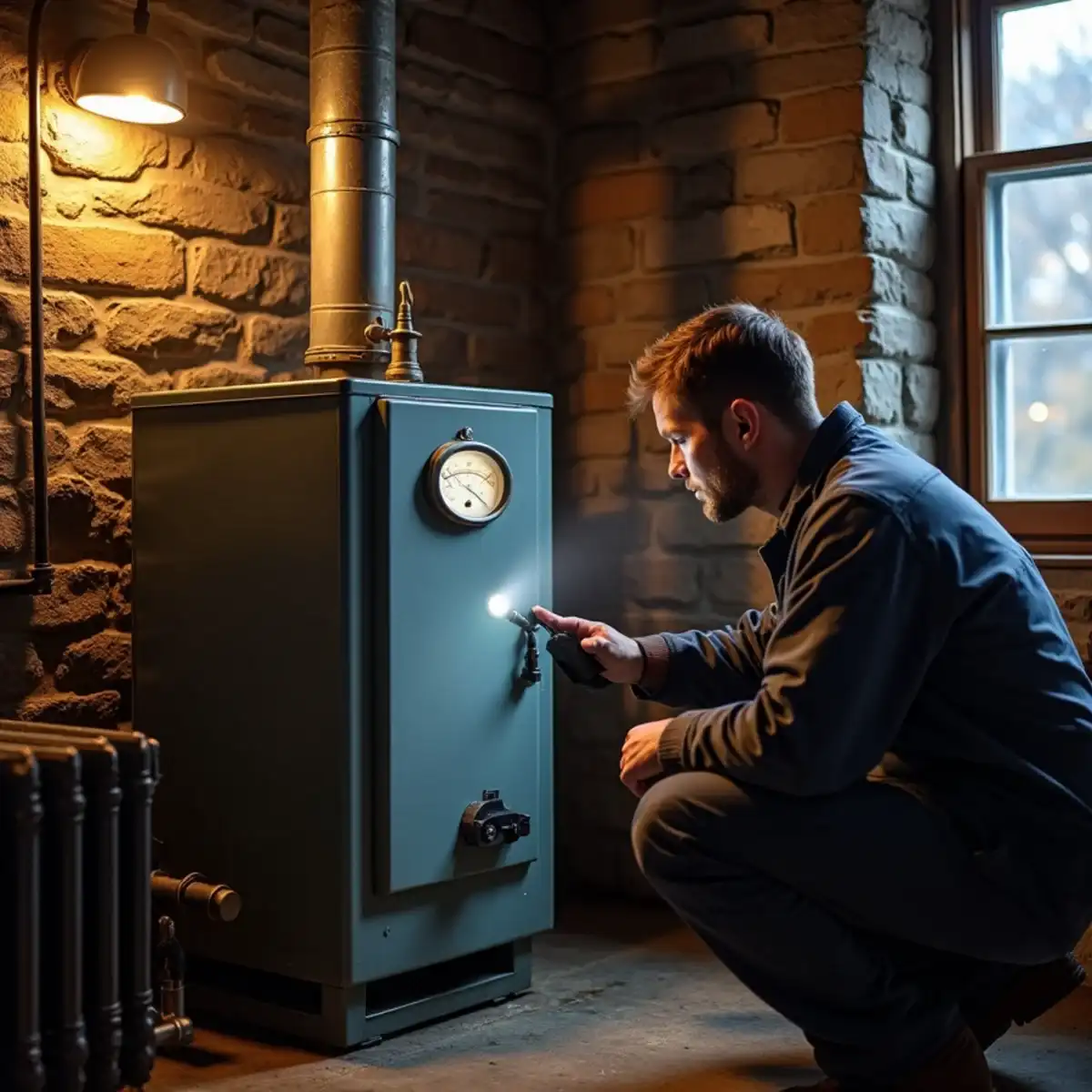
Steam boiler repair in Pittsburgh means working on systems most installers rarely touch, and when you call (321) 478-0693, day or night, we send a local technician who services low-pressure steam. Vanishing water, banging pipes, low-water lockouts and cold top floors are steam problems with steam answers.
Many pre-war houses here still heat with their original steam mains and radiators, often on a third or fourth boiler. A steam boiler can run thirty to fifty years, but only if its water line, safety controls and near-boiler piping are right. Most repair calls trace back to one of those three.
Signs a steam boiler needs repair
- The boiler shuts off on low water, or the low water cutoff trips more than once a season.
- You add water every few days, or the automatic water feeder runs far more than it used to.
- The boiler sight glass is murky, bounces wildly, or shows water too high or too low.
- Pipes bang loudly at startup, which is water hammer, or radiator vents spit water.
- The boiler short cycles: it fires, shuts off on pressure, waits, and repeats before the house warms.
- Some floors are hot while others stay cold for hours.
- Water on the floor around the boiler, wet spots along a return line, or steam drifting from the flue.
Any of these is worth a call before January, when a lockout can leave pipes at risk of freezing.
What gets checked on a steam boiler repair call
Steam faults hide in the controls, the piping and the water itself. A repair visit from the technician we send covers:
- The water line read cold and again while steaming, against the normal water line marked on the boiler, with a note on whether the glass is clean enough to trust.
- Proof that the low-water cutoff shuts the burner off, before any other work is done.
- Operating pressure read on a low-pressure gauge, with the pressuretrol cut-in and differential confirmed or reset.
- The feeder's counter, or your record of water added, used to estimate how much water the system loses each week.
- The risers, header, equalizer and Hartford loop measured against the boiler manual's piping diagram.
- Each main vent checked at the end of its main while the system is steaming.
- Dry and wet returns walked for leaks and thin pipe, with any return buried in the floor pointed out.
- The boiler water looked at for oil, rust and surging, and skimming recommended where it will help.
- If a section has cracked, repair and replacement explained as separate options, each with its price.
How the technician works through a steam repair
- 1
Read the water line before firing
The technician checks the sight glass and whether the boiler is hot and dry. A dry, hot boiler is left to cool before any water goes in. Then the low-water cutoff is tested to confirm it stops the burner.
- 2
Check the pressure controls
The pigtail is cleared and the pressuretrol settings are read. As the boiler builds steam, a low-pressure gauge shows whether it shuts off in ounces as intended or climbs toward pounds because a control is blind or set too high.
- 3
Follow the steam along the mains
The technician times how long steam takes to reach the end of each main, feels for heat at the main vents and listens for where the hammering starts. Slow mains and banging fittings show where venting or pitch has failed.
- 4
Trace where the water is going
Feeder use, wet spots along the returns, spitting radiator vents and steam at the flue are checked one by one. That narrows a disappearing water line down to a vent, a return pipe or, less often, the boiler itself.
- 5
Price, repair, then steam it again
You get the explanation and the price, and the work waits for your approval. After the repair, the boiler is brought back up to steam while the technician watches the water line for surging and confirms both safety limits shut the burner off.
Low-water cutoffs, water feeders and the sight glass
The low-water cutoff is the most important safety control on a steam boiler. It shuts the burner off if the water drops too low, before the iron overheats and cracks. The two common types need different care.
- Float cutoffs sit in a chamber beside the boiler. Sludge collects in the bowl and can jam the float, so the chamber has a blowdown valve that is flushed regularly during the season, often weekly or as the manufacturer specifies.
- Probe cutoffs use an electrode threaded into the boiler. There is no float to jam, but the probe scales over and needs to be pulled, cleaned and inspected, usually at annual service.
The sight glass shows the actual water line. On most residential boilers it should sit around the middle of the glass when cold. A glass that is filthy, cracked or stained cannot be trusted, and its valves are often seized; replacing the glass and washers is routine.
An automatic water feeder tops the boiler up when the cutoff calls for water. Feeders help in houses left empty in winter, but they hide leaks, and the fresh oxygen-rich water they add slowly rots the boiler from inside. A feeder with a counter shows how much it adds. A feeder that sticks open causes boiler flooding, with water backing into the steam mains and radiators until the system gurgles and bangs.
Never add water to a hot, dry boiler
If the boiler has shut down and the sight glass is empty while the boiler is still hot, do not open the fill valve. Cold water hitting overheated cast iron can crack sections. Turn the boiler off at its emergency switch, let it cool completely, then call. Never bypass or jump out a low-water cutoff, and do not keep resetting a boiler that keeps locking out.
Pressure problems: pressuretrols, clogged pigtails and short cycling
Residential steam runs at very low pressure, usually well under 2 psi, and many systems run best between a few ounces and about 1.5 psi. Higher pressure does not push steam farther; it slows venting, wastes fuel and makes vents spit.
The pressuretrol
The pressuretrol turns the burner off when pressure reaches its cut-out and back on at its cut-in. A common target is a cut-in around half a pound with a differential of about one pound, but controls differ: on some, the main scale is the cut-in and the differential is added on top; on others, the main scale is the cut-out. Many boilers here are found set far higher than needed.
The pigtail and the gauge
The looped tube under the pressuretrol and gauge, called a pigtail, holds water so live steam never reaches the switch. It fills with sludge over the years. A clogged pigtail blinds the pressuretrol and lets pressure climb, so the technician removes and clears or replaces it. The factory gauge often reads 0 to 30 psi and cannot show ounces, so adding a low-pressure gauge is standard practice. Vapor systems may use a vaporstat set in ounces.
Short cycling
A boiler that hits its pressure limit before steam reaches the far radiators usually has slow main venting, an oversized boiler or too little differential. Fixing the venting often fixes the cycling.
Water hammer, surging and wet steam: near-boiler piping faults
The pipes between the boiler and the first main decide whether the steam is dry. The manufacturer's manual sets the riser height above the water line, the header size and the number of risers. When a replacement boiler goes in with short risers, a small header or the main taking off in the wrong place, water rides out with the steam, and that wet steam is behind much of the banging in old houses.
- Risers and header: tall enough risers, and a header sized and pitched so water drops out before the mains.
- Equalizer: connects the header back down to the return so water separated in the header drains to the boiler.
- Hartford loop: the return joins the equalizer through a close nipple a couple of inches below the normal water line, so a return leak cannot drain the boiler.
- Swing joints: threaded offsets that let the header expand without cracking a section.
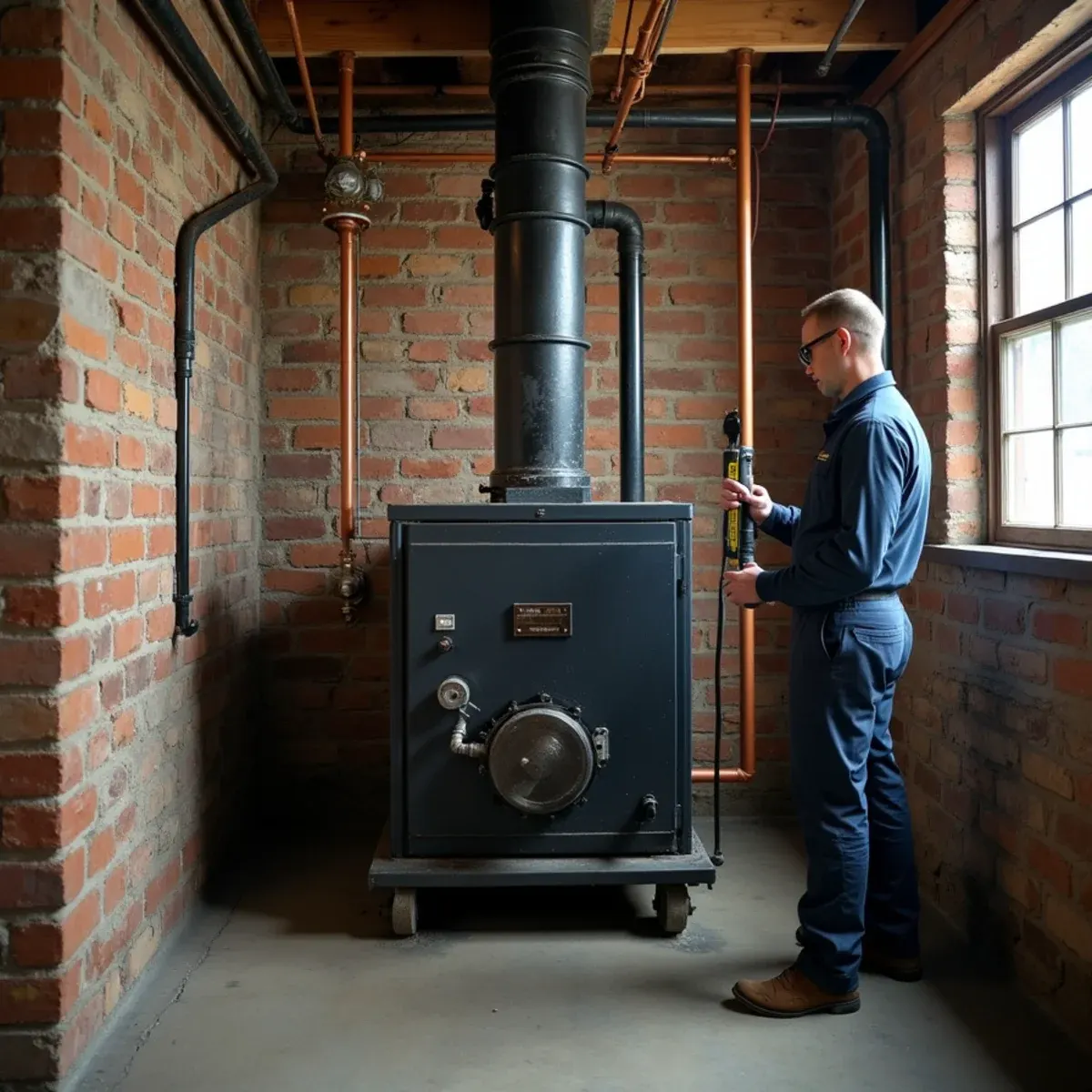
Dirty water causes the same symptoms. Oil left from new piping makes the water line surge and the sight glass bounce. Boiler skimming fixes that: with the boiler warm, the technician opens a skim port at the water line and trickles water in so the oily film floats off over an hour or more, sometimes on several visits after a new install. Sagging mains and radiators that have lost their pitch trap condensate too, which our radiator repair page covers. For the full picture, see why radiators bang in old Pittsburgh steam systems.
Main vents and uneven heat from floor to floor
Before steam reaches a single radiator, it has to push the air out of the mains. Steam main vents near the end of each main do that job, and they need far more capacity than a radiator vent. When they are missing, clogged or undersized, steam crawls along the mains, the radiators nearest the boiler heat first and the boiler shuts off on pressure before the far rooms warm.
The fix is to replace main vents and add capacity where needed, sometimes on a manifold. Then radiator vents are balanced: slower near the boiler, faster at the end of long runs. Third floors in tall Squirrel Hill and Point Breeze houses often need both steps.
Leaks: return lines, buried wet returns and cracked sections
Most steam boilers that lose water are losing it outside the boiler itself:
| Where the water goes | What you might notice | What the technician checks |
|---|---|---|
| Radiator or main vents stuck open | Hissing, spitting, damp walls near radiators | Every vent while the system is steaming |
| Dry return lines | Rust stains or drips along basement return pipes | Pipe walls thinned from the inside |
| Buried wet returns | Damp floor or a wet spot in the basement slab | Feeder usage, pressure or isolation tests, rerouting the return above the floor |
| Cracked boiler section | Steam from the flue, water in the firebox, rust under the jacket | Burner area inspection with the boiler cold |
Wet returns sit below the water line and stay full of water. Buried in a basement slab, they rot from both sides, and rerouting them above the floor is a common Pittsburgh job. A cracked section is serious: on sectional boilers it can sometimes be repaired, but often it is the moment to talk about boiler replacement.
Gas smell or CO alarm: get out first
A cracked section or a blocked flue can push combustion gases into the house. If you smell gas or a carbon monoxide alarm sounds, leave the house and call 911 or your gas utility from outside first. Call us for the boiler repair after they have made the house safe.
One-pipe and two-pipe steam in Pittsburgh's pre-war houses and rowhouses
One-pipe steam is the most common system in the city's rowhouses and smaller homes in Bloomfield, Lawrenceville and Friendship. Steam rises and condensate falls in the same pipe, so valves must be fully open or fully closed and every radiator needs a working vent and proper pitch. Two-pipe steam is more common in larger houses: separate supply and return pipes, traps at each radiator outlet, and sometimes a vapor system running at a few ounces with special valves and no radiator vents at all. Putting one-pipe vents on a two-pipe system is a common mistake, which is why good steam heating repair starts by identifying the system.
Steam calls come from every part of the city and from the pre-war boroughs on our boiler service areas around Pittsburgh page. Large early-1900s houses split into apartments are typical of steam boiler repair in Wilkinsburg, where one boiler and one water line serve several tenants. Steam heat in Mt. Lebanon often means 1920s or 1930s piping behind a newer boiler, and the 1910s and 1920s brick homes on our Dormont steam and radiator repair page mix both types.
What affects the cost of a steam boiler repair
Steam repairs run from a cleared pigtail to a rerouted return, so the price follows the diagnosis. The main variables:
- Which control failed. Clearing a pigtail or resetting a pressuretrol is small work. A new low-water cutoff takes longer, especially a probe type, where the water has to come down below its tapping first.
- Draining and refilling. Any repair below the water line means draining, refilling, bringing the boiler back up to steam and sometimes skimming it again.
- Near-boiler piping. Correcting short risers or an undersized header is a repiping job, priced by how much pipe changes.
- Where the water is going. A vent stuck open is quick. A wet return rotting in the basement slab gets rerouted above the floor, which adds pipe, fittings and hours.
- How many vents. Main vents on several long mains, plus radiator vents to rebalance, add up in a big house.
- Parts for older boilers. Controls for discontinued models sometimes have to be adapted or ordered in.
- Timing and access: nights and holidays, or a boiler in a tight, wet basement.
The technician explains the repair and gives you the price before work starts, and nothing goes ahead until you approve it. For published local ranges broken down by part, see our guide to steam and hot-water boiler repair costs in Pittsburgh.
Annual steam boiler service: what is cleaned and tested
A steam boiler service visit before October catches most of these faults early. A thorough visit includes:
- Testing the low-water cutoff to confirm the burner stops, then flushing the float chamber or cleaning the probe.
- Cleaning the sight glass, or replacing the glass and washers.
- Removing and clearing the pigtail, and checking the pressuretrol settings against a low-pressure gauge.
- Inspecting the burner, flame, flue passages and chimney draft.
- Checking the main vents and a sample of radiator vents.
- Draining sediment, and skimming if the water line is unsteady.
- Checking the relief valve, feeder and near-boiler piping for leaks and pitch.
Our annual boiler service checklist explains each step, and our breakdown of what boiler repairs cost in Pittsburgh covers what drives the price. Every HVAC technician we send is licensed where Pennsylvania requires it, and insured, and the price is explained and approved before work starts.
What you get from a steam call through this line
The piping above the boiler gets checked, not just the burner
Much of the banging and water loss in old Pittsburgh basements starts in the risers and header of a replacement boiler. The technician we send measures that piping against the manual instead of stopping at a burner cleaning.
Low pressure treated as the target
Steam heats best at ounces, not pounds. A pressuretrol cranked up years ago to push heat upstairs is turned back down on a low-pressure gauge, rather than left wasting fuel and making vents spit.
The low-water cutoff is never bypassed
It is the control that keeps a dry boiler from cracking. It is tested to shut the burner off on every call, and it is never jumped out to get the heat back on faster.
Low-water lockouts answered at 3 a.m.
When a steam boiler locks out on low water overnight, the person who answers tells you not to add water to a hot, dry boiler, takes the sight-glass reading and dispatches the nearest available technician.
Steam Boiler Repair across Pittsburgh and nearby boroughs
Steam is thickest in the city's rowhouse neighborhoods, Bloomfield, Lawrenceville and Friendship, and in tall Squirrel Hill and Point Breeze houses where the third floor waits longest for heat. Past the city line, Bellevue steam boiler repair calls come from a borough with more than a thousand buildings over a century old, where boilers swapped two or three times still feed old near-boiler piping. The steel-era houses on the hill get steam heat repair in Munhall.
Steam Boiler Repair: common questions
Why does my steam boiler keep losing water?
Some loss is normal, but a boiler that needs water every few days has a leak or is losing steam somewhere. The usual culprits are radiator or main vents stuck open, rotted dry returns, wet returns buried in the basement floor, and leaking valve packing. Wet steam from poor near-boiler piping can also push water into the mains. A cracked section, which shows as steam from the flue or water in the firebox, is the least common but most serious cause.
How much pressure should a residential steam boiler run at?
Very little: usually well under 2 psi, and many systems run best from a few ounces up to about 1.5 psi. A common pressuretrol setup is a cut-in around half a pound with a one-pound differential. Vapor systems may run in ounces. The standard 0 to 30 psi gauge cannot read that range accurately, so a low-pressure gauge is worth adding. The 15 psi relief valve is a safety limit, not a target.
Why do the pipes bang when the heat comes on?
Banging is water hammer: steam racing over trapped condensate and slamming it into a fitting. It usually comes from wet steam leaving the boiler because of poor near-boiler piping, oily water that needs skimming, a water line set too high, sagging mains or radiators that lost their pitch, or one-pipe valves left half closed. It is worst on cold starts. The technician checks the boiler and piping first, then the radiators that bang.
How often should a steam boiler be flushed or skimmed?
Flushing is routine; skimming is not. A float-type low-water cutoff is usually blown down weekly or as its manufacturer specifies during the season, and sediment is drained at annual service. Probe cutoffs are cleaned yearly instead. Skimming is needed after a new boiler or piping work, often more than once in the first weeks, and any time the water line surges or bounces. A boiler that needs skimming every year usually has another problem.
Can I blow down the low-water cutoff on my steam boiler myself?
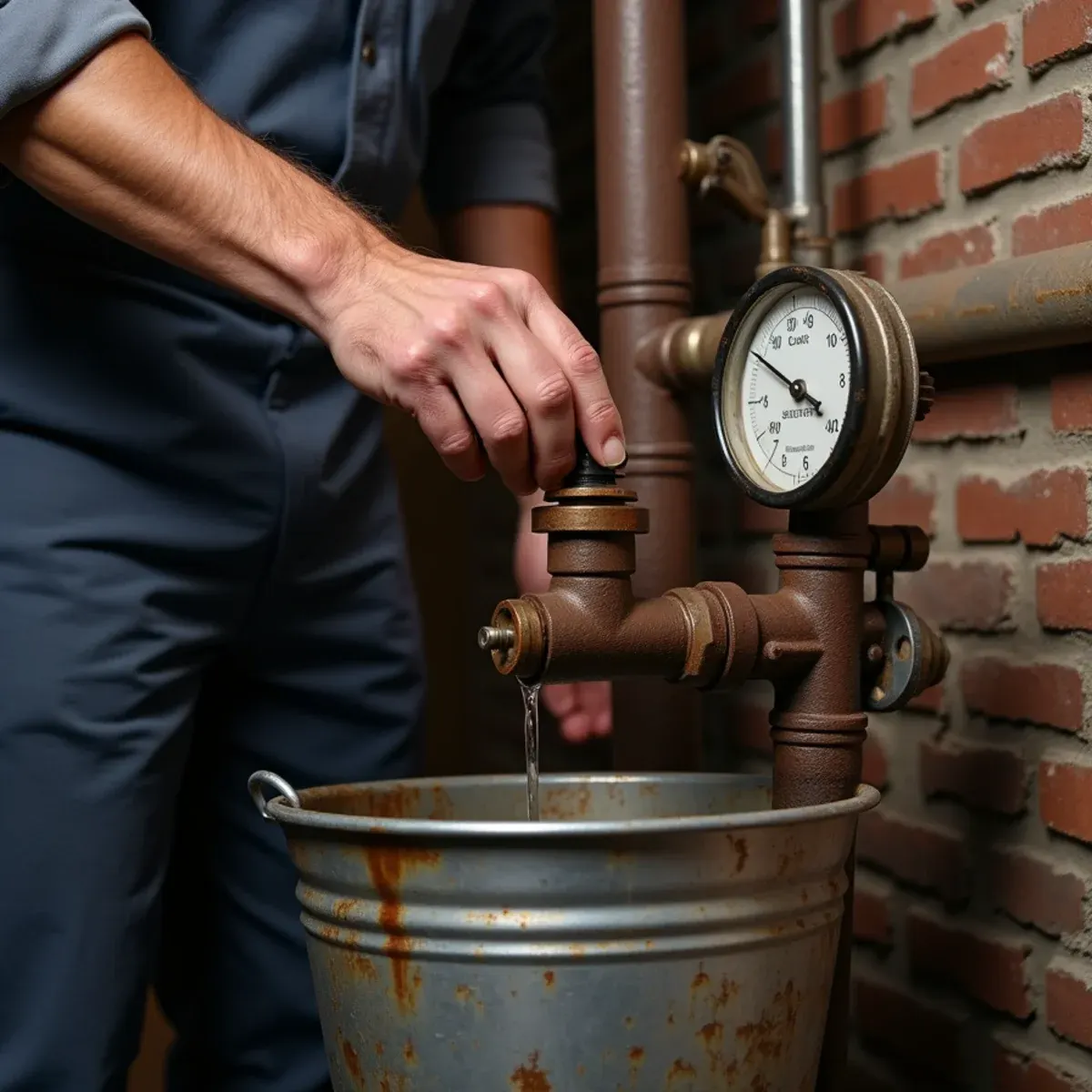
Yes, on most float-type cutoffs, if the label or manual describes the procedure. With the boiler steaming, put a bucket under the blowdown valve and open it until the water runs clear, then close it. The burner should shut off as the float drops, which is the test. The water is scalding, so wear gloves and keep your face clear. If the burner keeps running, shut the boiler off and call. Probe cutoffs have no blowdown valve and are cleaned by a technician.
Why does my steam boiler turn on and off so often?
Usually because it reaches its pressure limit before the steam has filled the system. Slow or clogged main vents, a pressuretrol with too little differential, a sludged pigtail giving a false reading, or a boiler too big for the radiators connected to it all cause that. A surging water line can do it too, by tripping the low-water cutoff for a few seconds each time it bounces. The technician watches a full call for heat on a low-pressure gauge to see which limit is stopping the burner.