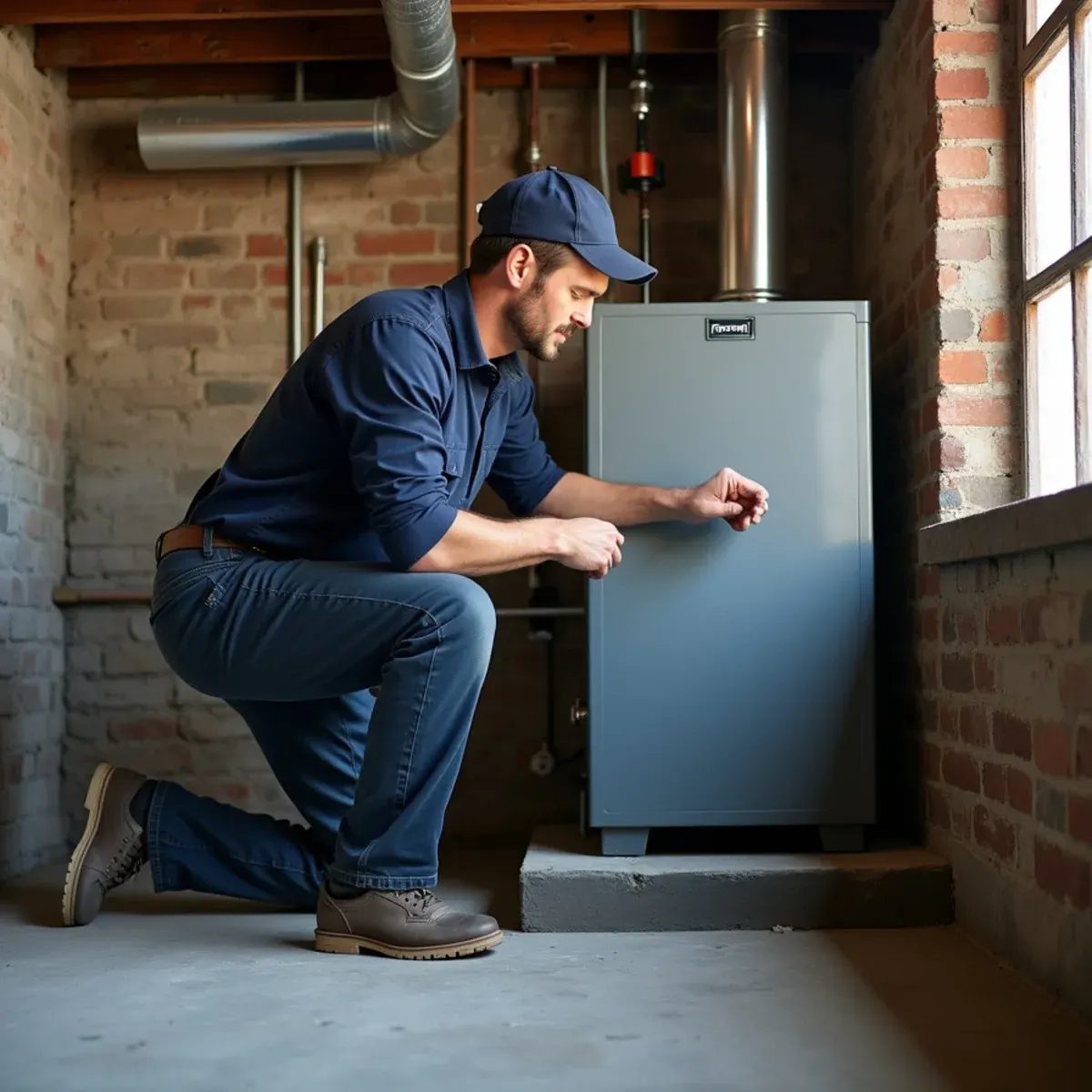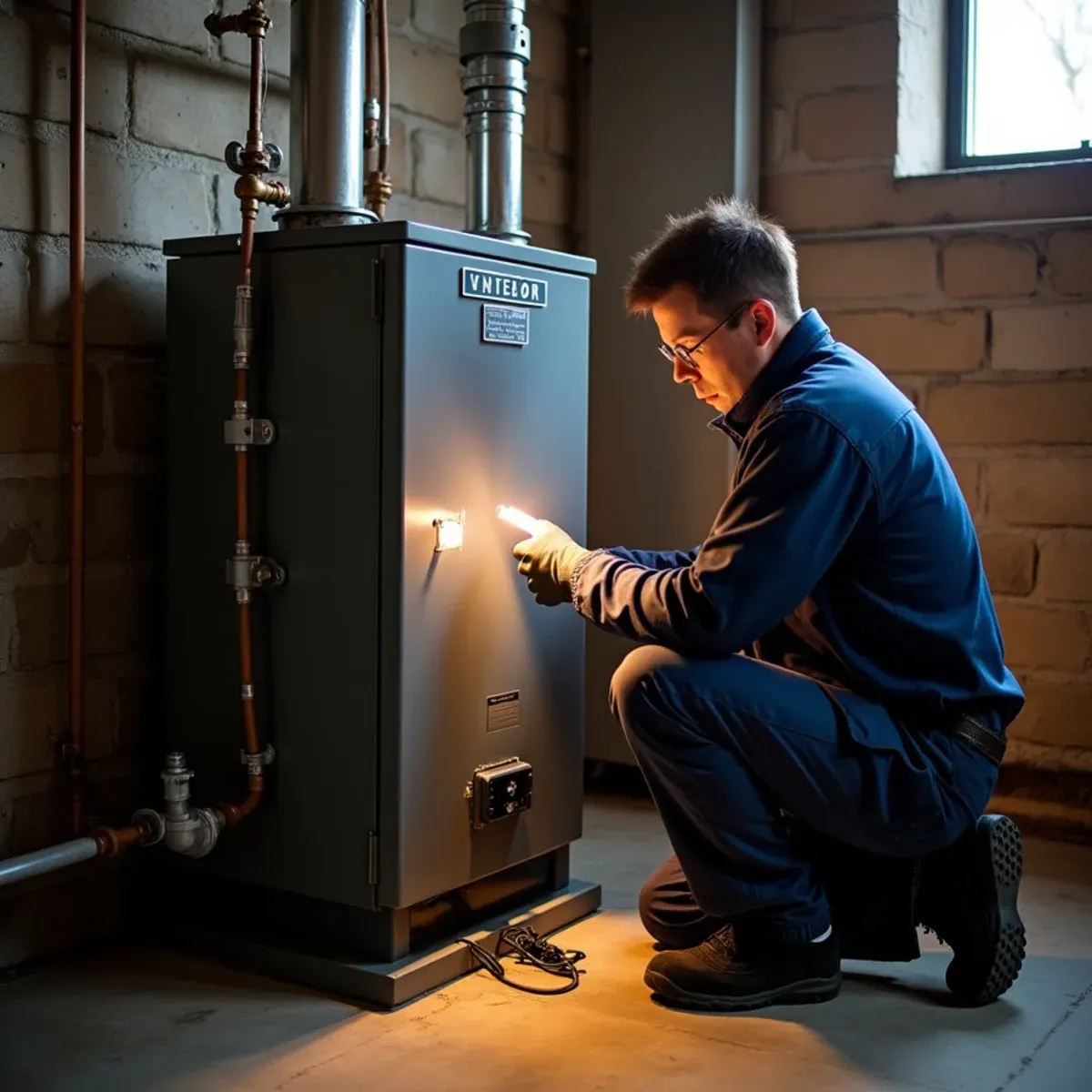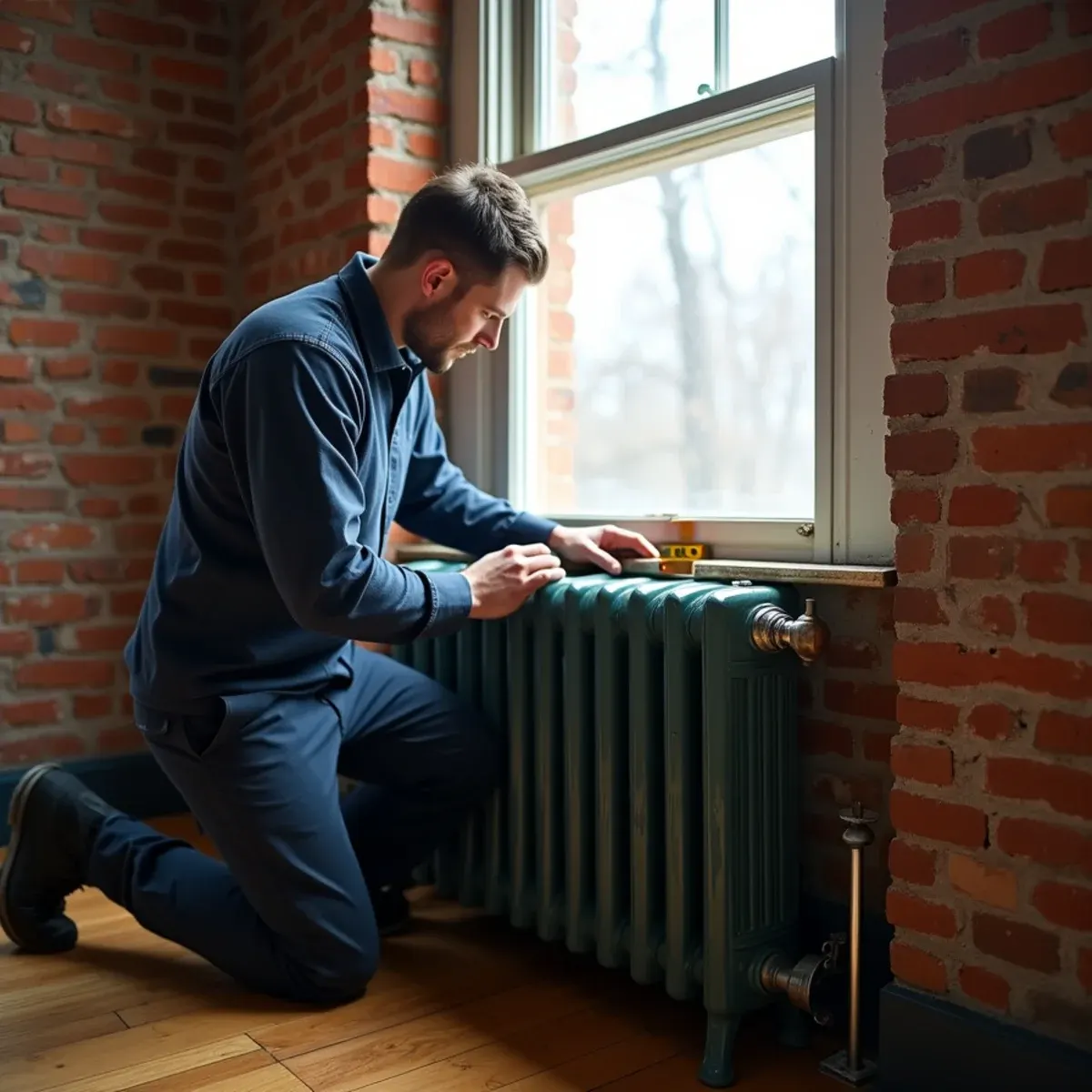
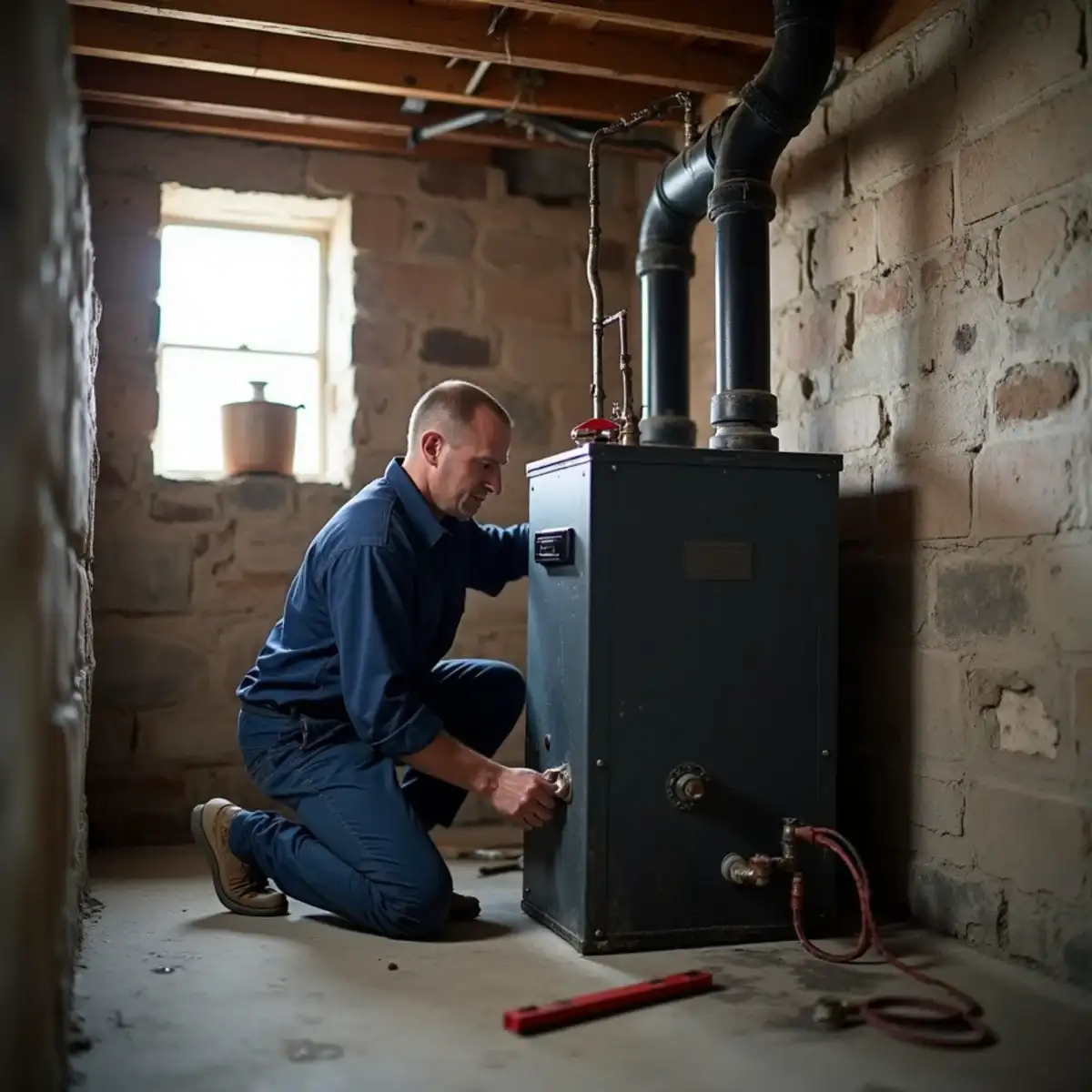
For boiler replacement in Pittsburgh, call (321) 478-0693 and we will send a local technician who sizes a new steam or hot-water boiler to the radiators you already have, pipes it the way the manufacturer requires, and gives you a price before any work starts.
Sizing is where many replacements go wrong. About half the city's homes were built before 1940, and the boiler in the basement is often the third or fourth one feeding the same cast iron radiators. A boiler that matches the house on paper but not the system it feeds can bang, short cycle or leave the top floor cold for its whole life.
Every HVAC technician we send is licensed where Pennsylvania requires it, and insured.
Signs a boiler is at the end of its life
- Water where it should not be: rust streaks down the jacket, a damp floor, or a steam boiler that needs water every day, all of which can point to a leak inside the cast iron.
- A repair every winter. One repair is upkeep. A new part every few months on a boiler past 25 years means the rest is close behind.
- Soot or scorch marks around the burner door, a sign of a blocked heat exchanger or venting trouble that needs attention now.
- Discontinued parts. Burners and controls for boilers built decades ago are hard to find, and adapted parts do not always behave like the originals.
- Age. A cast iron boiler commonly lasts 25 to 30 years and a steam boiler 30 to 50. A boiler in that range is not automatically done, but it should be planned for.
The point is to price a replacement while the old boiler still runs, not in January with the house cooling down.
What a boiler replacement includes
A replacement is more than a boiler in a crate. These are the pieces a complete job covers, and each one should be named in the quote you approve.
- A sizing survey you can see: every radiator measured and totaled in EDR on steam, or a room-by-room heat-loss figure on hot water, with the result written down next to the boiler chosen.
- The boiler named by make, model and output rating, so you can compare it against any other quote line for line.
- Near-boiler piping to the installation manual: risers, header, equalizer and Hartford loop on steam; on a condensing boiler, primary-secondary piping or a hydraulic separator plus a dirt or magnetic separator.
- The parts that go with the boiler: on hot water, a new diaphragm expansion tank, fill valve, 30 psi relief valve and circulator; on steam, the trim that comes with the boiler (low-water cutoff, pressuretrol, pigtail and sight glass) set up and tested.
- Venting settled before start-up: a chimney check and correctly sized liner where needed, or a sidewall vent in PVC or stainless, and a safe flue for any water heater that stays.
- Gas line sizing and a leak test on the new connection, and on condensing boilers a condensate drain with a neutralizer so acidic water does not eat the drain line.
- Disconnection and removal of the old boiler, sectioned in the basement where the stairs are too narrow to carry it out whole.
- The mechanical permit and inspection the city or your borough requires, included in the price rather than left to you.
- A walk-through at the boiler: the emergency switch, the water shutoff, what the gauge or sight glass should read, and when the first skim or bleed-down is due.
From the first visit to the signed quote and install date
The work in the basement is covered further down under replacement day. This is what happens before it, and what you decide at each stage.
- 1
A survey of the system, not just the boiler
The technician looks at the boiler, the near-boiler piping, the chimney, the gas line and the water heater, then measures the radiators or works up the heat loss. Access gets noted too: stair width, door clearances and where the vent could exit.
- 2
A straight answer on repair versus replacement
Before any boiler is recommended, you hear whether the old one could reasonably be repaired and what that would buy you. If a new boiler is the better path, the technician explains why using what was found, such as a leaking section or obsolete burner parts.
- 3
Options laid out by system type
Steam houses get a steam boiler sized to the radiation. Hot-water houses usually see a cast iron option and a condensing option, and a combi where the household suits one. Each comes with what it means for venting, the water heater and the piping.
- 4
One written price covering the whole scope
The quote names the boiler, the piping work, venting or liner, the parts replaced with it, removal of the old unit and the permit. Asbestos abatement, if testing calls for it, is priced separately by the abatement contractor. Nothing is ordered until you approve.
- 5
Scheduling, permits and preparation
Once approved, the permit is applied for, the boiler and parts are ordered, and any abatement is booked to finish first. You get a date, an estimate of how long the heat will be off, and a short list of what to clear from the basement.
- 6
Follow-up after the first weeks of heat
A new steam boiler usually needs a second skim once oil from the new piping works loose, and hot-water radiators may need bleeding again. Ask when that follow-up is due and whether the quote covers it, so it is planned rather than a surprise.
Repair or replace: age, leaks, cracked sections and parts availability
| Problem | Usually points toward | Why |
|---|---|---|
| Failed control, ignitor, circulator or low-water cutoff | Repair | A bolt-on part on a heat exchanger that is still sound |
| Dripping relief valve | Repair | Usually an expansion tank or fill valve problem, not a failing boiler |
| Water seeping between cast iron sections | Replace, in most cases | Resealing is labor-heavy, and every other section is the same age |
| Cracked section or heat exchanger | Replace | Cracks spread and can affect combustion and venting |
| Discontinued burner or controls past 30 years | Replace, usually | Money spent adapting parts is better spent on a boiler with decades ahead of it |
The technician will show you where the fault is before recommending either path. If it turns out to be a repair, see our steam boiler repair and hot water boiler repair pages.
Steam boiler replacement: sizing to the radiators and getting the near-boiler piping right
A steam boiler has to make enough steam to fill every pipe and radiator connected to it, whether or not the house needs that much heat. So its size comes from the radiators, measured in square feet of equivalent direct radiation (EDR).
- The technician measures each radiator: height, number of sections, and columns or tubes per section.
- Each one is looked up in published EDR tables and the total is added up.
- That total is matched to the net rating in the manufacturer's tables, which already allows for the piping, choosing the closest size at or just above it.
A heat-loss calculation still shows whether the house needs all that radiation, but a steam boiler replacement sized from heat loss alone, or copied from the old boiler's rating plate, is how homes end up with cold far radiators or a boiler that short cycles and throws water up the pipes.
Near-boiler piping
The first few feet of pipe decide whether the steam is dry. The installation manual sets the riser height above the water line, pipe sizes, the header, the equalizer and the Hartford loop, which ties the return in just below the water line so a return leak cannot drain the boiler. Most manuals call for threaded steel here. Skip those details and wet steam carries water into the mains, causing the noise explained in our post on radiators banging and water hammer.
Steam boilers do not condense
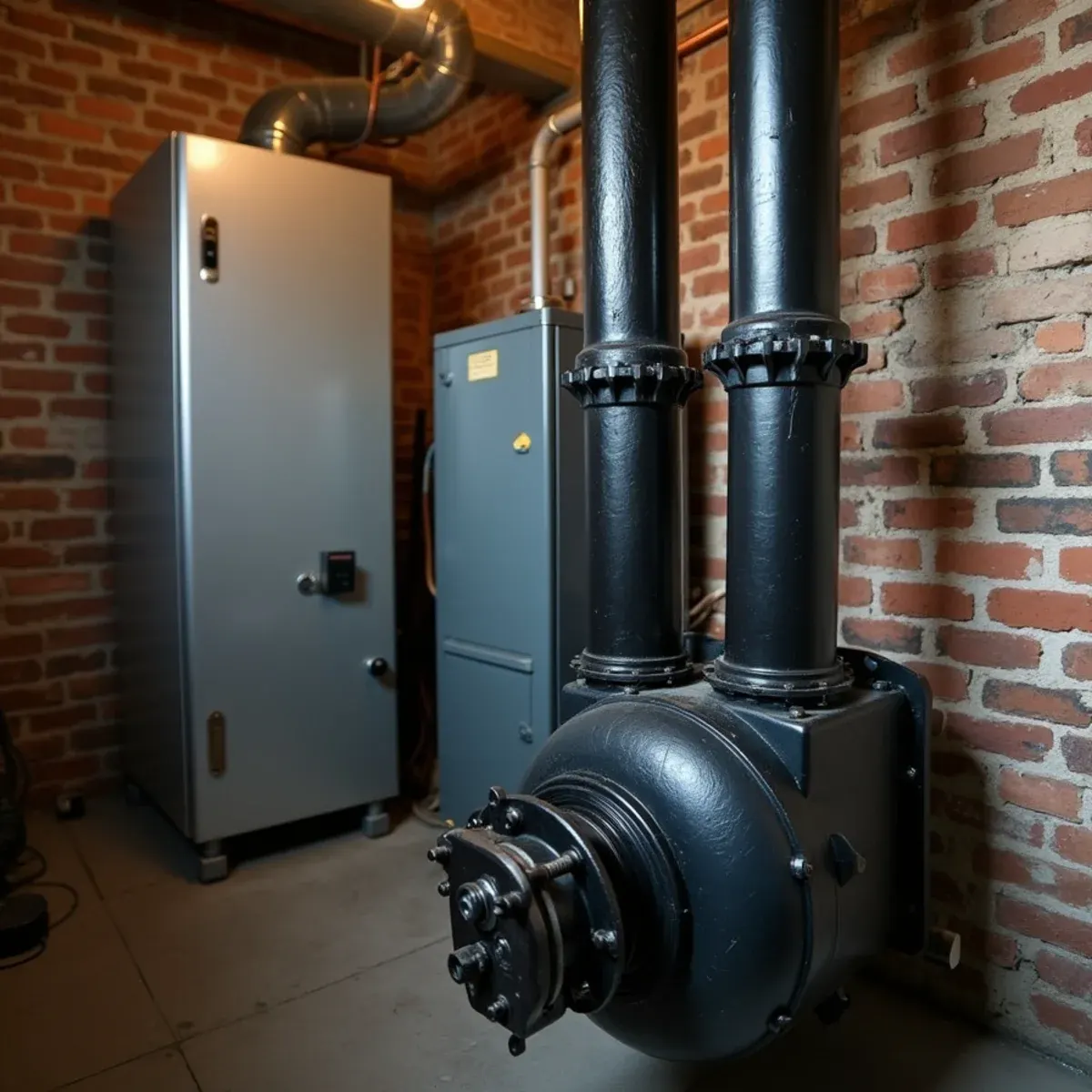
Water has to boil at about 212°F to make steam, far too hot for flue gases to condense, so residential steam boilers are never condensing boilers. A steam replacement gains efficiency from correct sizing, clean water and good piping, and the new boiler should be skimmed after start-up to remove manufacturing and threading oil.
Hot water options: cast iron, high-efficiency condensing and combi boilers
Cast iron boiler. The closest like-for-like swap for an old gravity or pumped system. It tolerates the large water volume and sediment older systems carry, is simple to service and lasts. It cannot condense, and most vent into a chimney.
Condensing boiler (mod-con). A high efficiency boiler that pulls extra heat from its exhaust, but only when the water returning to it is cool, roughly below 130°F on natural gas. Old Pittsburgh houses often suit them. Their cast iron radiators were sized for drafty, uninsulated rooms, so after decades of storm windows and insulation they can heat the house with cooler water for most of the season. An outdoor reset control lowers the water temperature on mild days, keeping the return in the condensing range more often. Converting an old gravity system usually means flushing it, adding a dirt or magnetic separator, and primary-secondary piping or a hydraulic separator. Mod-cons vent through the wall in plastic or stainless pipe.
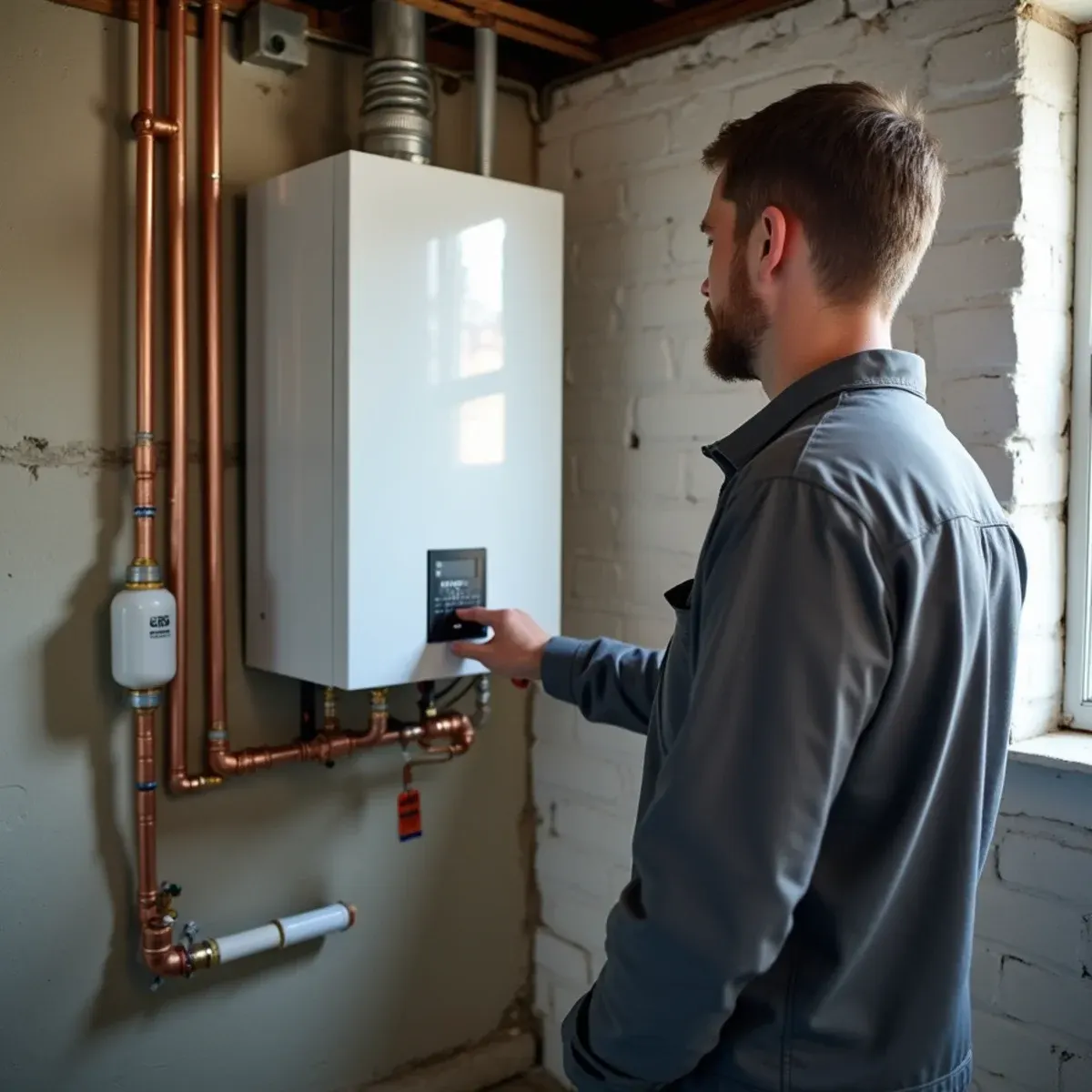
Combi boiler. A condensing boiler that also heats tap water on demand, so the water heater goes away. It suits a rowhouse or smaller home with one or two bathrooms, struggles when two showers run at once, and cannot be used on steam.
Chimney liners, venting and gas piping in older Pittsburgh basements
- Chimney-vented boilers. Many pre-war brick chimneys have cracked clay tile liners or none at all. If the flue is damaged or far too large for the new boiler, a correctly sized liner goes in.
- Orphaned water heaters. When a direct-vent boiler leaves the chimney, the gas water heater is left alone in a flue built for something much bigger. It may not draft properly, and its wet exhaust can damage the masonry. It usually needs its own liner, or a move to a combi.
- Gas piping. The line is checked for size and condition, and the meter and service for the new load.
- Oil to gas conversion. This adds a gas line, a new boiler or burner, and a plan for the oil tank: a basement tank is pumped and removed, while a buried tank is a separate job with its own rules. The gas service may need upgrading on the utility's schedule.
Gas smell or CO alarm
If you smell gas or a carbon monoxide alarm sounds, leave the house and call 911 or your gas utility from outside first. Call for boiler service only after they have cleared the house.
Keeping the radiators: what is reused and what is replaced
Cast iron radiators almost never wear out, so they usually stay, along with sound mains and risers. On steam, main vents and radiator vents are checked and two-pipe traps tested. On hot water, the expansion tank, fill valve, relief valve and circulator are usually replaced with the boiler. Leaking valves and unions are fixed before start-up, which our radiator repair page covers.
Asbestos on old boilers and pipes
Boilers and steam pipes installed before the 1980s were often covered in insulation that may contain asbestos: chalky white or gray wrap, corrugated paper layers, or a hard plaster coat. Leave it undisturbed until tested. If testing confirms asbestos the job would disturb, it should be removed by a licensed asbestos abatement contractor before demolition, under the state and county rules for that work. Neither the technician nor the homeowner should tear it out.
Replacement day: drain-down, removal, piping, fill, purge and start-up
- Power, fuel and water are shut off and the system is drained.
- The old boiler is disconnected and often taken apart in sections, which matters on narrow rowhouse stairs.
- The new boiler is set level and piped, vented and wired to the manual.
- A steam boiler is filled to its water line and the low-water cutoff tested. A hot-water system is filled, pressurized and purged loop by loop.
- The burner is fired and combustion tested, safety controls checked, and the technician shows you what normal looks like on the gauges.
- A new steam boiler usually needs another skim after it has run a while, and a hot-water system may need its radiators bled again as dissolved air works out.
Most straight swaps take one to two days. Steam piping corrections, a chimney liner, a fuel conversion or asbestos abatement add time. Once the new boiler is running, keep up with the annual boiler service checklist.
What affects boiler replacement cost
Two boiler installations in Pittsburgh that look alike from the street can be very different jobs in the basement, so the technician sees the system and gives you a price before work starts. What moves new boiler cost:
- Boiler type and size: steam or hot water, cast iron or condensing.
- Near-boiler piping corrections on steam systems.
- A chimney liner, a sidewall vent, or a fix for an orphaned water heater.
- Fuel conversion, tank removal or an upsized gas line.
- Access, from tight basement stairs to a rowhouse with no outside entry.
- Asbestos abatement, priced separately by the abatement contractor.
- Permits: replacement normally needs a mechanical permit, through the city's Department of Permits, Licenses and Inspections or the local borough or township. Confirm it is in the price.
For published ranges, read how much boiler replacement costs in Pittsburgh. Our Pittsburgh boiler service areas run from 1920s Tudors needing boiler replacement in Mt. Lebanon to early-1900s houses we cover for boiler service in Wilkinsburg and brick duplexes behind most calls for boiler and radiator work in Dormont.
Why Pittsburgh homeowners trust us with a boiler replacement
Sized from your radiators, not the old rating plate
Pittsburgh basements often hold a third or fourth boiler feeding the same cast iron. The technicians we send size the new one from measured radiation or a real heat-loss figure, so an oversized boiler is not simply copied forward again.
A repair answer before a replacement pitch
A replacement is a big decision, and sometimes the honest finding is a low-water cutoff or a circulator. If the old boiler has good years left, you hear that first, with the replacement figures alongside so you can compare them.
Chimney, water heater and permit in the same price
Liners, orphaned water heaters and municipal permits are where replacement quotes tend to grow after signing. The technician prices them up front with the boiler, and you approve the full scope before anything is ordered or removed.
A person on the line during the first cold week
New boilers sometimes need a control adjusted or a radiator bled once real cold arrives. The line is answered around the clock, so a question about the new boiler on a January night reaches a person rather than a recording.
Boiler Replacement across Pittsburgh and nearby boroughs
Replacement calls cluster where boilers have already been swapped more than once. In Mt. Lebanon, 1920s and 1930s homes often keep their original radiators behind a newer boiler. Wilkinsburg's big early-1900s houses, many split into apartments, put one boiler under several households, so its sizing and timing matter more. Houses built up after Brentwood's 1916 incorporation that need boiler replacement in Brentwood usually keep their cast iron while the boiler changes.
Boiler Replacement: common questions
How long does a boiler last in a Pittsburgh home?
A cast iron boiler commonly lasts 25 to 30 years in a Pittsburgh home, and a steam boiler often lasts 30 to 50. Where a boiler lands in that range depends on water quality, yearly service, and whether it was sized and piped correctly. A steam boiler that takes on fresh water constantly wears out faster, because new water brings oxygen and minerals with it.
Can a steam system be converted to hot water?
Yes, but it is a much bigger job than a boiler swap, and many houses are better off on steam. Hot water runs at roughly 12 to 25 psi, far above the ounces of pressure in residential steam, so old pipes and radiators must hold that pressure. One-pipe steam usually needs new piping, and some steam radiators are joined only at the bottom, which hot water does not flow through well.
Will a high-efficiency boiler work with old cast iron radiators?
Yes, in many Pittsburgh homes it works well. Cast iron radiators were sized for uninsulated houses, so in a tightened-up house they heat the rooms with cooler water, which lets a condensing boiler condense and reach its rating, especially with outdoor reset. The old system usually needs flushing and a dirt separator first. This applies to hot-water radiators only; steam radiators need a steam boiler.
How long is the house without heat during a boiler replacement?
Usually one to two days for a straight swap, longer when the job adds steam piping corrections, a chimney liner, a fuel conversion or asbestos abatement. The technician gives you a timeline with the price. Spring or fall scheduling avoids the problem. In winter, keep the house above freezing with space heaters that have clearance and are never left unattended.
What size boiler do I need for my house?
It depends on the system, not the square footage alone. A steam boiler is sized to the total radiation connected to it: every radiator is measured, its EDR looked up, and the total matched to the boiler's net rating. A hot-water boiler is sized to the house's heat loss, which in an insulated pre-war home is often well below what the old boiler was rated for. Be wary of any quote that simply copies the old rating plate. Ask the technician to show you the number the size came from.
Should I replace the water heater at the same time as the boiler?
Sometimes, and it is worth deciding before the quote is final. If the new boiler vents through the wall, a gas water heater left alone in the old chimney may need its own liner, and that cost belongs in the comparison. A combi boiler or an indirect tank heated by the boiler removes that problem. If the water heater is young and vents safely, keeping it is reasonable. The technician checks the flue and the heater's age and lists both choices.